
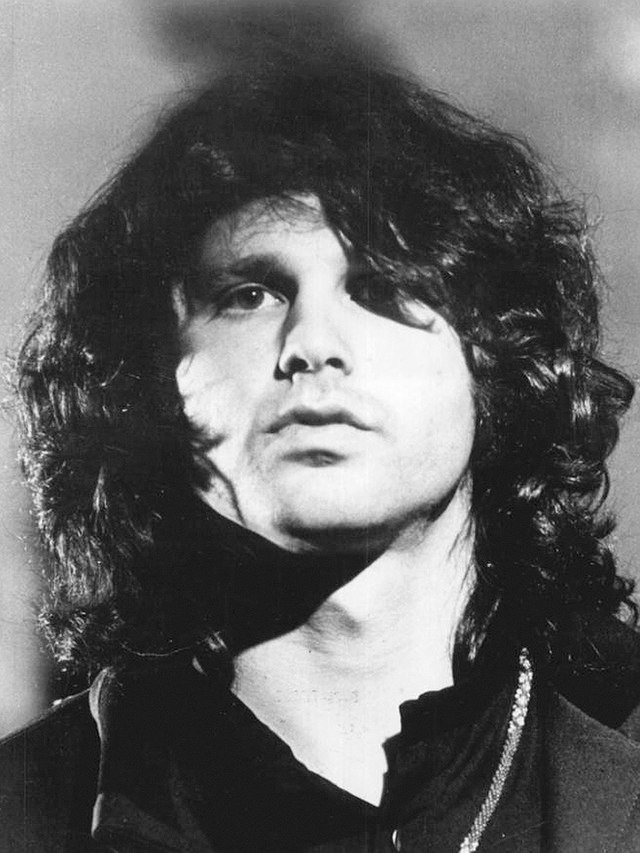
Jim Morrison, born James Douglas Morrison on December 8, 1943, in Melbourne, Florida, USA, is an enduring icon of rock music and a cultural figure whose influence extends far beyond his time as the lead singer of The Doors. Morrison was not just a musician; he was a poet, a provocateur, and a symbol of the countercultural revolution of the 1960s. His life was marked by creativity, rebellion, and ultimately, tragedy, as he died at the young age of 27, joining the infamous “27 Club” alongside other legends like Jimi Hendrix and Janis Joplin.
Early Life: The Making of a Rock Icon
Jim Morrison’s early life was shaped by the strict discipline of his family, particularly due to his father, George Stephen Morrison, who was a high-ranking naval officer. This military background meant that the Morrison family frequently relocated, which made it difficult for young Jim to form lasting friendships or roots. His mother, Clara Clarke Morrison, was a homemaker, and together, they raised Jim along with his younger siblings, Anne and Andrew.
Morrison’s childhood was marked by a profound and traumatic experience that would later become a significant part of his artistic identity. In 1947, during a road trip through the desert between Albuquerque and Santa Fe, the Morrison family encountered the aftermath of a car accident involving a group of Native American laborers. Jim, just four years old at the time, was deeply affected by the sight of the injured and possibly dying workers. This event left an indelible mark on him, and he later claimed that the spirit of one of the dying Native Americans had entered his soul, a story that would surface in his lyrics and poetry throughout his career.
The Path to The Doors: Education and Early Influences
Jim Morrison’s academic journey was as tumultuous as his personal life. Despite his rebellious nature, Morrison was an exceptionally intelligent student with an IQ of 149. He was an avid reader, deeply interested in philosophy, literature, and poetry. His voracious reading habits introduced him to the works of Nietzsche, Rimbaud, Blake, and the Beat poets, all of whom would heavily influence his later work as a lyricist and performer.
After high school, Morrison briefly attended St. Petersburg Junior College and then transferred to Florida State University. However, he soon realized that his true interests lay in a more artistic and expressive field. This realization led him to move to Los Angeles in 1964, where he enrolled in the film program at UCLA. At UCLA, Morrison found himself in the company of future film legends like Martin Scorsese and Francis Ford Coppola, though his own efforts in filmmaking were not particularly well-received by his peers or professors.
It was during his time in Los Angeles that Morrison met Ray Manzarek, a fellow student at UCLA, who would become the keyboardist for The Doors. This meeting was the catalyst for the formation of the band that would go on to become one of the most influential in rock history. The Doors, named after Aldous Huxley’s book “The Doors of Perception,” which itself was inspired by a quote from William Blake, were born out of a shared vision to create a new form of musical and poetic expression.
The Rise of The Doors: Break On Through to the Other Side
The Doors, composed of Jim Morrison, Ray Manzarek, guitarist Robby Krieger, and drummer John Densmore, quickly became known for their unique sound, which blended rock, blues, and psychedelic music with Morrison’s haunting, poetic lyrics. The band’s first self-titled album, released in 1967, was a commercial and critical success, featuring hits like “Light My Fire,” “Break On Through (To the Other Side),” and “The End.” The album’s dark and intense themes, coupled with Morrison’s magnetic stage presence, set The Doors apart from other bands of the era.
“Light My Fire,” in particular, became a massive hit, reaching number one on the Billboard Hot 100 chart. The song’s success propelled The Doors into the spotlight, making them one of the most popular bands in America. Morrison’s deep, baritone voice and enigmatic persona earned him the title of “The Lizard King,” a moniker he embraced, further fueling his image as a mystical and rebellious figure.
However, Morrison’s behavior on stage and off became increasingly erratic as he struggled with alcohol and drug abuse. His live performances were often unpredictable, blending spoken word poetry with music, and his interactions with the audience ranged from mesmerizing to confrontational. Morrison’s tendency to push boundaries both artistically and socially often led to controversy, including several arrests for indecent exposure and public drunkenness.
The Poet and the Rebel: Morrison’s Literary Aspirations
Despite his fame as a rock star, Jim Morrison considered himself first and foremost a poet. He published two volumes of poetry, “The Lords and the New Creatures” and “An American Prayer,” which reflected his deep engagement with themes of existentialism, spirituality, and the human condition. His lyrics, often filled with vivid imagery and symbolic language, drew heavily from his literary influences and his own experiences.
Morrison’s poetry was not merely an extension of his music but a separate, deeply personal endeavor. He saw himself as a modern-day shaman, using his words and music to guide his audience to higher states of consciousness. This shamanistic persona was central to Morrison’s identity, both on stage and in his writing. His performances were often described as ritualistic, with Morrison serving as the conduit through which the audience could access deeper truths and emotions.
The Downward Spiral: Fame, Addiction, and Decline
As The Doors’ fame grew, so did Morrison’s struggles with addiction. His excessive drinking and drug use began to take a toll on his health and his relationships with his bandmates. The pressures of fame, coupled with Morrison’s desire to be taken seriously as a poet and artist, led to increasing tension within the band.
The release of their third album, “Waiting for the Sun” in 1968, saw The Doors experimenting with a softer sound, which was met with mixed reviews. While the album produced hits like “Hello, I Love You,” it also marked the beginning of a decline in the band’s commercial success. Morrison’s unpredictable behavior became more pronounced, leading to incidents like the infamous Miami concert in 1969, where he was accused of exposing himself to the audience, resulting in his arrest and a subsequent trial.
By the time The Doors released “Morrison Hotel” in 1970, Morrison’s voice had become deeper and more gravelly, a result of his heavy drinking and smoking. Despite the challenges, the album was well-received, with tracks like “Roadhouse Blues” showcasing the band’s return to a rawer, blues-influenced sound. However, Morrison’s legal troubles and deteriorating health overshadowed the band’s achievements.
The Final Chapter: Paris and the Mystery of His Death
In 1971, Jim Morrison sought to escape the pressures of fame by moving to Paris with his longtime girlfriend, Pamela Courson. He hoped to find solace and inspiration in the city’s artistic atmosphere and focus on his poetry. However, Morrison’s time in Paris was marked by continued substance abuse, and his health continued to decline.
On July 3, 1971, Jim Morrison was found dead in the bathtub of his apartment in Paris. The official cause of death was listed as heart failure, though no autopsy was performed, leading to widespread speculation and rumors about the true cause of his death. Some believed it was a heroin overdose, while others theorized that Morrison had faked his own death to escape the pressures of fame.
Morrison was buried in the Père Lachaise Cemetery in Paris, where his grave became a pilgrimage site for fans from around the world. His death at the age of 27 cemented his status as a rock legend and a member of the “27 Club,” a group of influential musicians who died at the same age, often under mysterious or tragic circumstances.
Legacy: The Enduring Influence of Jim Morrison
Jim Morrison’s influence on music, culture, and the arts remains profound. As the lead singer of The Doors, he helped to redefine the possibilities of rock music, blending poetry, theater, and raw emotion into a powerful and unforgettable performance. His lyrics, often dark and introspective, challenged the conventions of popular music and opened the door for future artists to explore deeper and more complex themes.
Morrison’s legacy is also deeply intertwined with the countercultural movements of the 1960s. He became a symbol of rebellion against authority, a voice for a generation disillusioned by war, social norms, and the status quo. His life and work continue to inspire musicians, poets, and artists who see in Morrison a kindred spirit—a figure who lived on the edge and pushed the boundaries of what art could be.
Despite his self-destructive tendencies, Morrison’s artistic contributions have stood the test of time. The Doors’ music remains influential, and Morrison’s poetry is still studied and admired for its depth, complexity, and raw emotion. His image as “The Lizard King” endures, a testament to his lasting impact on popular culture and his ability to capture the imagination of generations.
In the years since his death, Jim Morrison has been immortalized in books, films, and documentaries, most notably in Oliver Stone’s 1991 biopic “The Doors,” where Val Kilmer’s portrayal of Morrison introduced the rock star to a new generation of fans. Morrison’s life, marked by brilliance, excess, and tragedy, continues to fascinate and inspire, ensuring that his voice will never be silenced.


