
Introduction
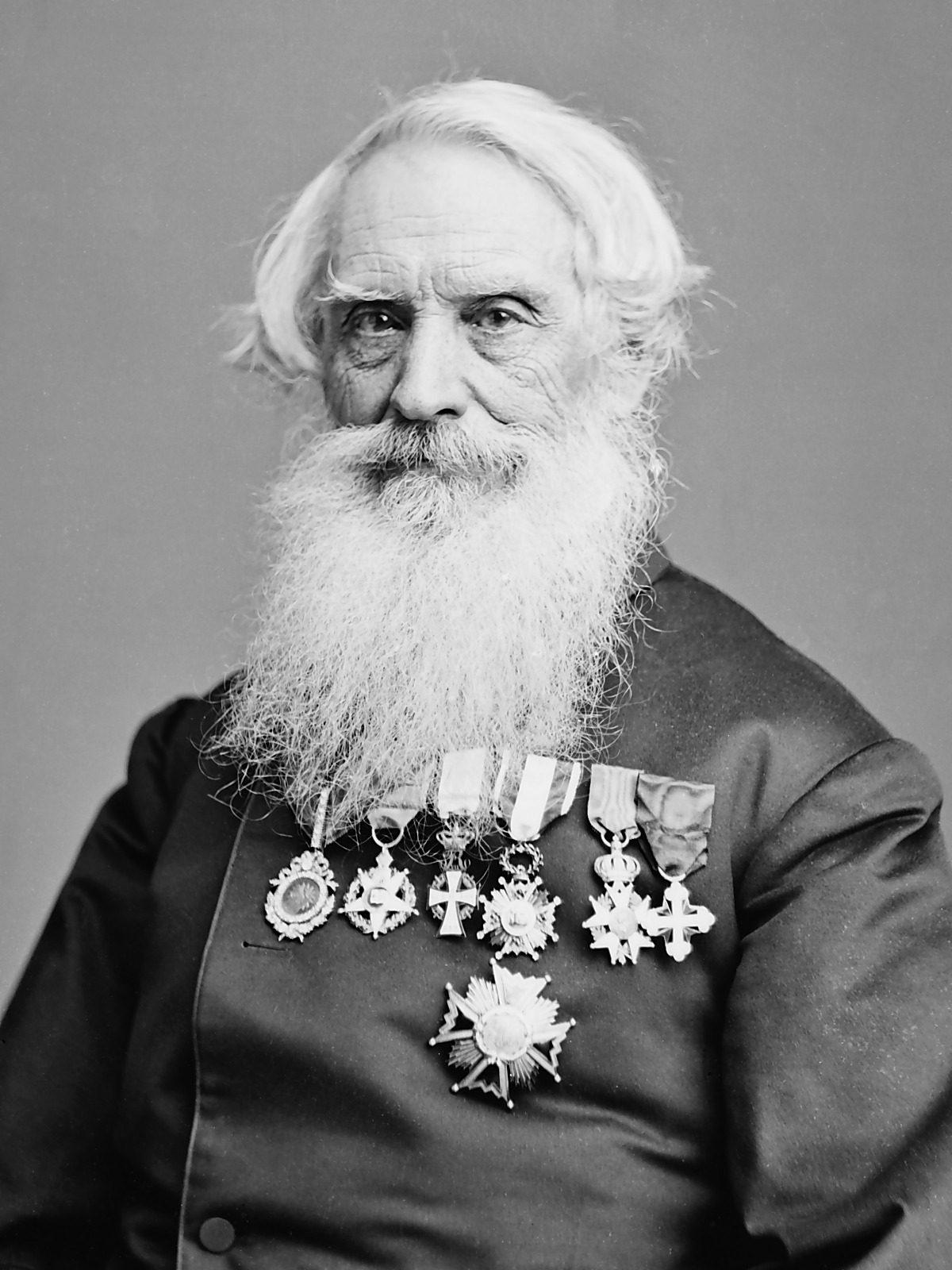
Samuel Finley Breese Morse is a name that resonates with innovation and transformation in communication. Born on April 27, 1791, in Charlestown, Massachusetts, Morse is celebrated not only as the inventor of the telegraph but also as a distinguished painter. His life is a testament to the power of curiosity and perseverance, as he ventured beyond his artistic pursuits to revolutionize how the world communicated. This article explores the life and legacy of Samuel Morse, providing detailed insights into his achievements, the historical context of his inventions, and the lasting impact of his work on global communication.
Early Life and Education
Samuel Morse was born into a family that valued education and intellectual pursuit. His father, Jedidiah Morse, was a prominent geographer and clergyman, often referred to as the “father of American geography.” This intellectual environment undoubtedly influenced young Samuel, who exhibited a keen interest in both the arts and sciences from an early age.
Despite his inherent talents, Morse’s academic journey was not without challenges. Described as a somewhat lazy student, his focus wavered, particularly in subjects that did not capture his interest. However, his fascination with electricity and painting remained consistent. In 1810, Morse graduated from Yale College, where he had developed a deeper understanding of electricity under the tutelage of professors such as Benjamin Silliman and Jeremiah Day. These formative experiences laid the groundwork for his future innovations.
Artistic Pursuits and European Influence
After completing his studies at Yale, Morse traveled to England in 1811 to further his education in painting. London, at the time, was a hub of artistic activity, and Morse was eager to immerse himself in the rich cultural milieu. He studied under the guidance of the renowned American painter, Washington Allston, and honed his skills in portraiture and historical painting.
Morse’s time in Europe was pivotal not only for his artistic growth but also for his exposure to the burgeoning field of electromagnetism. While his primary focus remained on painting, the scientific advancements he encountered would later fuel his interest in developing a practical means of long-distance communication.
In 1815, Morse returned to the United States, where he established himself as a successful portrait artist. He co-founded the National Academy of Design in 1825, reflecting his commitment to fostering artistic excellence in America. However, despite his success in the arts, Morse’s interest in scientific innovation never waned.
The Birth of the Telegraph: A Journey of Innovation
The idea that would eventually lead to the invention of the telegraph was sparked during a fateful sea voyage in 1832. Morse was returning to the United States from Europe aboard the ship Sully when he engaged in a conversation about electromagnetism with fellow passengers. Intrigued by the potential of using electricity to transmit messages over long distances, Morse began to formulate the concept of the telegraph.
Upon his return to New York, Morse set to work on developing his idea. His initial efforts were rudimentary, involving the use of a wooden frame, parts from a discarded clock, and an electromagnet given to him by a professor. Despite these humble beginnings, Morse was determined to bring his vision to life.
By 1835, Morse had constructed a working prototype of the telegraph, though it was far from perfect. He continued to refine his invention, and in 1837, he teamed up with Leonard Gale, a professor of science at New York University, and Alfred Vail, a skilled mechanic. Together, they made significant improvements to the telegraph, leading to Morse’s application for a patent.
One of the most significant innovations that emerged from Morse’s work was the development of a binary communication system that could be easily transmitted over wires. This system, known today as the Morse code, used a series of dots and dashes to represent letters and numbers, enabling messages to be sent quickly and accurately across vast distances.
The First Successful Demonstration and the Path to Fame
Morse’s telegraph and code were first successfully demonstrated on May 24, 1844, when a line was established between Washington, D.C., and Baltimore. The historic first message, “What hath God wrought?” was sent from the U.S. Capitol to a railroad station in Baltimore, marking the beginning of a new era in communication.
The success of this demonstration catapulted Morse to fame, and the telegraph quickly became an essential tool for communication across the United States and beyond. The timing of the invention could not have been more fortuitous, as the United States was expanding rapidly westward, and the need for quick, reliable communication was paramount.
One notable instance of the telegraph’s impact occurred during the 1844 Whig Party Convention in Baltimore. The results of the convention were telegraphed to Washington, D.C., where they arrived two hours before the train carrying the official results. This event underscored the telegraph’s revolutionary potential and solidified Morse’s reputation as a pioneer in communication technology.
The Global Impact of Morse’s Invention
The invention of the telegraph had far-reaching implications, not only in the United States but around the world. The ability to send messages over long distances almost instantaneously transformed industries, governments, and societies. By the late 1840s, telegraph lines were being constructed across Europe, and by the mid-1850s, they had reached as far as India.
In Italy, the first telegraph line was established in 1847, connecting the cities of Livorno and Pisa. The rapid spread of telegraphy demonstrated its importance in an increasingly interconnected world. It facilitated international trade, improved the coordination of military operations, and played a critical role in the expansion of the railway network.
Moreover, Morse’s invention laid the groundwork for future innovations in communication, including the telephone, radio, and eventually the internet. The principles of electromagnetic communication that Morse pioneered are still in use today, albeit in far more advanced forms.
The Later Years: Recognition and Legacy
As the telegraph became a vital part of global communication, Morse’s contributions were widely recognized. He received numerous honors and accolades from governments and scientific institutions around the world. In 1858, he was awarded the Grand Cross of the Order of the Dannebrog by the King of Denmark, and in 1868, he was made a Chevalier of the Légion d’honneur by the French government.
Despite his fame and success, Morse remained a humble and dedicated scientist. He continued to work on improving his telegraph system and exploring other scientific interests until his death. On April 2, 1872, Morse passed away from pneumonia in Poughkeepsie, New York, at the age of 80.
Morse’s legacy extends far beyond the invention of the telegraph. He is remembered as a visionary who recognized the potential of technology to connect people across great distances. His work paved the way for the modern communication systems that we rely on today, and his name is forever etched in history as a pioneer of the Information Age.
The Evolution of Morse Code
While the telegraph itself has largely been supplanted by more advanced technologies, Morse code remains a significant part of communication history. Originally developed as a simple and efficient way to encode messages for transmission over telegraph wires, Morse code has proven remarkably adaptable.
During the late 19th and early 20th centuries, Morse code became the standard method of communication for maritime vessels, particularly in emergencies. The famous distress signal SOS (··· — ···) is one of the most well-known uses of Morse code. Even today, Morse code is still used in certain areas of amateur radio, aviation, and by individuals with disabilities who use it as an alternative means of communication.
In a testament to its enduring relevance, a new symbol was added to Morse code for the first time in 60 years on May 3, 2004. The “@” symbol, widely used in email addresses and other forms of digital communication, was officially incorporated into Morse code, reflecting the evolution of communication in the digital age.
Conclusion
Samuel Morse’s life and work exemplify the spirit of innovation that drives human progress. From his early days as a painter to his groundbreaking work in communication technology, Morse consistently pushed the boundaries of what was possible. His invention of the telegraph and Morse code not only revolutionized communication in the 19th century but also laid the foundation for the interconnected world we live in today.
As we continue to build on the technological advances of the past, it is essential to remember the contributions of pioneers like Samuel Morse. His work serves as a reminder of the power of creativity and determination in shaping the future.


