
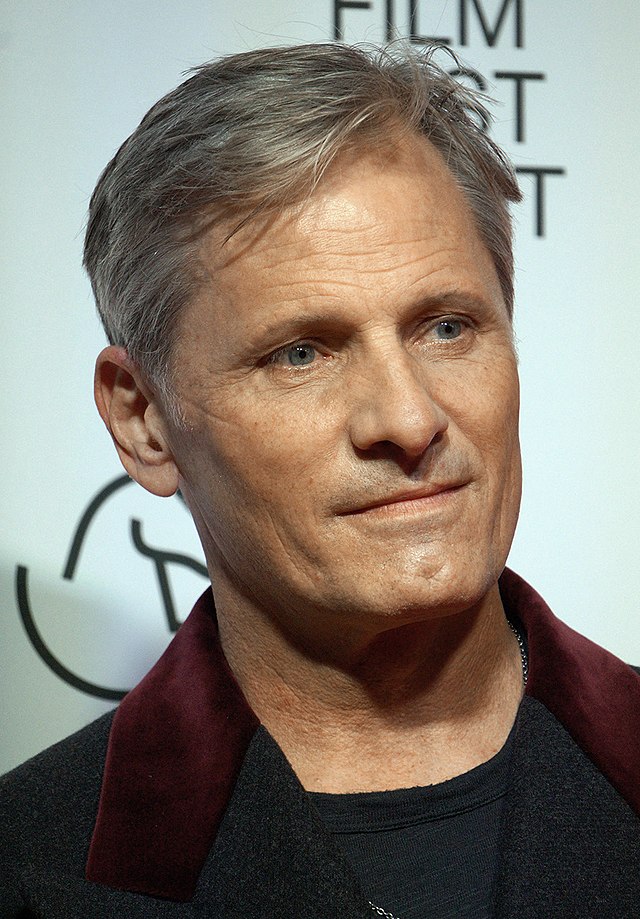
Viggo Mortensen, born Viggo Peter Mortensen Jr. on October 20, 1958, in New York City, is a multifaceted artist known for his work as an actor, poet, musician, photographer, and painter. Best known for his iconic role as Aragorn in The Lord of the Rings trilogy, Mortensen’s career spans various forms of artistic expression, showcasing his depth, versatility, and commitment to the craft. This article explores the life, career, and artistic journey of Viggo Mortensen, offering detailed insights into his rise to fame, his artistic endeavors, and the cultural impact he has made over the years.
Early Life and Diverse Influences
Viggo Mortensen was born into a culturally rich and diverse environment. His father, Viggo Mortensen Sr., was a Danish farmer and businessman, while his mother, Grace Gamble, was American. The family moved frequently during Mortensen’s early years, living in Venezuela, Argentina, and Denmark due to his father’s work. This exposure to different cultures at a young age played a significant role in shaping Mortensen’s worldview and artistic sensibilities.
After his parents separated, Mortensen moved with his father to Copenhagen before eventually returning to the United States. He completed his high school education at Watertown High School in New York, where he developed a passion for photography. Mortensen later attended St. Lawrence University, where he majored in Spanish literature and political science. His academic background in literature would later influence his artistic pursuits, particularly in poetry and writing.
The Journey into Acting
Mortensen’s path to acting was not straightforward. After graduating from university, he briefly worked as a translator for the Swedish hockey team during the 1980 Winter Olympics in Lake Placid. However, his passion for the arts led him to pursue acting, and he enrolled at Warren Robertson’s Theatre Workshop in New York. Mortensen’s early acting career was marked by small roles in theater productions and minor television appearances.
His first film role came in 1985 in Peter Weir’s Witness, where he played an Amish farmer. Although it was a small part, it marked the beginning of Mortensen’s journey in the film industry. Before this, he had filmed a scene in Swing Shift (1984), but it was cut during editing—a pattern that would repeat in his early career, including a role in Woody Allen’s The Purple Rose of Cairo (1985) that also ended up on the cutting room floor.
Despite these setbacks, Mortensen continued to work in television, appearing in shows like Miami Vice and the soap opera Search for Tomorrow. His determination and talent eventually led to more substantial roles, setting the stage for his future success.
Breakthrough Roles and Hollywood Recognition
The 1990s marked a significant turning point in Mortensen’s career. After being passed over for the role of Sergeant Elias in Platoon (1986), which went to Willem Dafoe, Mortensen began to gain recognition for his work in Hollywood. He appeared in films like Carlito’s Way (1993) alongside Al Pacino and Crimson Tide (1995) directed by Tony Scott. These roles showcased his ability to portray complex characters with depth and intensity.
In 1996, Mortensen played the role of Lucifer in The Prophecy, a performance that highlighted his range as an actor. He continued to build his filmography with roles in G.I. Jane (1997) with Demi Moore and A Perfect Murder (1998) with Michael Douglas and Gwyneth Paltrow. His portrayal of Tom Stall in David Cronenberg’s A History of Violence (2005) further solidified his status as a leading man in Hollywood.
The Lord of the Rings: A Global Icon
Mortensen’s career reached new heights when he was cast as Aragorn in Peter Jackson’s The Lord of the Rings trilogy (2001-2003). Interestingly, Mortensen was not the first choice for the role; he was brought in after the original actor, Stuart Townsend, was replaced. Initially hesitant to take on the role due to the lengthy shooting schedule in New Zealand, Mortensen ultimately accepted after encouragement from his son, Henry, who was a fan of J.R.R. Tolkien’s work.
Portraying Aragorn, the rightful heir to the throne of Gondor, Mortensen brought a blend of strength, nobility, and vulnerability to the character. His performance resonated with audiences worldwide, making Aragorn one of the most beloved characters in the trilogy. The success of The Lord of the Rings catapulted Mortensen to international stardom, earning him critical acclaim and a massive fan following.
The trilogy’s success also led to significant financial gains for Mortensen, allowing him to invest in other artistic endeavors. He became involved in music, publishing, and visual arts, further expanding his creative portfolio.
Artistic Pursuits Beyond Acting
Viggo Mortensen is not just an actor; he is a true Renaissance man with diverse artistic talents. In addition to his acting career, Mortensen is an accomplished poet, musician, photographer, and painter. His love for the arts is evident in his various creative projects, many of which reflect his deep intellectual and emotional engagement with the world around him.
In 1993, Mortensen published his first collection of poetry, Ten Last Night. His poetry often explores themes of nature, human experience, and existential reflection, showcasing his literary depth. He has since published several other collections, blending poetry with his photography.
Mortensen’s photography has also garnered attention. His work was first recognized by Dennis Hopper, who helped him exhibit his photographs in New York in the 1970s. Mortensen’s exhibitions have since been displayed in galleries around the world, including a notable show titled Errant Vine at the Robert Mann Gallery in New York. His photography captures the beauty of the natural world and often incorporates abstract elements, reflecting his unique perspective.
In addition to poetry and photography, Mortensen is an accomplished musician. He has released several albums, both as a solo artist and in collaboration with others. His music often features experimental elements, blending genres and incorporating spoken word.
Mortensen’s passion for the arts led him to establish Perceval Press in 2002, a publishing company dedicated to promoting the work of emerging artists and writers. The press has published numerous works, including Mortensen’s own books of poetry, photography, and painting. Through Perceval Press, Mortensen has provided a platform for artists who might not otherwise have the opportunity to showcase their work.
Later Career and Continued Success
After The Lord of the Rings, Mortensen continued to take on challenging and diverse roles. He reunited with director David Cronenberg for Eastern Promises (2007), in which he played a Russian mobster. His performance earned him an Academy Award nomination for Best Actor. Mortensen also starred in Cronenberg’s A Dangerous Method (2011), portraying the famous psychoanalyst Sigmund Freud.
Mortensen’s commitment to his craft is evident in the choices he makes as an actor. He often gravitates toward roles that challenge him and allow him to explore different facets of human experience. This is evident in films like Captain Fantastic (2016), where he played a father raising his children off the grid, and Green Book (2018), where he portrayed Tony Lip, a working-class Italian-American bouncer. Green Book won the Academy Award for Best Picture, and Mortensen received another Oscar nomination for his performance.
In 2020, Mortensen made his directorial debut with Falling, a film he also wrote and starred in. The film explores complex family dynamics, focusing on the relationship between a son and his aging father. Mortensen’s directorial debut was well-received, further establishing him as a multifaceted artist capable of excelling in various creative fields.
Personal Life and Philosophical Outlook
Viggo Mortensen’s personal life is as intriguing as his professional career. He was married to singer Exene Cervenka, with whom he has a son, Henry Blake Mortensen. The couple divorced in 1997 but have remained on good terms, co-parenting their son.
Mortensen is known for his intellectual curiosity and linguistic talents. He is fluent in several languages, including English, Danish, Spanish, French, and Italian. This linguistic ability has allowed him to take on roles in various languages and engage with diverse cultures.
Politically and socially conscious, Mortensen has been an outspoken critic of certain U.S. government policies, particularly during the administration of George W. Bush. He has also expressed support for Christiania, a self-proclaimed autonomous neighborhood in Copenhagen, and has been involved in various environmental and social causes.
Mortensen’s philosophical outlook is reflected in his approach to life and work. He values authenticity, creativity, and intellectual exploration, and these values permeate his artistic endeavors. Whether through acting, writing, or visual arts, Mortensen seeks to connect with deeper truths and engage with the world in meaningful ways.
Conclusion
Viggo Mortensen’s career is a testament to the power of artistic expression and the pursuit of excellence across multiple disciplines. From his early days as a struggling actor to his rise as an international film star, Mortensen has remained true to his artistic vision, consistently challenging himself and exploring new creative avenues.
His work in film, literature, photography, and music has made him a cultural icon, respected not only for his talent but also for his integrity and commitment to the arts. As he continues to create and inspire, Viggo Mortensen’s legacy will undoubtedly endure, leaving a lasting impact on the world of art and culture.


