
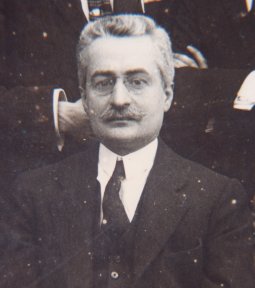
Giuseppe Moscati, born on July 25, 1880, in Benevento, Italy, was a remarkable figure in the medical field, not only for his groundbreaking work as a physician and researcher but also for his deep compassion and commitment to serving the sick and the poor. Known as the “Holy Doctor” or “Medico Santo,” Moscati’s life was a blend of scientific rigor and profound faith, earning him canonization as a saint by Pope John Paul II in 1987. His life and work continue to inspire many in the fields of medicine and beyond.
Early Life and Education
Giuseppe Moscati was the seventh of nine children born to a devout Catholic family. His father, Francesco Moscati, was a magistrate, and his mother, Rosa De Luca, came from the noble family of the Marchesi di Roseto. In 1884, when Giuseppe was just four years old, his family moved to Naples after his father was appointed as a Consigliere at the Court of Appeals.
Moscati’s early life was shaped by both tragedy and responsibility. His elder brother, Alberto, suffered a severe injury after falling from a horse during military service. The young Giuseppe, deeply moved by his brother’s suffering, took on the role of caregiver, an experience that sparked his interest in medicine. This early exposure to the world of illness and healing profoundly influenced his decision to pursue a career in medicine.
In 1897, Moscati enrolled at the University of Naples to study medicine. However, that same year, his father passed away due to a cerebral hemorrhage, leaving the family in a difficult financial situation. Despite these challenges, Giuseppe persevered in his studies, showing an exceptional commitment to his education and future profession.
Medical Career and Dedication to the Poor
Giuseppe Moscati graduated with honors in 1903, presenting a thesis on hepatic urogenesis. His brilliance was quickly recognized, and he passed the competitive exams to become both an ordinary assistant and an extraordinary coadjutor at the Ospedali Riuniti degli Incurabili in Naples. He spent five years working at this hospital, where he developed a reputation for his dedication to his patients, particularly the poor.
Moscati’s typical day was one of tireless service. He would begin his mornings by visiting the impoverished sick in the Spanish quarters of Naples, offering his medical services free of charge. After these visits, he would head to the hospital to fulfill his professional duties, and in the afternoons, he would see patients in his private practice. His work was driven by a deep sense of compassion and a desire to help those who could not afford medical care.
Moscati’s commitment to his patients extended beyond the physical aspects of healing. He was known for his ability to balance his medical practice with his deep Catholic faith, often providing spiritual as well as physical comfort to his patients. He believed that true healing involved caring for both the body and the soul, a philosophy that guided his entire medical career.
Heroism During the 1906 Eruption of Mount Vesuvius
One of the most significant events in Moscati’s life occurred in April 1906, when Mount Vesuvius erupted, spewing ash and lava over the town of Torre del Greco. A small hospital in the town, a branch of the Ospedali Riuniti degli Incurabili, was in imminent danger of being destroyed by the eruption. Moscati, displaying extraordinary courage and selflessness, rushed to the hospital to oversee the evacuation of the patients. His quick thinking and leadership saved many lives that day, further solidifying his reputation as a doctor who truly cared for his patients’ well-being.
Academic Contributions and Research
Giuseppe Moscati was not only a compassionate physician but also a dedicated researcher. In 1908, he passed the exam to become an ordinary assistant in the Department of Physiological Chemistry at the University of Naples, where he began conducting scientific research. His work was characterized by a commitment to integrating scientific knowledge with a deep sense of ethical responsibility.
In 1911, when Naples was struck by a cholera epidemic, Moscati was called upon to investigate the outbreak. He conducted extensive research and presented a report to the Public Health Inspectorate, outlining the necessary measures to improve the city’s sanitary conditions. Although his recommendations were only partially implemented, his work during the epidemic demonstrated his commitment to public health and his ability to apply scientific knowledge to real-world problems.
That same year, Moscati was awarded a teaching license in Physiological Chemistry, a recognition of his academic excellence and contributions to the field. He also became a member of the Royal Academy of Medical and Surgical Sciences and was appointed director of the Institute of Pathological Anatomy. His lectures were well-attended by students who admired his depth of knowledge, his ability to communicate complex ideas, and his unwavering commitment to his patients.
Service During World War I
The outbreak of World War I in 1914 brought new challenges to Giuseppe Moscati’s life. His mother passed away that same year, and Moscati, motivated by a strong sense of duty, volunteered for military service. However, his application was rejected, with the authorities deeming his work in Naples more critical to the war effort. Instead, Moscati focused on providing care to wounded soldiers returning from the front lines, offering both medical treatment and spiritual support.
Moscati’s work during the war further demonstrated his dedication to his patients and his belief in the inseparability of science and faith. He continued to serve in the hospital, often working long hours to care for the influx of injured soldiers. His compassion and dedication earned him the respect and admiration of both his colleagues and the soldiers he treated.
In 1917, Moscati made the significant decision to resign from his teaching position and focus entirely on his work at the hospital. He believed that his true calling was to be with his patients, particularly those who were poor or suffering. This decision reflected his deep commitment to his vocation as a healer and his belief that serving others was the highest form of service to God.
Final Years and Legacy
Giuseppe Moscati’s dedication to his work took a toll on his health. On April 12, 1927, at the age of 46, he passed away suddenly from a stroke while sitting in his chair at home. His death was met with widespread mourning in Naples, where he was beloved by both his patients and colleagues. The news of his passing quickly spread, and he was remembered by many as the “medico santo” or “holy doctor.”
Moscati was initially buried in the Cemetery of Poggioreale, but in 1930, his remains were moved to the Church of Gesù Nuovo in Naples, where they remain to this day. His tomb has become a place of pilgrimage for those who seek his intercession, and many miracles have been attributed to his prayers.
On November 16, 1975, Giuseppe Moscati was beatified by Pope Paul VI, and on October 25, 1987, he was canonized as a saint by Pope John Paul II. His feast day is celebrated on November 16, the anniversary of his beatification. Saint Giuseppe Moscati is remembered not only for his medical achievements but also for his deep faith, his compassion for the poor, and his unwavering commitment to serving others.
Conclusion: The Legacy of a Saint and Physician
The life of Giuseppe Moscati offers a powerful example of how one can integrate professional excellence with deep personal faith. His dedication to his patients, particularly the poor and marginalized, reflects a commitment to the true essence of medicine—a calling to heal both body and soul. Moscati’s life and work continue to inspire doctors, medical students, and all those who seek to serve others with compassion and integrity.
As a saint, Giuseppe Moscati is a patron for doctors, medical professionals, and all who work in healthcare. His story reminds us that the practice of medicine is not just a science but also an art that requires empathy, compassion, and a deep sense of moral responsibility. In a world where healthcare is often seen as a business, Moscati’s life stands as a testament to the true spirit of the medical profession.
Giuseppe Moscati’s legacy lives on, not only in the medical community but also in the hearts of those who seek to live a life of service to others. His example challenges us to consider how we can use our talents and abilities to make a positive impact on the world, to care for those who are suffering, and to live a life guided by faith, compassion, and a commitment to the well-being of others.


