
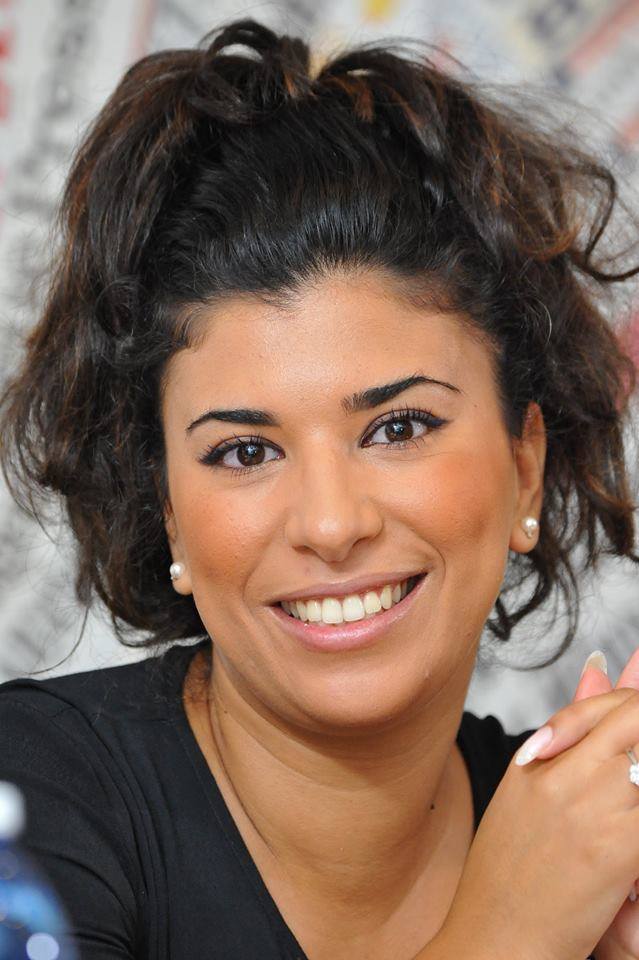
Karima Moual is a distinguished journalist and public figure, born on October 3, 1981, in Casablanca, Morocco. Her journey from a modest upbringing in Morocco to becoming a prominent voice in Italy’s media landscape is a tale of perseverance, identity, and an unwavering commitment to bridging cultural divides.
Early Life and Migration to Italy
Karima Moual’s early life was marked by her upbringing in Casablanca under the care of her grandparents, as her parents had emigrated to Italy in search of better opportunities. At the age of nine, in 1992, Karima joined her parents in Italy, settling in Santhià, near Vercelli. This move marked the beginning of her integration into Italian society, a journey that would eventually shape her career and public identity.
Growing up in Italy, Karima faced the challenges of adapting to a new culture while maintaining a connection to her Moroccan roots. Her experiences as a young immigrant played a crucial role in shaping her perspective on identity, belonging, and the complexities of multiculturalism—themes that would later become central to her work as a journalist.
Academic Pursuits and Entry into Journalism
After completing her secondary education, Karima moved to Rome to pursue higher studies at La Sapienza University, where she earned a degree in Oriental Languages and Civilizations. It was during her time at university that Karima began her foray into journalism, driven by a desire to give voice to communities that were often marginalized or misunderstood in the mainstream media.
Karima describes her early journalism as being more of an “intermediary,” a bridge between the established Italian society and the emerging multicultural reality. Her unique perspective as an immigrant woman allowed her to bring nuanced insights into the discussions on immigration, identity, and integration, which were becoming increasingly relevant in Italy.
Career Highlights in the 2000s
Karima Moual’s career took a significant turn in 2003 when she became an Italian citizen, a milestone that reflected her deep connection to her adopted country. The following year, she began working with “Il Passaporto.it,” the first newspaper of the Espresso Group dedicated to immigration issues. This publication later became a Sunday supplement of La Repubblica under the name Metropoli, where Karima continued her contributions until 2009.
During this period, Karima also made her mark on television, appearing on the program Tetris on La7, where she discussed immigration and the Muslim community in Italy. From 2007 to 2009, she collaborated with TG1 Rai, contributing to weekly segments like Italia Italie and TV7, further solidifying her reputation as a leading voice on multicultural issues in Italy.
In 2007, Karima participated in the Edward R. Murrow Program for Journalists in the United States, a prestigious opportunity that expanded her international perspective and allowed her to explore the experiences of Muslim communities in the U.S. In 2009, she produced a notable reportage on the Muslim community in America, showcasing her ability to tackle complex issues with depth and sensitivity.
Karima’s work during this time also extended to print journalism. She wrote for Il Sole 24 Ore, one of Italy’s most respected financial newspapers, where she focused on the social dynamics between Italy and a multicultural Europe. Her column “Zmagria” became a platform for exploring identity and diversity, drawing inspiration from figures like Moroccan writer and poet Tahar Ben Jelloun, whose views on identity resonated deeply with her own.
Continued Success in the 2010s
The 2010s saw Karima Moual further cement her role as a significant figure in Italian journalism. In 2011, she founded and directed MaroccOggi.it, a website dedicated to issues related to Islam in the Mediterranean region and the relationship between Italy and Europe. Her work earned her the Euromediterranean Award in 2012, a recognition of her efforts to foster understanding and dialogue between different cultures.
In 2014, Karima took on a new challenge by directing the Italian version of the information portal for the Ministry of the Moroccan Community Abroad (CCME). She also contributed to Formiche, an influential Italian news site, where her articles reached a wide audience.
By 2016, Karima was writing for La Stampa, one of Italy’s leading newspapers, where she launched the podcast Haram Halal and wrote the advice column Cara Karima. Through these platforms, she continued to explore issues of identity, integration, and the experiences of immigrants in Italy, offering advice and insights to a growing readership.
Television Fame and Broader Recognition
Karima Moual’s television career took a significant leap in 2020 when she became a regular guest on Rete 4’s prime-time show Dritto e Rovescio, hosted by Paolo Del Debbio. Her appearances on this program, as well as on Mattino 5 on Canale 5, expanded her reach to a broader audience and increased her public visibility.
Her role as a television commentator allowed her to bring her expertise on immigration and multiculturalism to a mainstream audience, making her one of the most recognizable voices on these issues in Italy. Her ability to articulate complex social issues in a way that resonates with a wide range of viewers has made her a sought-after commentator on national television.
Personal Life and Family
Beyond her professional achievements, Karima Moual’s personal life also reflects her commitment to both her Moroccan heritage and her Italian identity. On June 24, 2013, she married Vincenzo Amendola, a prominent politician affiliated with the Democratic Party. Vincenzo’s career reached new heights in 2019 when he was appointed Minister for European Affairs in the Conte II government. The couple has two children, Jamila, born in 2015, and Carlo Karim, born in 2019.
Karima’s marriage to Vincenzo Amendola symbolizes the blending of cultures and identities that has been a constant theme in her life and work. Her family life is a testament to the possibility of integration and coexistence between different cultural backgrounds, a message she has consistently advocated through her journalism.
A Voice for the Multicultural Italy
Karima Moual’s life and career are emblematic of the changing face of Italy in the 21st century. As a journalist, she has dedicated herself to highlighting the experiences of immigrants and advocating for a more inclusive society. Her work has not only provided a voice to those who are often marginalized but has also challenged the mainstream narrative about immigration and identity in Italy.
Her ability to navigate the complexities of her dual identity as both Moroccan and Italian has given her a unique perspective that resonates with many in a rapidly globalizing world. Karima’s story is one of resilience, adaptation, and a deep commitment to fostering understanding across cultural divides.
Conclusion
Karima Moual is more than just a journalist; she is a bridge between cultures, a voice for the underrepresented, and a symbol of the possibilities that arise when different worlds come together. Her work continues to inspire and challenge, reminding us of the importance of embracing diversity and the richness it brings to society.
As Italy continues to evolve into a more multicultural society, figures like Karima Moual play a crucial role in shaping the conversation and guiding the nation toward a more inclusive future. Her journey from Casablanca to the heights of Italian journalism is a powerful reminder of the potential within each of us to make a difference, no matter where we come from.


