
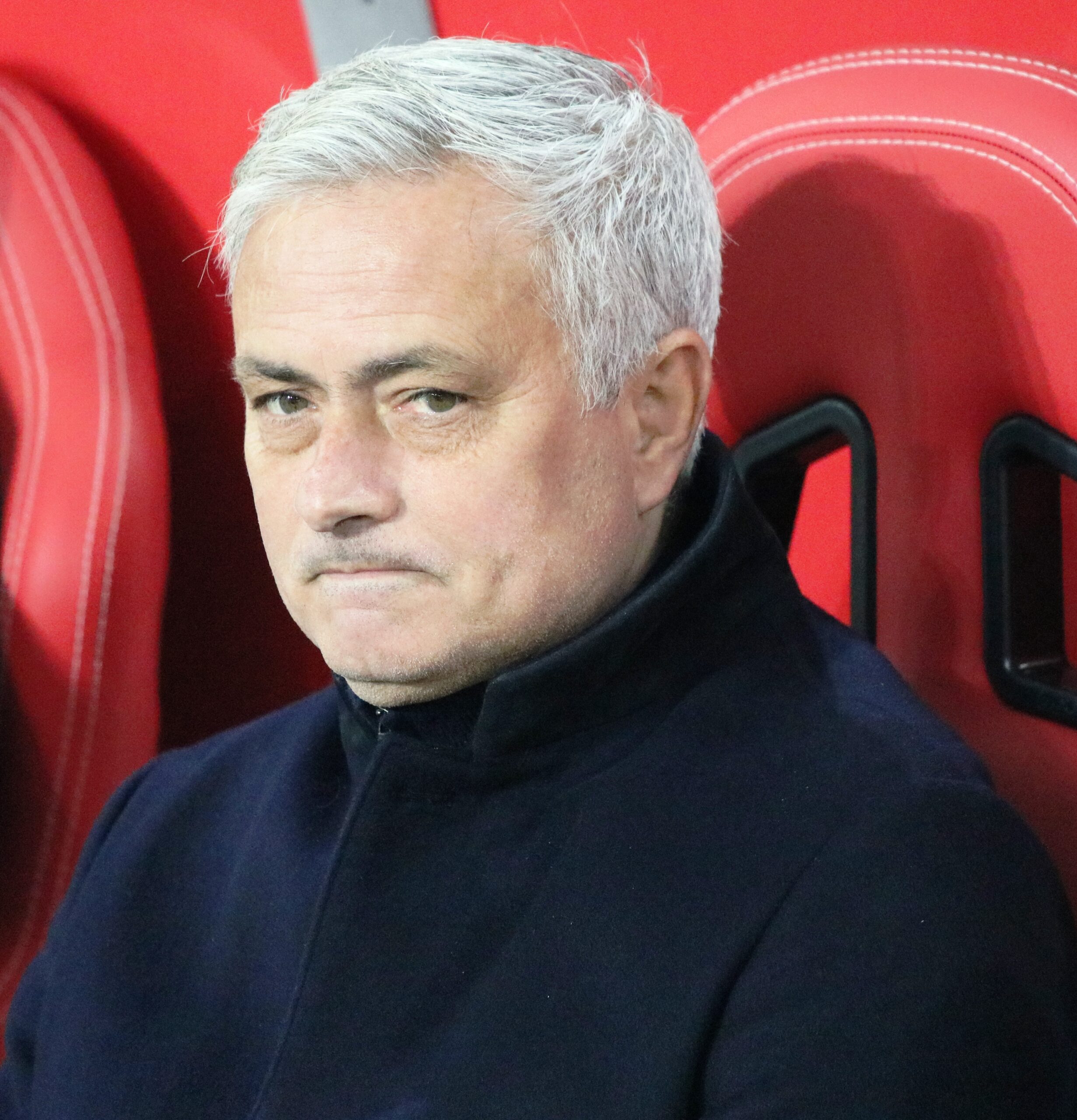
José Mourinho, a name synonymous with football excellence and controversy, has carved out a legendary career in the world of soccer. Known as “The Special One,” Mourinho’s journey from a humble beginning in Portugal to becoming one of the most successful and polarizing figures in football history is a tale of ambition, strategy, and an unwavering belief in his methods. Born on January 26, 1963, in Setúbal, Portugal, Mourinho’s life and career are filled with notable achievements, dramatic moments, and a legacy that continues to influence the football world.
Early Life and Football Aspirations
José Mário dos Santos Mourinho Félix, better known simply as José Mourinho, was born into a footballing family. His father, Félix Mourinho, was a professional goalkeeper who played for Vitória de Setúbal and Belenenses, among other clubs. Growing up in a football-centric environment, Mourinho was exposed to the beautiful game from a very young age. Despite his father’s success on the pitch, José’s early attempts to follow in his father’s footsteps as a player were met with limited success.
While he did play football during his youth, primarily as a defender, Mourinho quickly realized that his true talents lay not on the field but on the sidelines. He demonstrated an early aptitude for understanding the game’s tactical intricacies, and by his teenage years, he was already focused on becoming a football manager. His meticulous nature was evident as he began compiling detailed notes on teams, players, and strategies—habits that would later define his managerial approach.
Mourinho’s formal education also played a role in shaping his managerial philosophy. He attended the Technical University of Lisbon, where he studied sports science, combining academic knowledge with his practical experience in football. After earning his degree, he continued his education in Scotland, obtaining his coaching badges, including the UEFA Pro Licence, which qualified him to manage at the highest levels of European football.
The Rise to Fame: From Translator to “The Special One”
Mourinho’s break into top-tier football came in 1992 when he was hired as an interpreter for Bobby Robson, the legendary English coach, who was then managing Sporting CP in Portugal. Mourinho’s role was initially limited to translating Robson’s instructions and strategies for the Portuguese players, but it quickly became clear that Mourinho offered much more. His deep understanding of the game, combined with his ability to communicate complex tactical concepts, impressed Robson, and Mourinho began to take on more responsibilities, including assisting with training and tactical preparations.
When Robson moved to FC Porto and later to Barcelona, Mourinho followed, continuing to learn under Robson’s tutelage. His time at Barcelona was particularly formative, as he was exposed to the tactical brilliance of the club’s staff and the high expectations of one of the world’s biggest football clubs. After Robson left Barcelona, Mourinho stayed on, working as an assistant under Louis van Gaal, another managerial giant. This period was crucial in Mourinho’s development, as he absorbed the tactical discipline of Van Gaal and began to formulate his own unique managerial philosophy.
In 2000, Mourinho took his first major managerial role with Benfica, one of Portugal’s most storied clubs. Although his tenure was short-lived, it was during this time that Mourinho began to establish his reputation as a manager who was both tactically astute and fiercely ambitious. His next move to União de Leiria further solidified his credentials, as he led the modest club to an impressive finish in the Portuguese league.
Dominating Europe with Porto
Mourinho’s true breakthrough came when he was appointed manager of FC Porto in 2002. It was here that he would announce himself to the world as “The Special One.” In just two seasons, Mourinho transformed Porto into a European powerhouse, winning the Portuguese Primeira Liga, the Taça de Portugal (Portuguese Cup), and most notably, the UEFA Champions League in 2004. The Champions League triumph was particularly remarkable, as Porto defeated teams with far greater financial resources, showcasing Mourinho’s tactical genius and ability to motivate his players.
The Champions League victory with Porto was a testament to Mourinho’s meticulous preparation and his ability to outthink his opponents. His Porto side was known for its defensive solidity, quick counter-attacks, and an almost ruthless efficiency in front of goal. This success put Mourinho on the radar of Europe’s elite clubs, and it wasn’t long before he was lured to the English Premier League by Roman Abramovich, the billionaire owner of Chelsea FC.
The Chelsea Era: Building a Legacy
In 2004, Mourinho took over as manager of Chelsea, a club that was seeking to establish itself as a dominant force in English and European football. During his introductory press conference, Mourinho famously referred to himself as “a special one,” a moniker that would stick with him throughout his career. His confidence, bordering on arrogance, was matched by his results on the pitch. Under Mourinho, Chelsea quickly became a juggernaut, winning the Premier League title in 2005—the club’s first league title in 50 years—and then repeating the feat in 2006.
Mourinho’s Chelsea was built on a rock-solid defense, marshaled by John Terry and Ricardo Carvalho, and a midfield engine room featuring the likes of Frank Lampard and Claude Makélélé. Upfront, Didier Drogba became one of the most feared strikers in Europe under Mourinho’s guidance. Chelsea’s success was not just about winning; it was about how they won. Mourinho’s teams were often criticized for being pragmatic or even “boring,” but there was no denying their effectiveness. His ability to organize a team defensively while still allowing his attackers the freedom to express themselves made Chelsea one of the most difficult teams to beat in Europe.
During his first stint at Chelsea, Mourinho also won two League Cups and an FA Cup, but despite his domestic success, the Champions League eluded him. Tensions with the club’s hierarchy, particularly with Abramovich, began to surface, and in 2007, Mourinho left Chelsea by mutual consent. His departure was a shock, given the success he had brought to the club, but it also highlighted the pressures and expectations that come with managing at the highest level.
Triumphs and Challenges at Inter Milan
After leaving Chelsea, Mourinho took over as manager of Inter Milan in 2008. Inter was already a dominant force in Italian football, but they had struggled to translate their domestic success into European glory. Mourinho was brought in to change that, and he did so in spectacular fashion. In 2010, he led Inter to an unprecedented treble, winning Serie A, the Coppa Italia, and the UEFA Champions League. The Champions League victory was particularly sweet for Mourinho, as it came after a semi-final triumph over his former club, Barcelona.
Mourinho’s Inter was a reflection of its manager: disciplined, resilient, and tactically astute. The team’s success was built on a solid defense, with players like Javier Zanetti and Walter Samuel, and a midfield orchestrated by Wesley Sneijder. Upfront, Diego Milito was the clinical finisher that Mourinho’s system needed. The crowning achievement came in the Champions League final, where Inter defeated Bayern Munich 2-0, with Milito scoring both goals.
The 2010 treble cemented Mourinho’s status as one of the greatest managers of his generation. However, as had been the case at Chelsea, his success also brought scrutiny, and his combative personality often led to conflicts with the media, opponents, and even his own players. After the Champions League triumph, Mourinho left Inter to take over at Real Madrid, where he faced the daunting task of challenging Pep Guardiola’s all-conquering Barcelona.
The Real Madrid Years: A Battle for Supremacy
Mourinho’s tenure at Real Madrid from 2010 to 2013 was marked by a fierce rivalry with Barcelona, both on and off the pitch. Guardiola’s Barcelona was widely regarded as one of the best football teams of all time, and Mourinho’s mission was to knock them off their perch. His Madrid side was built to counter Barcelona’s possession-based style, focusing on quick transitions, physicality, and a strong defensive structure.
In 2012, Mourinho achieved one of his most significant successes at Real Madrid, winning La Liga with a record 100 points, breaking Barcelona’s dominance in Spanish football. Madrid’s title win was characterized by their relentless attacking play, with Cristiano Ronaldo, in particular, thriving under Mourinho’s management. However, despite this domestic success, the Champions League remained elusive, with Madrid suffering several heartbreaking exits in the semi-finals.
Mourinho’s time at Madrid was also marked by increasing tension and controversy. His confrontational style led to clashes with the Spanish media, opposition managers, and even his own players, including high-profile figures like Iker Casillas and Sergio Ramos. By the end of the 2012-2013 season, it was clear that Mourinho’s relationship with the club had deteriorated, and he left Madrid by mutual consent.
Return to Chelsea and Subsequent Adventures
In 2013, Mourinho made a highly publicized return to Chelsea, declaring himself “The Happy One.” His second stint at the club saw immediate success, with Chelsea winning the Premier League title again in 2015. However, the following season was disastrous, with the team struggling in the league and Mourinho eventually being sacked in December 2015 after a series of poor results and reported conflicts with players.
Mourinho’s next challenge came at Manchester United, where he was appointed manager in 2016. His time at United was mixed; he won the League Cup and the UEFA Europa League in his first season but was unable to deliver the Premier League title. His tenure at United was also marked by conflicts with players and the club’s board, and he was eventually sacked in December 2018.
In 2019, Mourinho took over at Tottenham Hotspur, with the aim of bringing silverware to a club that had not won a major trophy in over a decade. However, his time at Spurs was also fraught with challenges, and he was dismissed in April 2021, just days before the League Cup final.
The Roma Revolution
In May 2021, Mourinho returned to Italy, signing a contract to manage AS Roma. His appointment was met with excitement and skepticism in equal measure. Mourinho’s task was to restore Roma’s fortunes and challenge for trophies in a highly competitive Serie A. His tenure began with a strong start, but as with many of his previous roles, it remains to be seen whether Mourinho can sustain success and avoid the conflicts that have characterized much of his career.
Legacy and Impact
José Mourinho’s legacy in football is undeniable. He is one of the most successful managers of all time, with a trophy cabinet that includes domestic league titles in Portugal, England, Italy, and Spain, as well as two UEFA Champions League titles. His tactical innovations, particularly his use of a deep-lying defense and rapid counter-attacks, have influenced a generation of managers.
However, Mourinho’s legacy is also complex. His confrontational style, both with the media and within his own teams, has often overshadowed his achievements. Critics argue that his approach is too negative and that his teams can be overly reliant on defensive tactics. Yet, his ability to win trophies and his track record of success make him one of the most intriguing and polarizing figures in modern football.
Mourinho’s influence extends beyond the pitch. He has become a cultural icon, known for his charisma, his sharp wit, and his unshakeable self-confidence. Whether loved or loathed, José Mourinho has left an indelible mark on the world of football, and his story is far from over.


