
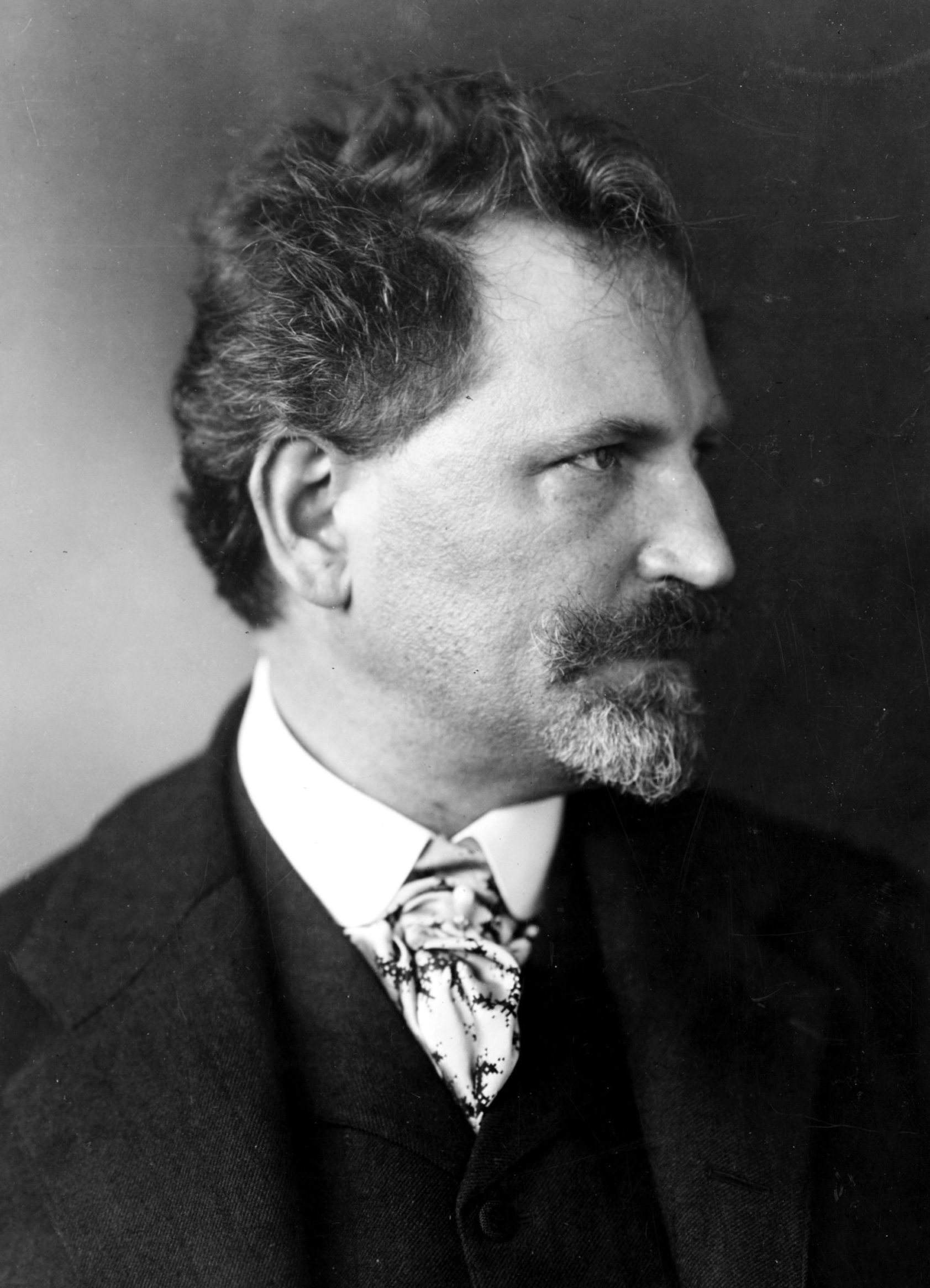
Alfons Maria Mucha, often recognized under the Frenchified name Alphonse Mucha, was born on July 24, 1860, in Ivancice, Moravia, within the Austro-Hungarian Empire. As one of the most significant artists of the Art Nouveau movement, Mucha’s work is celebrated for its distinct style and influence that extended beyond the confines of fine art into everyday life through posters, advertisements, and designs. His journey from a small town in Moravia to becoming a central figure in European art is a story of passion, resilience, and creativity. This article will explore the life of Alfons Mucha, his artistic journey, and the legacy he left behind.
Early Life and Artistic Beginnings
Alfons Mucha’s early life was marked by modest beginnings. His father was a court usher, and his family lived in relatively humble circumstances. From a young age, Mucha exhibited a strong inclination toward drawing, which he nurtured despite the family’s financial constraints. His early education was supported by his role as a choirboy, which allowed him to attend school up until high school.
Mucha’s artistic talents became more apparent as he grew older, leading him to work as a decorative painter, focusing primarily on theatrical scenery. This early work was crucial in developing his skills and understanding of large-scale compositions, which would later become a hallmark of his artistic style.
In 1879, Mucha moved to Vienna, the cultural hub of the Austro-Hungarian Empire, where he worked as a scenic artist for a prominent Viennese theater company. This experience was invaluable in honing his artistic skills and broadening his technical knowledge. However, a fire that destroyed the theater forced Mucha to return to Moravia after only a couple of years in Vienna.
Rise to Prominence in Paris
Mucha’s return to Moravia marked a period of reflection and growth. He continued to work as a portraitist and decorator, gaining the patronage of Count Karl Khuen Belasi, who recognized Mucha’s talent and commissioned him to decorate his castles in Moravia and Tyrol with frescoes. The Count’s financial support enabled Mucha to pursue formal art education, first at the Academy of Fine Arts in Munich and later in Paris, where his artistic career would truly flourish.
In Paris, Mucha enrolled at the Académie Julian and later at the Académie Colarossi, two of the most prestigious art schools in Europe. The Parisian art scene, vibrant and innovative, provided Mucha with the perfect environment to develop his style and gain exposure to the broader artistic movements of the time. It was in Paris that Mucha’s unique style, characterized by its intricate lines, flowing forms, and ethereal figures, began to take shape.
The Breakthrough: Gismonda and the Art Nouveau Movement
Alfons Mucha’s breakthrough came in 1894 when he was commissioned to create a poster for the play Gismonda, starring the famous actress Sarah Bernhardt. The poster, which featured Bernhardt in a highly stylized, elongated form surrounded by ornate patterns and delicate details, was an immediate sensation. It not only cemented Mucha’s reputation as a master of poster art but also became synonymous with the Art Nouveau movement, which was gaining popularity across Europe.
The Gismonda poster led to a six-year contract with Bernhardt, during which Mucha produced numerous iconic posters, costumes, and stage designs for her plays. His work during this period was characterized by its harmonious blend of natural forms, elaborate ornamentation, and a soft, pastel color palette. This style, which came to be known as the “Mucha Style,” became a defining feature of Art Nouveau, influencing countless artists and designers.
Expanding Influence: Decorative Panels and Commercial Art
Following the success of his theatrical posters, Mucha expanded his artistic repertoire to include decorative panels, illustrations, and commercial advertisements. In 1896, he created a series of decorative panels titled The Four Seasons, which depicted ethereal female figures personifying the seasons, surrounded by lush, symbolic imagery. These panels were hugely popular and became a template for Mucha’s later works, which often featured idealized, almost otherworldly women intertwined with natural motifs.
Mucha’s commercial work also flourished during this period. He created advertisements for a variety of products, including biscuits, champagne, and cigarettes, all of which featured his signature style. These works not only brought Mucha financial success but also helped to democratize art by bringing it into the public sphere. His ability to combine high art with commercial appeal made him one of the most influential artists of his time.
The Turn of the Century: International Recognition and Artistic Evolution
As the 19th century drew to a close, Alfons Mucha’s fame continued to grow. In 1897, 107 of his works were exhibited at the Galerie Bodiniére in Paris, and shortly thereafter, a solo exhibition at the Salon des Cent featured over 400 of his pieces. These exhibitions solidified his status as a leading figure in the Art Nouveau movement and expanded his influence beyond France.
In 1898, Mucha was initiated into the Freemasons, an organization that would play a significant role in his later life. His Masonic connections influenced much of his later work, which increasingly incorporated themes of mysticism, symbolism, and the spiritual quest for enlightenment.
In 1900, Mucha was commissioned to design the interior for the Paris jewelry store of George Fouquet, a project that allowed him to apply his Art Nouveau principles to architecture and interior design. The result was one of the most celebrated examples of Art Nouveau interior design, showcasing Mucha’s ability to translate his artistic vision into three-dimensional space.
His achievements were recognized in 1901 when he was awarded the Legion of Honor, one of France’s highest distinctions. Around this time, Mucha published Documents Décoratifs, a comprehensive manual for artists and artisans that detailed his stylistic approach and served as an influential guide for future generations of designers.
Personal Life and Return to Prague
In 1903, Alfons Mucha married Maria Chytilová, a woman who would become his lifelong partner and the mother of his two children, Jaroslava and Jiří. The couple initially settled in Paris, where Mucha continued to work on various projects, including the publication of Figures Décoratives in 1905. This collection of 40 plates depicted idealized figures in geometric compositions, further cementing Mucha’s reputation as a master of decorative art.
In 1906, Mucha and his family moved to the United States, where they lived for several years. During his time in America, Mucha sought to establish himself as a portraitist and educator. He lectured at the Art Institute of Chicago and the New York School of Applied Design for Women, among other institutions. It was also during this period that Mucha began work on his most ambitious project, The Slav Epic, a series of 20 monumental paintings depicting the history and mythology of the Slavic peoples.
The Slav Epic and National Identity
The Slav Epic became Mucha’s magnum opus, a project that consumed much of his later life. Supported by the American philanthropist Charles R. Crane, Mucha returned to Europe in 1910 to begin work on the series. Over the next 18 years, Mucha dedicated himself to this monumental task, creating a series of large-scale canvases that celebrated the cultural heritage and history of the Slavic people.
The paintings in The Slav Epic are grand in scale and vision, combining Mucha’s mastery of composition and detail with a deep sense of national pride and historical narrative. Each painting tells a story from Slavic history, ranging from ancient myths to key moments in medieval and modern history. Mucha saw this work as his legacy, a gift to his people that would inspire future generations with a sense of unity and cultural identity.
Upon its completion in 1928, The Slav Epic was presented to the city of Prague, where it was displayed as a symbol of national pride and cultural heritage. The series remains one of the most significant achievements in Czech art and is considered one of Mucha’s greatest contributions to the world of art.
Later Years and Legacy
Following the completion of The Slav Epic, Mucha continued to work on various artistic and cultural projects, though none matched the scale or ambition of his magnum opus. He was deeply involved in the cultural life of the newly independent Czechoslovakia, designing banknotes, stamps, and official documents for the young nation. His work during this period reflected his deep commitment to his homeland and his belief in the importance of art in shaping national identity.
In 1921, Mucha was honored with a solo exhibition at the Brooklyn Museum in New York, further cementing his international reputation. However, as political tensions in Europe escalated during the 1930s, Mucha’s health began to decline. The rise of Nazi Germany and the subsequent invasion of Czechoslovakia in 1939 brought tragedy to Mucha’s life. He was arrested and interrogated by the Gestapo, an ordeal that severely impacted his already fragile health.
Alfons Mucha passed away on July 14, 1939, in Prague, just weeks after his release from Gestapo custody. His death marked the end of an era in Czech art, but his legacy lived on through his works, which continue to inspire and captivate audiences around the world.
Conclusion
Alfons Mucha’s life and work stand as a testament to the power of art to transcend cultural and temporal boundaries. From his early days as a decorative painter in Moravia to his rise as a leading figure of the Art Nouveau movement in Paris, Mucha’s journey was one of relentless creativity and innovation. His ability to blend beauty with meaning, to infuse his works with a sense of national pride and identity, made him a unique and influential figure in the history of art.
Mucha’s contributions to art extended far beyond the decorative and commercial realms. His works, particularly The Slav Epic, reflect a deep commitment to the cultural and historical heritage of his people. In celebrating the past, Mucha also looked to the future, leaving behind a legacy that continues to resonate with artists, historians, and admirers of art worldwide.
Alfons Mucha’s name is synonymous with the Art Nouveau movement, but his impact goes far beyond that. He was a visionary who believed in the transformative power of art, and through his work, he sought to elevate the human spirit and enrich the cultural fabric of his time. His legacy remains a source of inspiration, reminding us of the enduring power of art to shape and reflect our world.


