
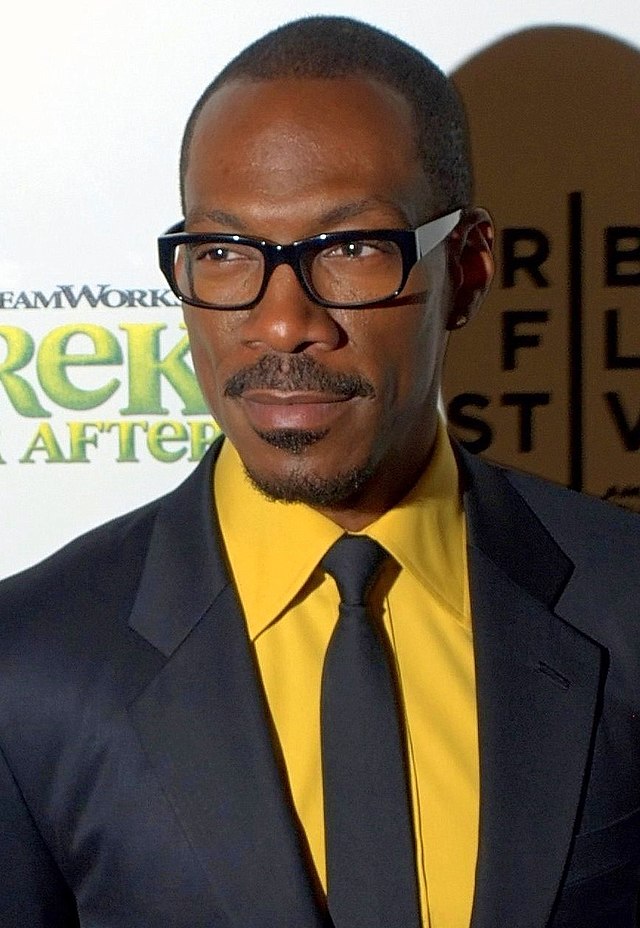
Early Life and Background
Edward Regan Murphy, known to the world as Eddie Murphy, was born on April 3, 1961, in New York City. His early life was shaped by both tragedy and inspiration. The son of Lillian, a telephone operator, and Charles Edward, a police officer who dabbled in amateur comedy, Murphy faced challenges from a young age. His father passed away when Eddie was still a child, and his mother struggled with illness. These hardships, however, did not deter Murphy; instead, they became a crucible that forged his comedic talents.
Growing up in Brooklyn, Eddie Murphy developed a keen sense of humor as a coping mechanism and a way to stand out. By the age of 15, he was already writing and performing his sketches, showcasing a natural talent that would soon capture the attention of the entertainment world.
Breakthrough in the 1980s
The 1980s were a pivotal decade for Eddie Murphy. His early career was marked by a meteoric rise in the world of stand-up comedy. His first special, “Eddie Murphy,” released in 1982, was followed by the iconic “Delirious” in 1983. These performances solidified his reputation as a comedic powerhouse, leading to his breakthrough on television.
Murphy’s big break came when he joined the cast of “Saturday Night Live” (SNL) in 1980. His time on SNL was transformative, as he quickly became one of the show’s most popular and influential cast members. His characters, such as Buckwheat, Gumby, and Mr. Robinson, became cultural touchstones, and his presence helped revive the show during a challenging period.
The success on SNL paved the way for Murphy’s transition to the big screen. In 1982, he made his film debut alongside Nick Nolte in the action-comedy “48 Hrs.” The film was a commercial success and showcased Murphy’s ability to balance humor with action, setting the stage for his future as a leading man in Hollywood.
Rise to Superstardom: Iconic Roles and Box Office Hits
Eddie Murphy’s ascent to superstardom was swift. Following the success of “48 Hrs.,” he starred in “Trading Places” (1983) alongside Dan Aykroyd. The film, directed by John Landis, was another hit, demonstrating Murphy’s versatility as a comedic actor and further cementing his status in Hollywood.
However, it was “Beverly Hills Cop” (1984) that truly catapulted Murphy to the pinnacle of fame. Playing the role of Axel Foley, a street-smart Detroit cop who finds himself in Beverly Hills, Murphy delivered a performance that was both hilarious and action-packed. The film was a massive success, grossing over $230 million worldwide and becoming one of the highest-grossing films of the decade. “Beverly Hills Cop” not only made Murphy a household name but also established him as a box office draw.
Murphy continued to build on this success with films like “The Golden Child” (1986) and “Beverly Hills Cop II” (1987). His ability to infuse humor into a variety of roles made him a sought-after actor in the industry. In 1988, he teamed up again with John Landis for “Coming to America,” where he played multiple characters, a trend that would become a hallmark of his career. The film was both a critical and commercial success and remains one of Murphy’s most beloved works.
The 1990s: Reinvention and Continued Success
The 1990s saw Eddie Murphy continue to dominate the comedy scene while also exploring new avenues in his career. He kicked off the decade with “Another 48 Hrs.” (1990), reprising his role from the earlier film. This was followed by “The Distinguished Gentleman” (1992) and “Boomerang” (1992), where he demonstrated his ability to balance comedy with more serious, romantic themes.
Murphy’s directorial debut came in 1989 with “Harlem Nights,” a film he also wrote and starred in. While the film received mixed reviews, it showcased Murphy’s ambition to take on multiple roles in the creative process.
In 1996, Murphy starred in “The Nutty Professor,” a remake of the 1963 Jerry Lewis film. The movie was a hit, with Murphy playing multiple roles, including the lead character, Sherman Klump, and various members of Klump’s family. This performance not only highlighted Murphy’s comedic genius but also his skill in physical comedy and character transformation. “The Nutty Professor” was a box office success and solidified Murphy’s place as one of the top comedic actors of the era.
The late 1990s saw Murphy take on family-friendly roles, such as in “Dr. Dolittle” (1998) and its sequel, “Dr. Dolittle 2” (2001). These films introduced Murphy to a new generation of fans and showcased his versatility as an actor capable of appealing to audiences of all ages.
The 2000s: Voice Work and a Return to the Spotlight
The 2000s marked a new chapter in Eddie Murphy’s career. While he continued to act in live-action films, it was his voice work that brought him significant acclaim. In 2001, Murphy lent his voice to the character of Donkey in the animated film “Shrek.” The film was a massive success, spawning a franchise and introducing Murphy to a global audience. His portrayal of Donkey was praised for its humor and energy, making the character one of the most beloved in the series.
Murphy continued to work steadily throughout the decade, appearing in films like “The Haunted Mansion” (2003) and “Daddy Day Care” (2003). However, it was his role in “Dreamgirls” (2006) that marked a significant comeback. Playing the role of James “Thunder” Early, a soul singer whose career is on the decline, Murphy delivered a performance that was both powerful and poignant. The role earned him critical acclaim and numerous awards, including a Golden Globe and an Academy Award nomination for Best Supporting Actor.
Personal Life and Controversies
Eddie Murphy’s personal life has been as dynamic as his career. He married Nicole Mitchell in 1993, and the couple had five children together before divorcing in 2006. Murphy’s relationships and personal choices have often made headlines, including his brief marriage to producer Tracey Edmonds in 2008 and his relationship with former Spice Girl Melanie Brown, with whom he has a daughter.
Murphy has also faced controversies throughout his career, including run-ins with the law and public disputes with other celebrities. Despite these challenges, he has remained a resilient figure in the entertainment industry, continuously reinventing himself and adapting to changing trends.
Legacy and Impact
Eddie Murphy’s impact on the entertainment industry is undeniable. As one of the most successful comedians and actors of his generation, Murphy has paved the way for future African American comedians and actors. His ability to cross genres and appeal to a wide range of audiences has made him a beloved figure in Hollywood.
Murphy’s influence extends beyond his films and television work. He has inspired countless comedians with his fearless approach to comedy and his willingness to tackle difficult and often controversial subjects. His legacy is evident in the work of comedians like Chris Rock, Kevin Hart, and Dave Chappelle, all of whom have cited Murphy as an influence.
Recent Projects and Future Endeavors
In recent years, Eddie Murphy has made a successful return to the spotlight. In 2019, he starred in “Dolemite Is My Name,” a biographical film about filmmaker Rudy Ray Moore. The film was well-received, earning Murphy praise for his portrayal of Moore and revitalizing his career.
Murphy also returned to one of his most famous roles in “Coming 2 America,” the 2021 sequel to the 1988 classic. The film was a hit with audiences and demonstrated that Murphy’s comedic timing and charm remain as sharp as ever.
Looking ahead, Eddie Murphy continues to explore new projects, both in front of and behind the camera. With a career spanning over four decades, Murphy’s influence on comedy and film is likely to endure for many years to come.
Conclusion
Eddie Murphy’s journey from a young boy in Brooklyn to a Hollywood superstar is a testament to his talent, resilience, and ability to adapt to the ever-changing landscape of the entertainment industry. With a legacy that spans television, film, and voice work, Murphy has left an indelible mark on popular culture. As he continues to entertain audiences with his unique blend of humor and heart, Eddie Murphy remains a true icon of American cinema.


