
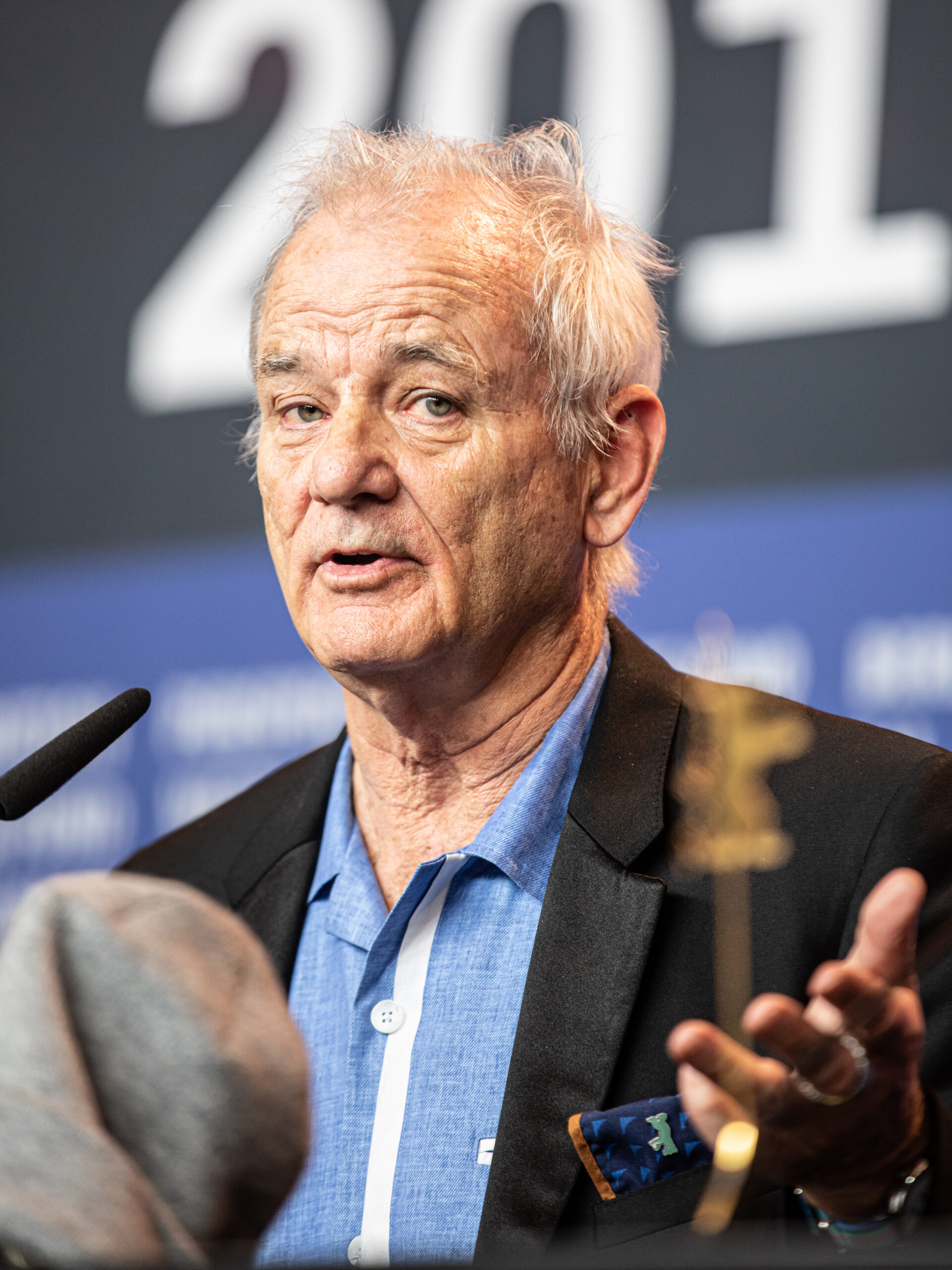
Bill Murray, born William James Murray on September 21, 1950, in Wilmette, Illinois, is a legendary figure in the entertainment industry, known for his distinctive comedic style, his ability to seamlessly transition between humor and drama, and his unique off-screen persona. Over the course of a career spanning more than four decades, Murray has become one of Hollywood’s most beloved and respected actors. His journey from a young man with a passion for comedy to an international film icon is a story of talent, resilience, and a bit of serendipity.
Early Life and Family Background
Bill Murray was born into a large Irish-American family as the fifth of nine children. Growing up in a bustling household, he developed a quick wit and a love for storytelling, both of which would serve him well in his future career. His father, Edward Joseph Murray II, worked as a lumber salesman, and his mother, Lucille Collins, was a homemaker. The family faced financial challenges, and young Bill often took on odd jobs, including working as a caddy, to help make ends meet.
Murray’s childhood was marked by a mixture of joy and hardship. He was fascinated by the stories of Western heroes like Davy Crockett and Kit Carson, and he enjoyed entertaining his siblings with his antics. However, the family also faced significant difficulties, including the death of Murray’s father when Bill was just 17 years old and a sibling’s battle with polio. These experiences shaped Murray’s outlook on life, instilling in him a sense of resilience and a penchant for humor as a coping mechanism.
Education and Early Struggles
After graduating from Loyola Academy, a Jesuit high school in Wilmette, Murray briefly attended Regis University in Denver, Colorado, with the intention of becoming a paramedic. However, his college career was cut short when he was expelled after being caught with marijuana at Chicago’s O’Hare Airport. This incident marked a turning point in Murray’s life, as he decided to abandon his academic pursuits and focus on finding his way in the world, which eventually led him to comedy.
Returning to the Chicago area, Murray began working various odd jobs, including as a pizza delivery driver for Little Caesar’s. However, it was his involvement in the local theater scene that would set the stage for his future success. Encouraged by his older brother, Brian Doyle-Murray, who was already making a name for himself in comedy, Bill joined the Second City Chicago improv troupe. It was here that he honed his comedic skills and developed his unique style of humor, characterized by deadpan delivery, sharp wit, and an ability to find humor in the absurd.
Breakthrough with “Saturday Night Live”
Murray’s big break came in 1976 when he joined the cast of NBC’s “Saturday Night Live” (SNL), replacing Chevy Chase. Although his initial reception was lukewarm, Murray quickly won over audiences with his memorable characters, including the awkward nerd Todd and the eccentric lounge singer Nick. His ability to blend improvisation with scripted comedy made him a standout performer, and his time on SNL established him as a major comedic talent.
During his tenure on SNL, Murray developed close relationships with fellow comedians John Belushi and Gilda Radner. His chemistry with Belushi, in particular, was palpable, and the two would go on to collaborate on several projects. SNL not only provided Murray with a platform to showcase his talent but also served as a launching pad for his film career.
Transition to Film: Early Successes
Murray made his film debut in 1979 with the comedy “Meatballs,” directed by Ivan Reitman. The film, set in a summer camp, was a surprise hit and showcased Murray’s ability to carry a film with his improvisational humor and natural charisma. His next major role came in the 1980 sports comedy “Caddyshack,” where he played Carl Spackler, a dim-witted groundskeeper. The film was a commercial success and has since become a cult classic, with Murray’s performance being one of the highlights.
Murray continued to build his film career with roles in “Stripes” (1981) and “Tootsie” (1982), where he demonstrated his range by taking on supporting roles that allowed him to showcase both his comedic and dramatic talents. In “Tootsie,” although his role was secondary, Murray’s performance was praised for its depth and subtle humor, further cementing his reputation as a versatile actor.
The Iconic “Ghostbusters” and Global Fame
In 1984, Murray starred in what would become one of the defining films of his career, “Ghostbusters.” Directed by Ivan Reitman and co-written by Dan Aykroyd and Harold Ramis, “Ghostbusters” was a supernatural comedy about a group of scientists who start a ghost-hunting business in New York City. Murray played Dr. Peter Venkman, a sarcastic and wisecracking parapsychologist who provides much of the film’s humor.
“Ghostbusters” was a massive commercial success, grossing over $295 million worldwide and becoming one of the highest-grossing films of the 1980s. Murray’s performance was a major factor in the film’s success, and his portrayal of Venkman became iconic. The film’s success catapulted Murray to international fame and solidified his status as one of Hollywood’s leading comedic actors.
Following the success of “Ghostbusters,” Murray attempted to branch out into more serious roles. He co-wrote and starred in “The Razor’s Edge” (1984), a drama based on W. Somerset Maugham’s novel. However, the film was a commercial and critical failure, leading Murray to take a hiatus from acting. Disillusioned with Hollywood, he moved to Paris and enrolled in courses at the Sorbonne, seeking a change of pace and a chance to reflect on his career.
Return to Comedy and Continued Success
Murray returned to the big screen in 1988 with the comedy “Scrooged,” a modern take on Charles Dickens’s “A Christmas Carol.” The film was well-received, and Murray’s portrayal of the cynical television executive Frank Cross showcased his ability to balance humor with darker, more complex character traits. This film marked the beginning of Murray’s return to mainstream success.
In 1989, Murray reprised his role as Peter Venkman in “Ghostbusters II.” While the sequel did not achieve the same level of acclaim as the original, it was still a commercial success, and Murray’s performance was once again a highlight. Around this time, Murray began to take on roles that allowed him to explore more dramatic themes, such as “Quick Change” (1990), which he co-directed and starred in, and “Groundhog Day” (1993), a film that has since become one of his most beloved works.
“Groundhog Day,” directed by Harold Ramis, is a dark comedy about a cynical weatherman who finds himself reliving the same day over and over again. The film was a critical and commercial success, and Murray’s performance was praised for its depth and nuance. The film has since become a cultural touchstone, and Murray’s portrayal of Phil Connors is considered one of his best performances.
A New Direction: Collaboration with Wes Anderson
As the 1990s came to a close, Murray began to collaborate with director Wes Anderson, a partnership that would redefine his career. Their first collaboration was “Rushmore” (1998), in which Murray played Herman Blume, a disillusioned industrialist who forms an unlikely friendship with a precocious teenager. The film was a critical success, and Murray’s performance earned him widespread acclaim, including a Golden Globe nomination.
Murray’s work with Anderson marked a shift in his career, as he began to take on more understated and nuanced roles. Anderson’s films, known for their quirky characters and meticulous visual style, provided Murray with the opportunity to explore different facets of his acting abilities. Their subsequent collaborations, including “The Royal Tenenbaums” (2001), “The Life Aquatic with Steve Zissou” (2004), and “The Darjeeling Limited” (2007), further cemented Murray’s reputation as a versatile and skilled actor.
Critical Acclaim with “Lost in Translation”
One of the most significant moments in Murray’s career came in 2003 with the release of “Lost in Translation,” directed by Sofia Coppola. In the film, Murray plays Bob Harris, an aging movie star who forms a deep connection with a young woman, played by Scarlett Johansson, while staying at a hotel in Tokyo. The film was a critical and commercial success, and Murray’s performance was widely praised for its sensitivity and depth.
“Lost in Translation” earned Murray several awards, including a Golden Globe and a BAFTA, and he received his first Academy Award nomination for Best Actor. The film marked a turning point in Murray’s career, as he was finally recognized not just as a comedic actor but as a serious and talented performer capable of delivering powerful dramatic performances.
Later Career and Legacy
In the years following “Lost in Translation,” Murray continued to work in both comedy and drama, taking on roles in a variety of films, including “Broken Flowers” (2005), “Get Low” (2009), and “Hyde Park on Hudson” (2012). He also continued his collaborations with Wes Anderson, appearing in films like “Moonrise Kingdom” (2012) and “The Grand Budapest Hotel” (2014).
Murray’s off-screen persona has also contributed to his enduring popularity. Known for his unpredictable behavior, he has developed a reputation as a larger-than-life character who is just as likely to crash a wedding or bartend at a random party as he is to appear on screen. This sense of spontaneity and unpredictability has endeared him to fans and has become a key part of his public image.
Murray’s contributions to film and comedy have been widely recognized. He received the Mark Twain Prize for American Humor in 2016, one of the highest honors in comedy, and his work continues to inspire and entertain audiences around the world. His ability to navigate both comedic and dramatic roles with ease has made him a unique and beloved figure in Hollywood.
Conclusion: A Legend in Comedy and Film
Bill Murray’s career is a testament to his versatility, talent, and enduring appeal. From his early days on “Saturday Night Live” to his iconic roles in films like “Ghostbusters” and “Lost in Translation,” Murray has consistently demonstrated his ability to entertain and move audiences. His collaborations with directors like Wes Anderson and Sofia Coppola have further solidified his status as a respected actor capable of delivering both comedic and dramatic performances.
Murray’s influence extends beyond the screen. His unconventional approach to life and career has made him a cultural icon, and his legacy as one of Hollywood’s most beloved actors is firmly established. Whether making us laugh with his sharp wit or touching our hearts with his nuanced performances, Bill Murray has left an indelible mark on the world of film and entertainment.


