
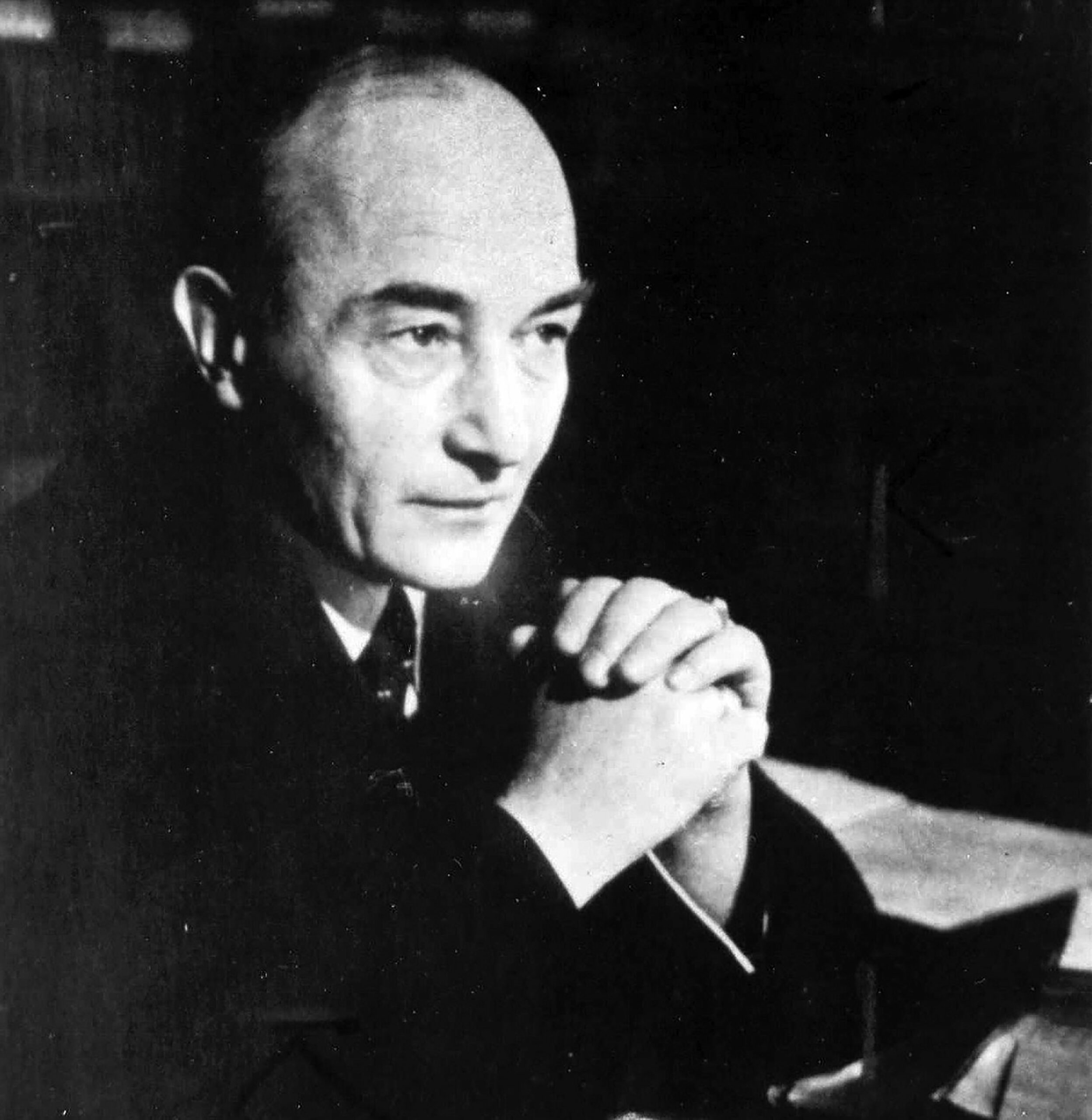
Robert Musil, a seminal figure in early 20th-century literature, is best known for his monumental, unfinished novel The Man Without Qualities. Born on November 6, 1880, in Klagenfurt, Austria, Musil’s life was characterized by a relentless pursuit of intellectual and artistic exploration. His work, which spans novels, essays, and plays, reflects his deep engagement with the philosophical and cultural crises of his time. Musil’s life and literary output provide valuable insights into the complexities of modernity, the nature of human consciousness, and the existential dilemmas of his era.
Early Life and Education: Foundations of a Literary Mind
Robert Musil was born into a family steeped in the traditions of the Austro-Hungarian Empire. His father, Alfred Edler von Musil, was a professor of mechanical engineering, and his mother, Hermine Bergauer, was of bourgeois descent. Musil’s early education took place in various cities, including Steyr and Brno, before he was sent to the military academy in Eisenstadt. The rigid discipline of military life, however, did not suit Musil, who was more inclined towards intellectual pursuits.
In 1897, Musil began his studies at the military academy in Vienna, where he trained as an artillery officer. Yet, the young Musil soon realized that his true interests lay elsewhere. He left the military to study engineering at the Technical University in Brno, where he was introduced to the works of philosophers and writers who would deeply influence his thinking. Among them were Friedrich Nietzsche, Maurice Maeterlinck, and Gabriele D’Annunzio, whose ideas about individualism, the irrational, and the aesthetic life resonated with Musil’s own intellectual inclinations.
By the early 1900s, Musil had completed his engineering studies but found himself increasingly drawn to literature and philosophy. He enrolled at the University of Berlin, where he studied mathematics, psychology, and philosophy, eventually earning a doctorate in philosophy with a dissertation on the epistemology of Ernst Mach. This period of intense intellectual activity laid the groundwork for Musil’s later literary endeavors, particularly his exploration of the limits of rational thought and the complexities of human perception.
The Transition to Literature: A New Path
Despite his academic success, Musil chose to abandon a conventional career in academia in favor of writing. His first novel, The Confusions of Young Törless (1906), is a semi-autobiographical work that explores the psychological turmoil of a young cadet at a military boarding school. The novel’s themes of sexual awakening, sadism, and the search for identity reflect Musil’s interest in the darker aspects of human nature and the inadequacies of conventional moral and educational systems.
The Confusions of Young Törless was well-received, establishing Musil as a significant new voice in German-language literature. Encouraged by this success, Musil decided to dedicate himself fully to writing. He moved to Berlin, where he became involved in the city’s vibrant literary scene, contributing essays, reviews, and short stories to various publications. During this time, Musil also began working on his magnum opus, The Man Without Qualities, a novel that would occupy him for the rest of his life.
Personal Life and Literary Career: A Complex Journey
In 1911, Musil married Martha Marcovaldi, a widow with two children. Their marriage was marked by mutual respect and intellectual companionship, though Musil’s financial difficulties often strained their relationship. Musil’s literary career during the early years of his marriage was a mix of modest success and constant struggle. He published several short stories and novellas, including Unions (1911), a collection that explored themes of love, betrayal, and the quest for meaning in a rapidly changing world.
However, Musil’s financial situation remained precarious, and he was forced to take on various jobs to support himself and his family. He worked as a librarian, an editor, and even as a civil servant in the Austrian Ministry of Foreign Affairs. These experiences, though not fulfilling, provided Musil with a broader perspective on the social and political dynamics of his time, which he would later incorporate into his literary work.
World War I: A Turning Point
The outbreak of World War I in 1914 marked a significant turning point in Musil’s life. Like many of his contemporaries, Musil was initially caught up in the nationalist fervor that swept across Europe. He served as an officer in the Austro-Hungarian Army, stationed on the Italian front. The war had a profound impact on Musil, deepening his sense of disillusionment with the values and institutions of the old order.
Musil’s experiences during the war, including the senseless violence and the bureaucratic incompetence he witnessed, reinforced his belief in the inadequacy of traditional moral and philosophical systems. These experiences also fueled his desire to explore new forms of expression that could more accurately capture the complexities of modern life. After the war, Musil returned to Vienna, where he resumed work on The Man Without Qualities.
The Man Without Qualities: A Literary Masterpiece
The Man Without Qualities is widely regarded as one of the greatest novels of the 20th century, despite its unfinished state. The novel, set in Vienna on the eve of World War I, is a vast, encyclopedic exploration of the intellectual, social, and political currents of the time. At its center is Ulrich, a disaffected intellectual who, like Musil himself, is searching for meaning in a world that seems increasingly fragmented and absurd.
The novel is a reflection of Musil’s own ambivalence towards modernity. On one hand, Musil was fascinated by the possibilities of scientific and technological progress; on the other, he was deeply skeptical of the dehumanizing effects of rationalism and bureaucracy. Through the character of Ulrich, Musil explores the tension between reason and emotion, order and chaos, individualism and collectivism.
Musil worked on The Man Without Qualities for over two decades, but he was never able to complete it. The novel’s unfinished state reflects the very uncertainty and ambiguity that it seeks to portray. Despite its incomplete form, The Man Without Qualities has had a profound influence on modern literature, inspiring writers such as Thomas Mann, Milan Kundera, and J.M. Coetzee.
Later Life: Struggles and Exile
The rise of Nazism in Germany and the subsequent annexation of Austria in 1938 forced Musil and his wife to flee to Switzerland. The last years of Musil’s life were marked by increasing financial difficulties, poor health, and a sense of isolation. Despite these challenges, Musil continued to work on The Man Without Qualities, as well as on various essays and aphorisms.
In 1936, Musil published Posthumous Papers of a Living Author, a collection of essays and short stories that further explored the themes of identity, art, and the nature of reality. In his famous 1937 essay, “On Stupidity,” Musil provided a scathing critique of the intellectual and moral complacency that he believed was contributing to the rise of totalitarianism in Europe.
Musil’s health deteriorated rapidly in the early 1940s. He suffered a stroke in 1942 and died on April 15 of that year in Geneva, Switzerland. His death went largely unnoticed at the time, and it was only after World War II that his work began to receive the recognition it deserved. Today, Robert Musil is considered one of the most important and innovative writers of the 20th century, a pioneer in the exploration of the modern human condition.
The Legacy of Robert Musil: A Complex Influence
Robert Musil’s legacy is a testament to the power of literature to grapple with the most profound questions of human existence. His work challenges readers to confront the ambiguities and contradictions of modern life, to question the assumptions that underlie our understanding of reality, and to explore new ways of thinking and being in the world.
Musil’s influence extends beyond literature into philosophy, psychology, and cultural studies. His exploration of the limits of reason, the nature of consciousness, and the dynamics of power and authority continue to resonate with scholars and thinkers across disciplines. In many ways, Musil’s work anticipates the concerns of postmodernism, particularly its emphasis on the instability of meaning and the fluidity of identity.
Conclusion
Robert Musil’s life and work are a reflection of the turbulent times in which he lived. From the intellectual ferment of fin-de-siècle Vienna to the horrors of World War I and the rise of totalitarianism, Musil bore witness to some of the most significant events of the 20th century. His writing, characterized by its intellectual rigor, stylistic innovation, and deep humanism, offers a unique perspective on the challenges of modernity.
Although he did not achieve widespread fame during his lifetime, Musil’s work has gained a devoted following in the decades since his death. The Man Without Qualities remains a cornerstone of modern literature, a work that continues to inspire and challenge readers with its profound insights into the nature of the human condition.


