
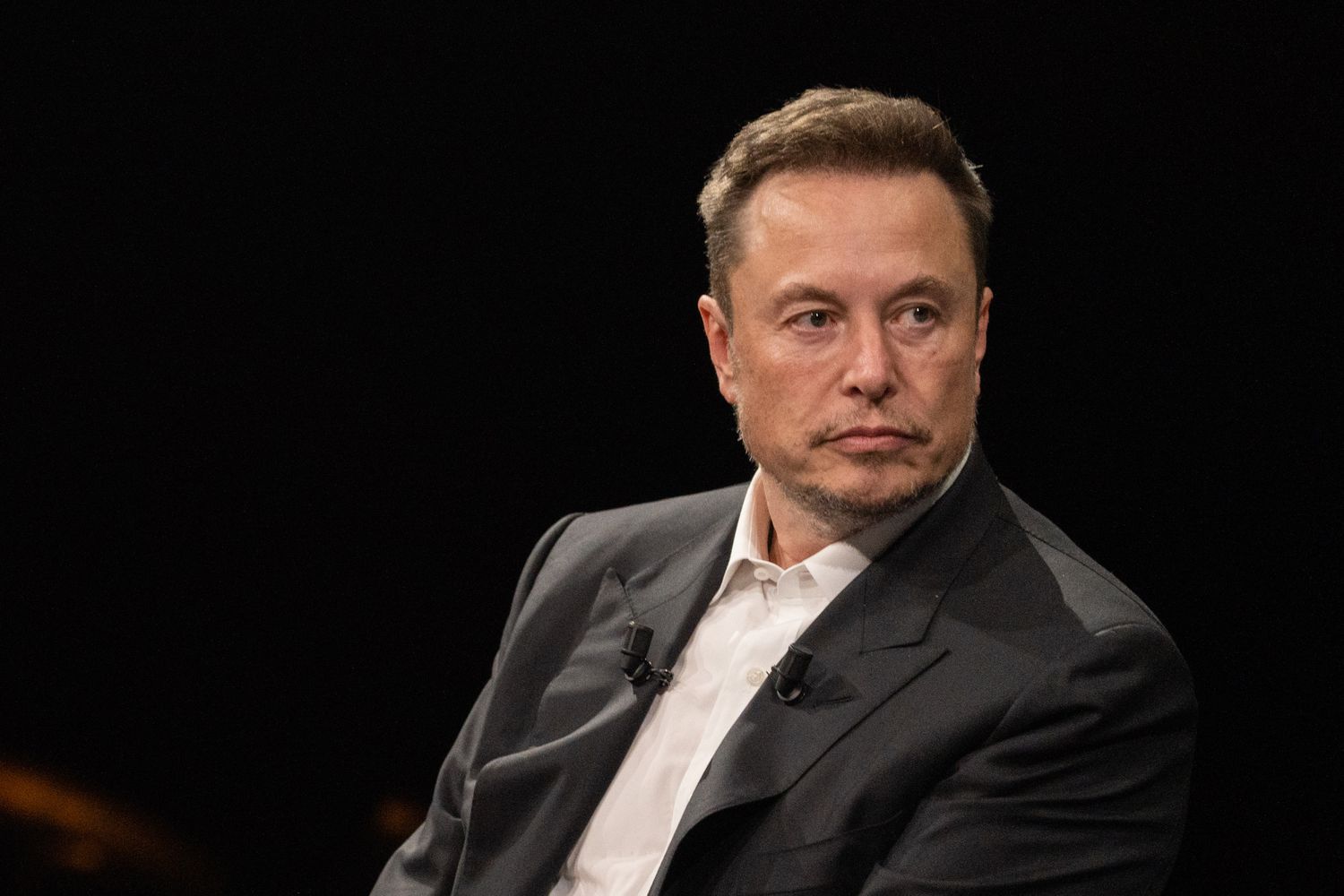
Elon Musk is a name that resonates across the globe, synonymous with innovation, ambition, and a relentless pursuit of the future. Born on June 28, 1971, in Pretoria, South Africa, Musk has become one of the most influential figures in technology and business, shaping the 21st century in ways few could have imagined. This article delves into Musk’s life, exploring his age, the journey to fame, and the key highlights that have marked his extraordinary life.
Early Life and Education: The Making of a Visionary
Elon Reeve Musk was born to an electromechanical engineer, Errol Musk, and a Canadian model and dietitian, Maye Musk. His early life in South Africa was marked by a keen interest in computers and programming. By the age of 12, Musk had already demonstrated his entrepreneurial spirit, selling the code for a video game he created for $500. Despite his early achievements, Musk’s childhood was not without its challenges. He faced bullying, which once left him hospitalized after being attacked and thrown down the stairs by a group of boys.
Musk attended the Waterkloof House Preparatory School before enrolling at Pretoria Boys High School, where he completed his high school education. In June 1989, at the age of 18, Musk moved to Canada, taking advantage of his mother’s Canadian citizenship. He enrolled at Queen’s University in Ontario but later transferred to the University of Pennsylvania. There, he earned two bachelor’s degrees, one in physics and another in economics from the Wharton School of Business. His education laid the groundwork for his future ventures, combining a deep understanding of physics with business acumen.
The 1990s: Early Ventures and Entrepreneurial Beginnings
The 1990s were a pivotal decade for Musk, as he began his journey as an entrepreneur. After briefly attending Stanford University for a Ph.D. in materials science and applied physics, Musk dropped out just two days later, driven by a desire to make a real-world impact rather than remain in academia.
In 1995, Musk co-founded Zip2, a company that provided online city guide software for newspapers. The company was sold to Compaq’s AltaVista division in 1999 for $307 million, giving Musk his first major financial success. This windfall allowed him to start X.com, an online payment company, in 1999. X.com later became PayPal after a merger with Confinity, and it was eventually sold to eBay in 2002 for $1.5 billion in stock. These ventures not only solidified Musk’s reputation as a savvy entrepreneur but also provided him with the capital to pursue more ambitious projects.
The 2000s: SpaceX, Tesla, and SolarCity
The 2000s were transformative for Musk, as he established himself as a key player in the technology and space industries. In 2002, Musk founded SpaceX (Space Exploration Technologies Corp.), aiming to reduce the cost of space travel and ultimately make life multi-planetary by colonizing Mars. Musk’s vision for SpaceX was clear: to revolutionize space technology and bring humanity closer to becoming a multi-planetary species. SpaceX made significant strides in achieving this goal, including the successful launch and docking of the Dragon spacecraft with the International Space Station in 2012, a first for a privately-funded company.
In 2004, Musk joined Tesla Motors, an electric car company founded by Martin Eberhard and Marc Tarpenning, as chairman of the board. After a financial crisis in 2008, Musk became the CEO and product architect of Tesla. Under his leadership, Tesla introduced the Roadster, the first all-electric sports car, which sold around 2,500 units in over 30 countries. Tesla’s success didn’t stop there; the company went on to produce several groundbreaking vehicles, including the Model S, Model X, and Model 3, helping to accelerate the world’s transition to sustainable energy.
In 2006, Musk co-founded SolarCity, a solar energy services company, with his cousins Lyndon and Peter Rive. SolarCity quickly became the largest provider of solar energy services in the United States, furthering Musk’s commitment to sustainability and renewable energy.
The 2010s: Achievements and Global Impact
The 2010s were marked by Musk’s growing influence and the expansion of his ventures. SpaceX continued to break new ground with the development of the Falcon and Starship rockets. In 2015, SpaceX successfully landed the first stage of its Falcon 9 rocket back on Earth, a key milestone in reducing the cost of space exploration. The following year, SpaceX began reusing these rockets, further decreasing the cost of space missions and setting the stage for future missions to Mars.
Tesla, under Musk’s leadership, continued to push the boundaries of electric vehicle (EV) technology. The company introduced the Model S in 2012, which became the best-selling plug-in electric car worldwide in 2015 and 2016. Tesla’s innovations in battery technology, software, and autonomous driving have had a profound impact on the automotive industry, prompting major car manufacturers to accelerate their EV development programs.
Musk’s ventures also extended into artificial intelligence and neuroscience. In 2015, he co-founded OpenAI, a research company focused on developing and promoting friendly AI. Musk’s involvement in AI stems from his concern about the potential dangers of unregulated AI development. OpenAI aims to ensure that artificial general intelligence (AGI) benefits all of humanity.
In 2016, Musk founded Neuralink, a neurotechnology company developing implantable brain–machine interfaces (BMIs). Neuralink’s goal is to merge the human brain with AI, allowing humans to keep pace with rapidly advancing artificial intelligence. This could have profound implications for treating neurological disorders and enhancing human cognitive abilities.
Musk’s entrepreneurial success has not gone unnoticed. In 2016, Forbes ranked him 21st on its list of the world’s most powerful people. By 2018, with a net worth of nearly $21 billion, Musk was listed by Forbes as the 53rd richest person in the world.
The 2020s: The Billionaire and Twitter
The 2020s have continued to be a period of growth and controversy for Musk. In April 2022, Musk became the largest shareholder of Twitter, purchasing 9.2% of the company’s shares for around $3 billion. His involvement with Twitter sparked widespread speculation, particularly after he made a $43 billion offer to acquire the entire company. This move was highly publicized, especially after Musk accused Twitter of underreporting the number of fake accounts on the platform, leading to a temporary halt in the acquisition process. Despite the challenges, the deal was eventually finalized in October 2022 for approximately $44 billion.
As of September 2022, according to Forbes, Elon Musk’s net worth was estimated at $277.1 billion, making him the richest person in the world. His wealth, however, is not just a reflection of his success; it also symbolizes his influence and the significant impact his companies have on the global economy and future technologies.
Personal Life and Public Image
Elon Musk’s personal life has often been the subject of media attention. He has been married three times, twice to British actress Talulah Riley, and has seven children. Musk’s relationships and family life have been scrutinized by the public, particularly his brief relationship with actress Amber Heard and his ongoing relationship with Canadian musician Grimes, with whom he shares two children.
Despite his enormous wealth and success, Musk’s personal life is marked by challenges and complexities. He has openly discussed his struggles with work-life balance, the pressure of managing multiple companies, and the impact of these responsibilities on his personal relationships. Musk’s intense work ethic and high expectations for himself and others have also been well documented, often leading to public controversies and disputes with employees, investors, and the media.
Musk’s public image is that of a relentless innovator and a visionary, but it is also one of a polarizing figure. His outspoken nature on social media, particularly on Twitter, has led to numerous legal battles and controversies, including a high-profile defamation lawsuit in 2019, which he won. Musk’s tweets often make headlines, whether for their humor, bold predictions, or market-moving implications.
The Legacy of Elon Musk
Elon Musk’s legacy is still being written, but his impact on technology, business, and society is undeniable. He has redefined what is possible in industries ranging from automotive to space exploration to energy production. His vision for the future, where humanity becomes a multi-planetary species and shifts to sustainable energy, is both ambitious and inspiring.
Musk’s work with SpaceX, Tesla, SolarCity, OpenAI, and Neuralink has not only disrupted traditional industries but has also set new standards for innovation and progress. His ability to envision the future and then build it has made him a central figure in the 21st century, a symbol of what is possible when ambition meets opportunity.
As we look to the future, Elon Musk’s influence will likely continue to grow. Whether through new ventures or the continued success of his existing companies, Musk is poised to remain at the forefront of technological advancement. His journey from a young boy in South Africa to the richest person in the world is a testament to the power of vision, perseverance, and the relentless pursuit of a better future.


