
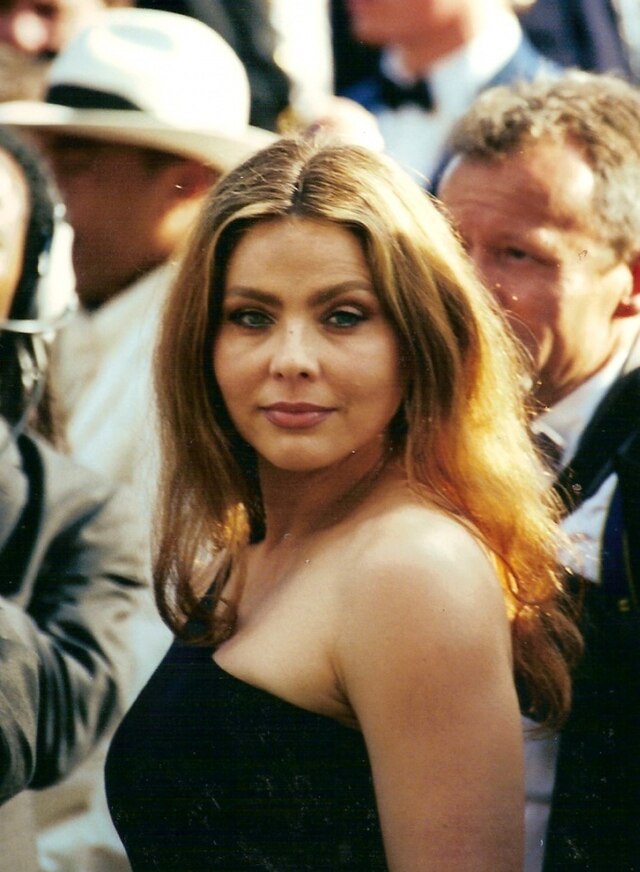
Ornella Muti, born Francesca Romana Rivelli on March 9, 1955, in Rome, Italy, is a name synonymous with Italian cinema. Her illustrious career, spanning over five decades, has made her one of the most celebrated actresses in the world. This article will explore the life, fame, and significant milestones of Ornella Muti, delving into her early years, rise to stardom, and the lasting impact she has had on the film industry. Additionally, we will analyze her influence on Italian cinema, her international ventures, and the cultural significance of her work.
Early Life and Background
Ornella Muti was born into a culturally rich environment, which significantly influenced her career. Her father was a Neapolitan journalist, and her mother, originally from Ukraine, was a sculptor. Growing up in such an environment, young Francesca was exposed to the arts from an early age, which set the stage for her future in acting. She was not alone in her artistic endeavors; her older sister, Claudia, also dabbled in the entertainment industry, particularly in the realm of “fotoromanzi,” a popular Italian photographic novel genre.
It was at the tender age of 14 that Francesca Romana Rivelli transformed into Ornella Muti, a name that would soon become iconic. The name change was the brainchild of director Damiano Damiani, who discovered her and cast her in the film “La moglie più bella” (“The Most Beautiful Wife”) in 1970. This film was not just a debut; it was the beginning of a career that would see Muti become a symbol of Italian beauty and talent.
The Rise to Fame in the 1970s
The 1970s were a transformative decade for Ornella Muti. With her debut in “La moglie più bella,” she immediately caught the attention of filmmakers and audiences alike. The film, which was based on a true story, showcased her ability to portray complex characters with depth and emotion. It was a success, and Muti’s career took off from there.
During this time, Italian cinema was experiencing a golden age, with a surge of creativity and talent. Muti quickly became a muse for many of the era’s most distinguished directors. She starred in several critically acclaimed films, such as “Paolo il caldo” (1973), directed by Marco Vicario, and “Le monache di Sant’Arcangelo” (1973), which solidified her status as a leading actress. However, it was her role in “Romanzo popolare” (1974), directed by Mario Monicelli, that truly established her as a household name. In this film, she played the unfaithful wife of Ugo Tognazzi’s character, a role that demonstrated her versatility and range as an actress.
One of the pivotal moments in her career was her collaboration with director Marco Ferreri. Ferreri, known for his unconventional and often controversial films, cast Muti in “L’ultima donna” (1976), alongside Gérard Depardieu. The film, which explored themes of love, power, and identity, was a critical success and further cemented Muti’s place in the pantheon of great Italian actresses.
Personal Life and Relationships
Ornella Muti’s personal life has been as eventful as her professional one. In 1975, she married actor Alessio Orano, whom she met while working on “La moglie più bella.” However, their marriage ended in divorce in 1981. She then married Federico Facchinetti in 1988, with whom she had two children, Andrea and Carolina. This marriage also ended in divorce in 1996.
Her relationships have often been the subject of media scrutiny, particularly her rumored affair with Adriano Celentano, a prominent Italian singer and actor, during the filming of “Innamorato pazzo” (1981). Despite the media frenzy, Muti has managed to maintain her dignity and focus on her work.
The 1980s: International Recognition
The 1980s marked Ornella Muti’s transition from a national star to an international icon. This period saw her taking on more diverse roles, both in Italy and abroad. One of her most notable international roles was in the 1980 sci-fi cult classic “Flash Gordon,” where she played the role of Princess Aura. Although the film did not achieve commercial success, it gained a cult following, and Muti’s performance was widely appreciated.
Back in Italy, Muti continued to dominate the box office with films like “Io e mia sorella” (1987), directed by Carlo Verdone, for which she won the prestigious Nastro d’Argento award. This decade also saw her working with some of the most prominent names in European cinema, including Dino Risi and Ettore Scola. However, despite her international forays, Muti remained deeply connected to Italian cinema, often returning to work with the directors and actors who had shaped her career.
Challenges and Reinvention in the 1990s
The 1990s were a time of transition for Ornella Muti. As the film industry evolved, Muti faced the challenge of staying relevant in a rapidly changing landscape. However, she proved her resilience by reinventing herself and exploring new avenues. She ventured into television, starring in several successful TV series, such as “Il grande Fausto” (1995) and “L’avvocato Porta” (1997), both of which were well-received by audiences and critics alike.
In addition to her television work, Muti continued to take on challenging film roles. One of her standout performances during this period was in “Il viaggio di Capitan Fracassa” (1990), directed by Ettore Scola. The film, a period piece set in the 17th century, allowed Muti to showcase her acting skills in a different light, and it was a critical success.
Despite the challenges, Muti managed to maintain her status as a beloved actress, both in Italy and abroad. Her ability to adapt to the changing times, while staying true to her artistic roots, is a testament to her enduring talent.
The 2000s and Beyond: A Legacy Cemented
As Ornella Muti entered the new millennium, her career showed no signs of slowing down. In 2001, she won another Nastro d’Argento for Best Supporting Actress for her role in Francesca Archibugi’s film “Domani.” This award was a testament to her continued excellence and relevance in the industry.
Throughout the 2000s, Muti continued to take on a variety of roles in both film and television. She appeared in Woody Allen’s “To Rome with Love” (2012), a film that showcased her enduring charm and acting prowess. She also starred in the television series “Sirene” (2017) and “Amami!” (2018), further solidifying her status as a versatile actress.
Beyond her professional achievements, Muti’s personal life has also been of interest to her fans. After her second divorce, she was in a long-term relationship with Stefano Piccolo, a plastic surgeon, before moving on to her current partner, Fabrice Kerhervé, an entrepreneur. Despite the ups and downs in her personal life, Muti has remained a beloved figure in the public eye.
Cultural Impact and Legacy
Ornella Muti’s impact on cinema and popular culture cannot be overstated. She is often cited as one of the most beautiful women in the world, and her image has been immortalized in countless films, photographs, and artworks. However, her legacy goes beyond her physical beauty. Muti’s body of work is a testament to her talent, versatility, and dedication to her craft.
Her influence extends beyond the world of cinema. Muti is also known for her humanitarian efforts, particularly her work with various charities. She has used her fame to raise awareness for causes she believes in, demonstrating that she is not just a talented actress but also a compassionate and socially conscious individual.
In addition to her philanthropic work, Muti has also embraced her spiritual side. She is a practicing Buddhist, a fact that has intrigued many of her fans. This spiritual journey has added another layer to her already multifaceted personality, making her a truly fascinating figure.
Conclusion
Ornella Muti’s life and career are a testament to her enduring talent, beauty, and resilience. From her early days as a teenage actress to her status as an international icon, Muti has consistently captivated audiences with her performances. Her ability to reinvent herself and adapt to the changing times has ensured her place in the pantheon of great actresses. As she continues to take on new challenges and explore new opportunities, Ornella Muti remains a beloved and respected figure in the world of entertainment.
Her legacy is one of elegance, grace, and undeniable talent. Whether on the silver screen or in her personal life, Muti has always carried herself with a dignity and poise that is truly admirable. As we look back on her remarkable career, it is clear that Ornella Muti is not just an actress; she is a cultural icon whose impact will be felt for generations to come.


