
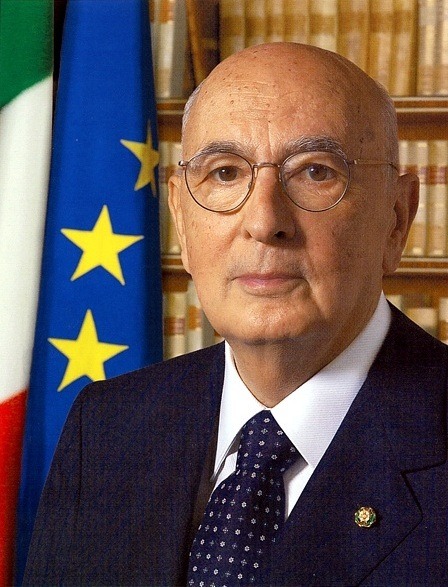
Giorgio Napolitano, born on June 29, 1925, in Naples, Italy, was one of the most influential figures in modern Italian politics. Over his extensive career, he served as the 11th President of the Italian Republic, marking history as the first Italian President to be elected for two consecutive terms. His life is a tapestry woven with dedication to public service, political acumen, and a steadfast commitment to the democratic principles that shaped Italy’s post-war era. This article delves into his life, from his early years to his remarkable tenure as President, exploring the nuances of his political journey and the historical context that framed his actions.
Early Life and Education
Giorgio Napolitano was born into a middle-class family in Naples. His early life was marked by the tumultuous events of World War II, which significantly influenced his political views. After graduating from high school, he enrolled at the University of Naples, where he studied law. His academic pursuits, however, were soon overshadowed by his growing involvement in political activism. By 1945, as the war drew to a close, Napolitano had already aligned himself with a group of young anti-fascists, a decision that would lay the groundwork for his future in the Italian Communist Party (PCI).
Political Beginnings and Rise in the Italian Communist Party
Napolitano’s political career officially began in the early 1940s when he joined the Italian Communist Party (PCI). His decision to join the PCI was driven by a deep-seated belief in social justice and equality, values that were starkly contrasted against the fascist regime that had dominated Italy for decades. The post-war period was a time of significant political upheaval in Italy, with the PCI emerging as a powerful force in the restructured Italian government.
In the late 1940s, Napolitano became actively involved in student movements and quickly rose through the ranks of the PCI. By 1953, he was elected to the Italian Chamber of Deputies, representing the Naples constituency. His early parliamentary work focused on economic development, particularly in southern Italy, which had long been neglected by the central government. This period also marked the beginning of his lifelong commitment to addressing the socio-economic disparities between Italy’s industrialized north and its underdeveloped south.
International Influence and Advocacy
Napolitano’s influence extended beyond Italy’s borders. Throughout the 1970s and 1980s, he became a prominent figure on the international stage, advocating for Italy’s role in global politics. His involvement in international relations was particularly evident during his tenure in the Italian Parliament’s Foreign Affairs Committee and as a member of Italy’s delegation to the North Atlantic Assembly. Napolitano was a strong advocate for European integration and played a key role in shaping Italy’s foreign policy, particularly in its relationship with the United States and the Soviet Union during the Cold War.
His advocacy for European integration was rooted in his belief that a united Europe could serve as a counterbalance to the superpowers of the United States and the Soviet Union. He was also a proponent of Italy’s participation in NATO, despite the PCI’s traditionally anti-NATO stance, reflecting his pragmatic approach to international politics.
Presidency: A Historic Tenure
Napolitano’s most significant political achievement came in 2006 when he was elected President of the Italian Republic. His election was a testament to his broad appeal across the political spectrum. As President, Napolitano navigated Italy through some of its most challenging times, including the global financial crisis of 2008 and the subsequent eurozone crisis. His presidency was marked by his efforts to maintain stability and his willingness to transcend partisan politics in the national interest.
In 2013, in an unprecedented move, Napolitano was re-elected for a second term as President. His re-election was seen as a necessity to ensure continuity and stability during a period of political uncertainty in Italy. However, his second term was shorter, as he resigned in 2015, citing his advanced age and the need for new leadership.
Legislative Achievements and Legacy
Throughout his career, Napolitano was instrumental in several key legislative reforms. His tenure as Minister of the Interior from 1996 to 1998 under Prime Minister Romano Prodi was particularly noteworthy. During this time, he focused on reforming Italy’s law enforcement agencies and enhancing the country’s civil protection mechanisms. His work in this area earned him a reputation as a diligent and effective administrator.
Napolitano was also a prolific writer and intellectual. He authored several books and essays on Italian and European politics, contributing to the intellectual discourse on the left. His writings reflect his deep understanding of the complexities of governance and his commitment to democratic principles.
Nuances and Historical Context
Understanding Giorgio Napolitano’s legacy requires an appreciation of the historical context in which he operated. The Italy of Napolitano’s youth was a country emerging from the shadows of fascism, grappling with the challenges of rebuilding a democratic society. His early commitment to the PCI was shaped by the urgent need for social reform and the desire to address the inequalities that had plagued Italy for centuries.
However, as the political landscape of Italy evolved, so did Napolitano’s views. He was part of the PCI’s gradual shift towards social democracy, a move that eventually led to the formation of the Democratic Party of the Left (PDS) in the early 1990s. This transformation was indicative of Napolitano’s pragmatic approach to politics; he was willing to adapt his ideology to the changing times, always with an eye towards the greater good.
Napolitano’s presidency was also marked by his ability to navigate the delicate balance between maintaining Italy’s traditional values and embracing the necessary reforms to ensure the country’s progress in a rapidly changing world. His efforts to bridge the divide between Italy’s north and south, his commitment to European integration, and his advocacy for workers’ rights all underscore his legacy as a statesman who was deeply committed to the welfare of his country.
Life After Presidency and Final Years
After his resignation in 2015, Napolitano remained an influential figure in Italian politics. He continued to speak out on issues of national and international importance, and his opinions were often sought by political leaders and the media. Despite his advanced age, Napolitano remained intellectually active, contributing to discussions on Italy’s future and the challenges facing Europe.
Giorgio Napolitano passed away on September 22, 2023, at the age of 98. His death marked the end of an era in Italian politics, but his legacy lives on. He is remembered as a President who guided Italy through some of its most turbulent times with wisdom, dignity, and a deep sense of duty.
Conclusion: A Legacy of Leadership and Dedication
Giorgio Napolitano’s life was one of remarkable achievement and unwavering dedication to public service. His journey from a young anti-fascist activist to the highest office in Italy is a testament to his enduring commitment to the principles of democracy and social justice. As Italy continues to navigate the complexities of the modern world, the legacy of Giorgio Napolitano serves as a reminder of the importance of leadership that is both principled and pragmatic.
Napolitano’s influence on Italian and European politics is profound. He was a leader who understood the importance of adapting to change while staying true to core values. His presidency, marked by its historical significance and the challenges he overcame, will be remembered as a defining period in Italy’s modern history.


