
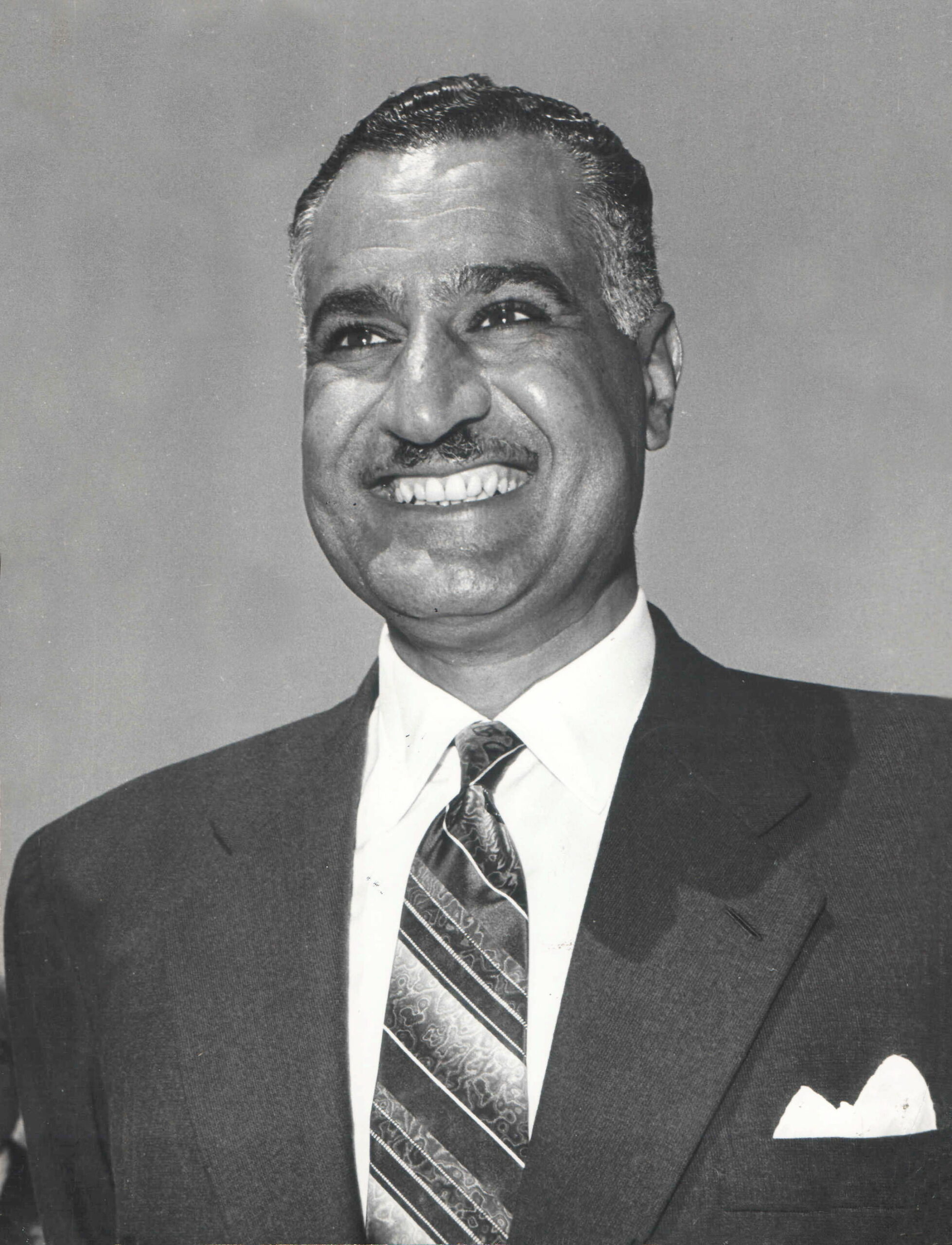
Gamal Abd el Nasser, born on January 15, 1918, in Alexandria, Egypt, is one of the most influential figures in the modern history of the Arab world. A leader who rose from humble beginnings to reshape the political landscape of the Middle East, Nasser’s legacy is marked by his efforts to unify the Arab world, his role in the decolonization of Africa, and his influence on the global stage during the Cold War. This article delves into the life of Gamal Abd el Nasser, exploring his early years, rise to power, significant achievements, and the enduring impact of his leadership.
Early Life and Education
Gamal Abd el Nasser was born into a modest family; his father was a postal worker from the small village of Beni Morr. Despite their limited means, Nasser’s family placed a strong emphasis on education. He began his schooling in Asyut before moving to Khatatba, where he completed his secondary education. Nasser’s early experiences were marked by significant personal challenges, including the death of his mother when he was only eight years old. This event had a profound impact on him, leading to a period of upheaval as he moved between relatives before finally returning to live with his father.
It was during his teenage years that Nasser first became involved in politics. While attending secondary school, he became president of the Student Union, a position that fueled his growing interest in political activism. Nasser’s political consciousness was shaped by the turbulent political environment of the time, which was dominated by the struggle for independence from British colonial rule. His participation in nationalist demonstrations as a young man, including one where he was shot in the leg by a British soldier, solidified his commitment to the cause of Egyptian independence.
Military Career and the Birth of a Leader
In 1937, Nasser entered the Egyptian Military Academy, where he pursued a career in the army. His time at the academy was crucial in shaping his leadership abilities and his vision for Egypt. It was here that he began to build the relationships that would later become the foundation of the Free Officers Movement, a group of nationalist military officers determined to overthrow the monarchy and establish a republic.
Nasser graduated from the Military Academy in 1938 and was commissioned as a second lieutenant. His early military career included service in Sudan and participation in the 1948 Arab-Israeli War. The war was a pivotal moment for Nasser, as it exposed the weaknesses of the Egyptian military and the corrupt nature of the monarchy under King Farouk. The defeat in Palestine was a national humiliation, and for Nasser, it underscored the need for radical change in Egypt.
Disillusioned by the failures of the Egyptian government, Nasser and his fellow officers formed the Free Officers Movement in 1949. The group operated in secrecy, planning a coup to overthrow the monarchy. Nasser emerged as the leader of the movement, distinguished by his organizational skills, strategic thinking, and unwavering commitment to Egyptian nationalism.
The Revolution of 1952 and the Rise to Power
The revolution that would change the course of Egyptian history took place on July 23, 1952. The Free Officers Movement, led by Nasser, successfully staged a coup that toppled King Farouk and ended the monarchy in Egypt. The revolution was largely bloodless, and within a day, the king was forced into exile. The coup was initially led by General Muhammad Naguib, a respected figure who was named the first President of Egypt. However, it quickly became apparent that Nasser was the real force behind the revolution.
In the years following the revolution, Nasser systematically consolidated power. In 1954, he effectively sidelined Naguib and assumed full control as the President of Egypt. One of Nasser’s first major acts as president was to negotiate the withdrawal of British troops from the Suez Canal Zone, a significant victory for Egyptian sovereignty. This agreement, signed in October 1954, marked the beginning of Nasser’s efforts to assert Egypt’s independence on the global stage.
Nationalization of the Suez Canal and International Standing
One of the most defining moments of Nasser’s presidency came in 1956 when he announced the nationalization of the Suez Canal. The canal, which had been under British and French control, was a vital international waterway and a symbol of foreign domination in Egypt. Nasser’s decision to nationalize the canal was driven by his desire to finance the construction of the Aswan High Dam, a massive infrastructure project that was crucial for Egypt’s economic development.
The nationalization of the Suez Canal was met with immediate hostility from Britain, France, and Israel, leading to the Suez Crisis. In October 1956, these three nations launched a military invasion of Egypt, aiming to retake control of the canal and remove Nasser from power. However, the conflict quickly escalated into a major international crisis, with the United States and the Soviet Union both intervening diplomatically to prevent further escalation. The crisis ended with a ceasefire brokered by the United Nations, and the invading forces were forced to withdraw.
Nasser emerged from the Suez Crisis as a hero in the Arab world. His successful defiance of Western powers elevated him to a position of leadership among the newly independent nations of the Middle East and Africa. The crisis also solidified his commitment to non-alignment, positioning Egypt as a leader in the Non-Aligned Movement, which sought to avoid taking sides in the Cold War.
Pan-Arabism and the United Arab Republic
Nasser’s vision for Egypt extended beyond its borders; he was a passionate advocate for Arab unity and socialism. His concept of Pan-Arabism called for the unification of Arab countries under a single political and economic system. This vision led to the creation of the United Arab Republic (UAR) in 1958, a political union between Egypt and Syria. The UAR was intended to be the first step toward a broader federation of Arab states.
However, the union between Egypt and Syria was short-lived. By 1961, internal conflicts and differing political priorities led Syria to withdraw from the UAR, effectively dissolving the union. Despite this setback, Nasser continued to champion the cause of Arab unity, and his influence remained strong throughout the Arab world.
Nasser’s domestic policies were characterized by a focus on social and economic reform. He implemented land reforms that redistributed land from wealthy landowners to poor farmers, expanded education, and pursued industrialization with the goal of making Egypt self-sufficient. These policies were part of his broader vision of Arab socialism, which aimed to combine economic modernization with social justice.
The Six-Day War and its Aftermath
The height of Nasser’s influence came in the 1960s, but it was also during this decade that his leadership faced its most significant challenges. The most notable of these was the Six-Day War in 1967, a conflict between Israel and a coalition of Arab states led by Egypt, Jordan, and Syria. The war began after Nasser, responding to pressure from Arab nationalist movements, moved to close the Straits of Tiran to Israeli shipping, an act that Israel considered a casus belli.
On June 5, 1967, Israel launched a preemptive strike against Egypt, destroying the majority of the Egyptian Air Force on the ground. In the course of just six days, Israel defeated the combined forces of Egypt, Jordan, and Syria, capturing the Sinai Peninsula, the Gaza Strip, the West Bank, and the Golan Heights. The defeat was a devastating blow to Nasser’s prestige and to the Pan-Arab movement as a whole.
In the immediate aftermath of the war, Nasser offered to resign, taking responsibility for the defeat. However, massive public demonstrations in Egypt called for him to remain in power, and he ultimately decided to stay. Despite this show of public support, the Six-Day War marked the beginning of the decline of Nasser’s influence, both domestically and internationally.
Later Years and Legacy
In the years following the Six-Day War, Nasser’s government became increasingly authoritarian. The economic challenges facing Egypt, combined with the lingering effects of the military defeat, led to growing discontent. Nasser responded by tightening his control over the country, cracking down on political dissent, and consolidating power within his inner circle.
Despite these challenges, Nasser continued to pursue his vision of Arab unity and socialism. He played a key role in the Khartoum Conference in 1967, where Arab leaders agreed on a common position toward Israel, famously summarized as “no peace, no recognition, no negotiation.” Nasser also sought to rebuild Egypt’s military capabilities, with the help of Soviet aid, in preparation for a future conflict with Israel.
Nasser’s health began to decline in the late 1960s, and on September 28, 1970, he died of a heart attack. His death was met with an outpouring of grief across the Arab world, with millions of people attending his funeral in Cairo. Nasser’s successor, Anwar Sadat, would eventually take Egypt in a different direction, pursuing peace with Israel and economic liberalization, moves that were in stark contrast to Nasser’s policies.
Conclusion
Gamal Abd el Nasser remains one of the most significant figures in modern Arab history. His vision of Arab unity, his defiance of colonial powers, and his commitment to social justice left a lasting impact on the Middle East. While his leadership was marked by both successes and failures, Nasser’s legacy continues to influence political discourse in the Arab world.
Nasser’s life was a testament to the power of nationalism and the complexities of leadership in a rapidly changing world. His efforts to modernize Egypt and promote Arab unity were groundbreaking, even as they were met with considerable challenges. Today, Nasser is remembered as a symbol of Arab dignity and resistance, a leader who sought to chart an independent course for his country and his region.


