
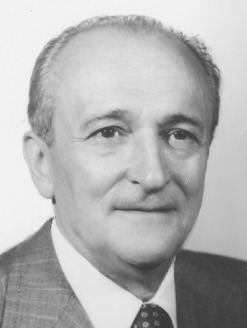
Alessandro Natta, born on January 7, 1918, in Imperia, Italy, was a prominent figure in Italian politics, particularly during the mid to late 20th century. As a committed member of the Italian Communist Party (PCI), Natta played a crucial role in shaping the political landscape of post-war Italy. His life and career were marked by a deep commitment to his political ideals, intellectual rigor, and a profound influence on the direction of Italian communism during a period of significant social and political upheaval. This article explores Alessandro Natta’s life, his rise to political prominence, and the key events that defined his legacy.
Early Life and Education
Alessandro Natta was born into a modest middle-class family in Imperia, a small city in the Liguria region of Italy. He was the sixth of seven children in a family of merchants, a background that provided him with a strong sense of discipline and work ethic from an early age. Natta’s intellectual inclinations were evident as he pursued higher education, earning a degree in Letters from the prestigious Scuola Normale Superiore di Pisa. His time at Pisa was formative, as he rubbed shoulders with future Italian luminaries such as Carlo Azeglio Ciampi, who would later become President of Italy.
During his university years, Natta became increasingly involved in anti-fascist activities. The political atmosphere in Italy was tense, with fascism firmly entrenched under Benito Mussolini’s regime. Natta, influenced by the liberal socialist ideas of his contemporaries and mentors, began to actively oppose the fascist government. His early political activism was not without risk, as the fascist regime was known for its brutal suppression of dissent. However, these experiences only strengthened Natta’s resolve and set the stage for his lifelong commitment to leftist politics.
World War II and the Italian Resistance
Natta’s life took a dramatic turn during World War II. As a young man, he was drafted into the Italian army and served as a second lieutenant in the artillery. In 1941, he was deployed to Greece, a region of strategic importance during the war. Natta’s military service was marked by a deep sense of duty, but also by an increasing disillusionment with the war and the fascist regime that had led Italy into such a destructive conflict.
The pivotal moment in Natta’s military career came after the armistice of September 8, 1943, when Italy capitulated to the Allies. Stationed in Rhodes, Natta and his fellow soldiers faced a dire situation as German forces moved to take control of the island. Despite being wounded, Natta took part in the defense of the Gaddurà airfield against the Germans. Following the defeat of Italian forces, Natta was among those who refused to collaborate with the occupying German forces or the Italian Social Republic, the puppet state established by Mussolini in northern Italy.
As a result of his refusal to cooperate, Natta was captured and interned in a German prisoner-of-war camp. His experiences in captivity had a profound impact on him. The harsh conditions, the brutality of the guards, and the suffering of his fellow prisoners deepened his commitment to the anti-fascist cause. These experiences were later chronicled in his autobiographical work, L’altra Resistenza (The Other Resistance), in which he documented the ordeals of Italian prisoners in Nazi concentration camps. This book remains a significant contribution to the historiography of World War II and the Italian Resistance.
Post-War Political Career
After his release and return to Italy in August 1945, Alessandro Natta immediately immersed himself in the political reconstruction of the country. The war had devastated Italy, both physically and socially, and the task of rebuilding fell to those who had resisted fascism. Natta joined the Italian Communist Party (PCI) in his hometown of Imperia, dedicating himself fully to the party’s cause. His early political career was characterized by his work at the grassroots level, where he quickly rose through the ranks.
Natta’s dedication and intellect did not go unnoticed. He was soon elected as a city councilor and then became the secretary of the local PCI federation. His effectiveness in these roles led to his election to the Italian Parliament, where he served for three legislatures. During this time, Natta became a close collaborator of Palmiro Togliatti, one of the most influential leaders of the PCI. Natta’s loyalty and hard work earned him a place in the party’s leadership, where he would play a crucial role in shaping the direction of Italian communism.
Political Ideology and Influence
Alessandro Natta was a staunch advocate of the “Italian road to socialism,” a concept that sought to adapt communist ideology to the specific political and social conditions of Italy. This approach was marked by a commitment to democratic principles and a rejection of the more authoritarian aspects of Soviet-style communism. Natta, along with Enrico Berlinguer, another key figure in the PCI, believed that the party needed to maintain its independence from the Soviet Union while also pursuing a path of gradual social reform in Italy.
However, Natta’s relationship with the broader communist movement was complex. While he was committed to the ideals of socialism, he was also pragmatic, understanding the need to adapt to changing political realities. This pragmatism was evident in his response to the youth movements of the 1960s, particularly the student protests of 1968. Like many in the PCI leadership, Natta was initially skeptical of these movements, viewing them as “bourgeois extremists” who were difficult to control and who often openly criticized the party. This cautious approach reflected the PCI’s concern with maintaining order and discipline within the broader leftist movement in Italy.
One of the most controversial episodes in Natta’s career occurred in 1969 when he played a key role in the expulsion of the editors of Il Manifesto from the PCI. Il Manifesto was a publication that had begun as an internal critique of the party, advocating for a more radical approach to socialism. Natta, along with other leaders, viewed this as a threat to the unity and cohesion of the party and moved to expel the dissenters. This decision highlighted the tension within the PCI between maintaining party discipline and allowing space for ideological debate.
Leadership of the PCI
After the death of Enrico Berlinguer in 1984, Alessandro Natta was chosen as the new leader of the PCI. His selection was seen as a move to preserve the unity of the party and continue the policies that had been established under Berlinguer. Natta’s tenure as the leader of the PCI came at a time of significant change both within Italy and internationally. The Cold War was entering its final phase, and the PCI, like many other communist parties in Western Europe, was grappling with the challenges of remaining relevant in a rapidly changing world.
Under Natta’s leadership, the PCI continued to distance itself from the Soviet Union, particularly in the wake of the crises in Budapest (1956) and Prague (1968), which had deeply shaken the faith of many European communists in the Soviet model. Natta’s leadership was marked by a cautious approach to reform, seeking to balance the party’s revolutionary ideals with the practicalities of operating within a democratic political system.
However, Natta’s leadership was not without its challenges. In 1988, after suffering a minor heart attack, Natta stepped down as the leader of the PCI, and Achille Occhetto was elected as his successor. Natta’s departure marked the beginning of a new era for the PCI, one that would eventually lead to the party’s dissolution and the formation of the Democratic Party of the Left (PDS) in 1991.
Later Life and Legacy
After stepping down from the leadership of the PCI, Alessandro Natta retired from active politics, returning to his home in Liguria. However, he remained a keen observer of Italian politics and was openly critical of the direction in which the PCI was heading under Occhetto’s leadership. Natta opposed the dissolution of the PCI and refused to join the newly formed PDS, viewing it as a betrayal of the party’s traditional values.
Despite his disillusionment with the direction of Italian communism, Natta continued to support progressive causes. He welcomed the victory of the center-left coalition, L’Ulivo, in the 1996 elections and was critical of the internal divisions that later plagued the coalition. His commitment to the principles of socialism and his belief in the importance of maintaining a strong, unified left in Italy remained unwavering until his death.
Alessandro Natta passed away on May 23, 2001, in his hometown of Imperia. His death marked the end of an era in Italian politics, as he was one of the last representatives of the generation that had shaped the post-war political landscape. Natta’s legacy is remembered for his intellectual rigor, his dedication to the cause of socialism, and his role in preserving and promoting the work of Antonio Gramsci, one of Italy’s most important Marxist thinkers.
Conclusion
Alessandro Natta’s life and career offer a window into the complexities of Italian politics during the 20th century. As a committed communist, he navigated the challenges of leading a major political party during a time of significant social and political change. His legacy is one of dedication to political ideals, a deep commitment to intellectual and moral integrity, and a lasting influence on the direction of Italian communism.
Natta’s story is also a reminder of the broader historical forces that shaped his life—from the horrors of World War II and the struggle against fascism to the ideological battles of the Cold War. As we reflect on Natta’s contributions, we see a figure who was not only a politician but also an intellectual and a moral leader, deeply committed to the cause of social justice and the betterment of society.


