
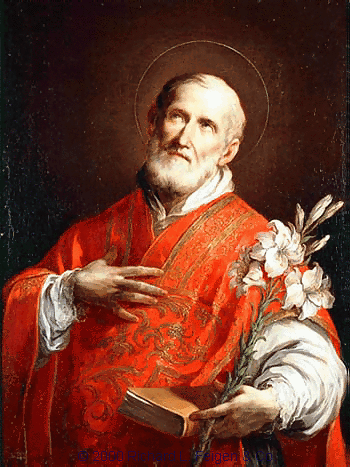
Filippo Neri, known as the “Apostle of Rome,” is one of the most beloved figures in the history of the Catholic Church. His life, marked by profound spirituality, humility, and a remarkable sense of humor, has left an indelible mark on the Church and the city of Rome. Born in Florence in 1515, Neri’s journey from a young man in a modest family to the founder of the Congregation of the Oratory and a saint recognized by the Catholic Church is a story of deep faith and unwavering dedication to serving others. This article delves into the life of Filippo Neri, exploring his age, the highlights of his life, and his enduring legacy.
Early Life: Humble Beginnings in Florence
Filippo Neri was born on July 21, 1515, in Florence, Italy. His family, though once well-off, experienced financial difficulties due to the changing political climate of the time. Filippo’s father, Francesco Neri, was a notary, a profession that had lost much of its prestige and financial security by the time Filippo was born. His mother, Lucrezia da Mosciano, came from a modest rural background and passed away shortly after giving birth to her fourth child. Filippo and his siblings were raised by their stepmother, Alessandra di Michele Lenzi, who was known for her affectionate care and played a significant role in Filippo’s upbringing.
From a young age, Filippo was recognized for his gentle and kind nature, earning him the affectionate nickname “Pippo Buono,” meaning “Good Pippo.” He exhibited a natural inclination towards spirituality and was deeply influenced by the religious environment in Florence, particularly the Dominican Convent of San Marco, where he received his early religious education. The teachings of Girolamo Savonarola, a fervent preacher who had a significant impact on Florentine spirituality, left a lasting impression on young Filippo, even though his approach to spirituality would later differ significantly from that of Savonarola.
The Move to Rome: A New Chapter Begins
At the age of 18, Filippo Neri moved to San Germano (now Cassino) on the advice of his father, who hoped to provide his son with opportunities for a better life. Filippo went to live with a wealthy relative who was a merchant. However, Filippo quickly realized that the life of a merchant was not his calling. After a brief period, he decided to move to Rome in 1534, driven by a desire to deepen his spiritual life and serve God more fully.
Rome, during this period, was a city in need of spiritual renewal. The city was still recovering from the Sack of Rome in 1527, and the moral and spiritual state of its inhabitants reflected the turmoil of the times. Filippo arrived in Rome with no clear plan but with a heart full of faith and a desire to make a difference.
Spiritual Formation and the Call to Priesthood
In Rome, Filippo Neri lived a life of austere simplicity. He supported himself by tutoring the children of Galeotto Caccia, a Florentine nobleman, while dedicating his free time to prayer and contemplation. Filippo’s spiritual life was characterized by a deep commitment to personal prayer, often spending long hours in solitary places like the catacombs of San Sebastiano, where he experienced profound moments of divine grace.
One of the most significant events in Filippo’s spiritual journey occurred during Pentecost in 1544. While praying in the catacombs, he felt a powerful infusion of the Holy Spirit, which he described as a divine fire that filled his heart and physically enlarged it. This mystical experience profoundly impacted his life, further deepening his commitment to God’s service.
Filippo’s spiritual fervor did not go unnoticed. He became known for his joyful and approachable nature, which drew people to him. Despite his initial reluctance, Filippo eventually felt called to the priesthood. In 1551, at the age of 36, he was ordained a priest, marking the beginning of a new phase in his ministry.
The Founding of the Congregation of the Oratory
As a priest, Filippo Neri quickly became known for his unique approach to pastoral care. He dedicated himself to the sacrament of confession, spending hours listening to the confessions of people from all walks of life. His gentle, compassionate manner made him a beloved confessor, and many sought his spiritual guidance.
Filippo’s pastoral activities extended beyond the confessional. He began gathering groups of people in informal settings to discuss spiritual matters, pray, and engage in acts of charity. These gatherings, which took place in Filippo’s small room at the Church of San Girolamo della Carità, became the foundation of what would later be known as the Oratory.
The Oratory was characterized by its informal and welcoming atmosphere, a stark contrast to the more rigid and hierarchical structures of other religious communities at the time. Filippo’s emphasis on joy, community, and personal holiness attracted many followers, including future cardinals like Cesare Baronio and Francesco Maria Tarugi. These men, inspired by Filippo’s example, would go on to play significant roles in the Catholic Church.
In 1575, Pope Gregory XIII officially recognized Filippo’s community as the Congregation of the Oratory. The Congregation was unique in that it was composed of secular priests who lived in community but were not bound by the traditional vows of religious orders. Instead, they were united by a shared commitment to living out the Gospel through prayer, preaching, and works of charity.
The Apostle of Rome: A Life of Service
Filippo Neri’s influence in Rome grew steadily over the years. He became known as the “Apostle of Rome” for his tireless efforts to evangelize the city and renew its spiritual life. He was particularly devoted to caring for the sick, the poor, and the pilgrims who came to Rome. His work with the Confraternity of the Holy Trinity, which provided care for poor pilgrims and the sick, further solidified his reputation as a man of deep compassion and practical charity.
Filippo’s approach to spirituality was marked by a joyful simplicity. He believed that holiness should be accessible to everyone and that the path to God could be found in everyday life. His humor and warmth made him approachable, and he often used playful methods to teach profound spiritual truths. This light-hearted approach did not diminish his seriousness about faith but rather made it more relatable to ordinary people.
The Legacy of Filippo Neri
Filippo Neri died on May 26, 1595, at the age of 80. His death was deeply mourned in Rome, where he was loved by people from all walks of life. In 1622, Filippo was canonized by Pope Gregory XV, and his feast day is celebrated on May 26 each year.
The legacy of Filippo Neri lives on through the Congregation of the Oratory, which continues to serve communities around the world. The Oratory remains true to Filippo’s vision of a joyful, community-based approach to spirituality, where the emphasis is on personal holiness, communal prayer, and acts of charity.
Filippo Neri’s life is a testament to the power of humility, joy, and dedication to God’s service. His approach to faith, which combined deep spirituality with a light-hearted joy, continues to inspire Christians today. In an age where religious practice can sometimes seem daunting or distant, Filippo’s message of finding God in the everyday and approaching faith with a joyful heart is as relevant now as it was in the 16th century.
Conclusion: Filippo Neri’s Enduring Influence
Filippo Neri’s influence extends far beyond the boundaries of Rome or the 16th century. His life and teachings have inspired countless individuals to pursue a deeper relationship with God through simplicity, joy, and service to others. As the founder of the Congregation of the Oratory, his vision of a community of priests dedicated to prayer, preaching, and charity continues to bear fruit in the Church today.
In a world that often values power, prestige, and wealth, Filippo Neri’s life is a powerful reminder that true greatness is found in humility, love, and service to others. His legacy as the “Apostle of Rome” endures, offering a timeless example of how a life devoted to God and others can transform not only individuals but entire communities.
Whether through his playful humor, his deep spiritual insights, or his compassionate service, Filippo Neri’s life continues to inspire and challenge us to live out our faith with joy and authenticity. His story is a testament to the enduring power of a life lived in service to God and others, a legacy that will continue to resonate for generations to come.


