
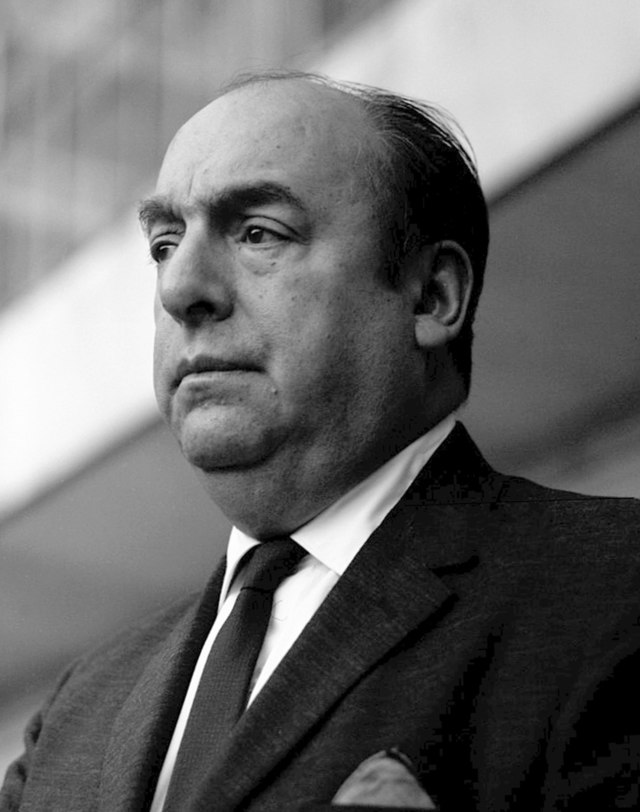
Pablo Neruda, born Ricardo Eliécer Neftalí Reyes Basoalto on July 12, 1904, in Parral, Chile, was a poet, diplomat, and politician whose works left an indelible mark on global literature. Celebrated for his passionate and evocative verse, Neruda became one of the most influential literary figures of the 20th century. This article delves into the life, fame, and significant achievements of Pablo Neruda, exploring the nuances and historical contexts that shaped his illustrious career.
Early Life and Literary Beginnings
Neruda was born into a modest family; his father was a railway worker, and his mother, who died shortly after his birth, was a schoolteacher. When Neruda was just two years old, his father moved to Temuco, a city in southern Chile, where he remarried. It was in Temuco that Neruda spent his formative years, and it was also where he first developed an interest in literature.
Despite his father’s disapproval of his literary ambitions, Neruda found support from Gabriela Mistral, a future Nobel laureate in literature, who was a teacher at his school. Mistral recognized Neruda’s talent and encouraged him to pursue his passion for writing. At the age of 13, he published his first piece, an article titled “Entusiasmo y perseverancia” (“Enthusiasm and Perseverance”), in the local newspaper La Mañana. This early publication marked the beginning of a prolific career that would span more than five decades.
The Emergence of Pablo Neruda
In 1920, while still a teenager, Ricardo Reyes began using the pen name “Pablo Neruda,” inspired by the Czech poet Jan Neruda. This pseudonym allowed him to separate his literary endeavors from his personal life and was later legalized as his official name.
Neruda’s first major work, Crepusculario (Twilight), was published in 1923 when he was just 19 years old. The following year, he achieved significant success with Veinte poemas de amor y una canción desesperada (Twenty Love Poems and a Song of Despair), a collection that remains one of the most popular works of poetry in the Spanish language. This collection, characterized by its emotional intensity and sensuous imagery, established Neruda as a rising star in the world of literature.
Diplomatic Career and Political Involvement
In 1927, Neruda began his diplomatic career, which took him to various countries across Asia, Europe, and Latin America. His first posting was as a consul in Rangoon, Burma (now Yangon, Myanmar), followed by positions in Colombo, Ceylon (now Sri Lanka), and Batavia (now Jakarta, Indonesia). These early experiences abroad exposed Neruda to different cultures and political realities, broadening his worldview and influencing his later works.
During his time in Buenos Aires in 1933, Neruda met the Spanish poet Federico García Lorca, a friendship that deepened his involvement in the literary circles of the Spanish-speaking world. A year later, he was posted to Madrid, where he became involved in the Republican cause during the Spanish Civil War. The war had a profound impact on Neruda, leading him to adopt a more overtly political stance in his writing. His support for the Republic and his condemnation of fascism resulted in his removal from the consular post in Spain.
Following his departure from Spain, Neruda moved to Paris, where he continued to work on behalf of Spanish refugees fleeing Franco’s regime. His time in Europe further solidified his commitment to leftist political causes, which would play a central role in his life and work.
The Influence of Politics on His Poetry
Pablo Neruda’s political beliefs were deeply intertwined with his literary output. In 1940, he was appointed consul for Mexico, where he met Matilde Urrutia, who would later become his third wife and the muse for many of his later poems, including Los versos del capitán (The Captain’s Verses). His time in Mexico also saw the publication of Canto General (General Song) in 1950, an epic poem that chronicles the history and struggles of Latin America. This work is considered one of Neruda’s most ambitious and significant contributions to world literature.
Neruda’s political involvement deepened when he was elected as a senator in Chile in 1945 and joined the Communist Party. However, his political affiliations put him at odds with the Chilean government, particularly under the administration of President Gabriel González Videla, who turned against the communists. In 1948, a warrant was issued for Neruda’s arrest, forcing him into hiding. During this period, he continued to write, producing some of his most powerful and politically charged work.
In 1949, Neruda fled Chile and embarked on a journey that took him through several countries, including the Soviet Union, Poland, and Hungary. His travels during this period further reinforced his commitment to socialism and anti-fascism, themes that would continue to permeate his writing.
Return to Chile and International Recognition
Neruda returned to Chile in 1952, after the political climate had shifted in his favor. His return marked a period of intense creativity and productivity. Between 1955 and 1960, he traveled extensively across Europe, Asia, and Latin America, further broadening his literary horizons and solidifying his reputation as one of the foremost poets of his time.
In 1971, Pablo Neruda was awarded the Nobel Prize in Literature, a recognition of his profound impact on global literature. The Nobel Committee praised his “poetry that with the action of an elemental force brings alive a continent’s destiny and dreams.” This accolade cemented his status as one of the greatest poets of the 20th century.
Later Years and Legacy
The final years of Neruda’s life were marked by both personal and political challenges. In 1970, he was nominated as the Communist Party’s candidate for the presidency of Chile but later withdrew in support of Salvador Allende, who went on to become the first Marxist president elected in a democratic election in Latin America. Neruda was appointed as Chile’s ambassador to France, a position he held until his health began to decline.
Neruda’s health deteriorated rapidly following the military coup in Chile in 1973, led by General Augusto Pinochet. The coup not only overthrew President Allende but also marked the beginning of a brutal dictatorship in Chile. Neruda, a staunch supporter of Allende, was devastated by the events in his homeland. He died just days later, on September 23, 1973, under circumstances that remain the subject of controversy and speculation. While the official cause of death was cancer, some believe that he may have been assassinated by agents of the Pinochet regime.
The Enduring Influence of Pablo Neruda
Pablo Neruda’s influence extends far beyond the realm of poetry. His works, which encompass love, politics, history, and social justice, have inspired generations of writers, activists, and thinkers around the world. His ability to blend the personal with the political, the lyrical with the epic, has made his poetry resonate across cultures and eras.
Among Neruda’s most celebrated works are Residencia en la Tierra (Residence on Earth), Cien Sonetos de Amor (One Hundred Love Sonnets), and Las Odas Elementales (The Elementary Odes). Each of these collections showcases a different facet of Neruda’s genius, from his introspective and surrealist early works to the passionate love poetry dedicated to Matilde Urrutia and the politically charged odes that reflect his deep concern for humanity.
Neruda’s legacy is also preserved through his memoir, Confieso que he Vivido (I Confess That I Have Lived), which offers insights into his life, his inspirations, and the historical events that shaped his worldview. This autobiography provides a unique window into the mind of one of the most complex and influential literary figures of the 20th century.
Conclusion
Pablo Neruda was more than just a poet; he was a voice for the oppressed, a chronicler of history, and a beacon of hope in times of despair. His life and work embody the power of words to inspire change, to evoke deep emotions, and to connect people across time and space. As we reflect on his contributions to literature and society, we are reminded of the enduring relevance of his poetry and the profound impact he continues to have on the world.
Neruda’s journey from a small town in Chile to the global stage is a testament to the power of passion, perseverance, and a deep belief in the transformative potential of art. His works remain a source of inspiration, offering insights into the human condition and the struggles and triumphs that define our collective experience.
As we celebrate the life and legacy of Pablo Neruda, we honor not only his literary achievements but also his unwavering commitment to justice, equality, and the beauty of the human spirit. His poetry continues to resonate, reminding us of the power of words to shape our world and our understanding of it.


