
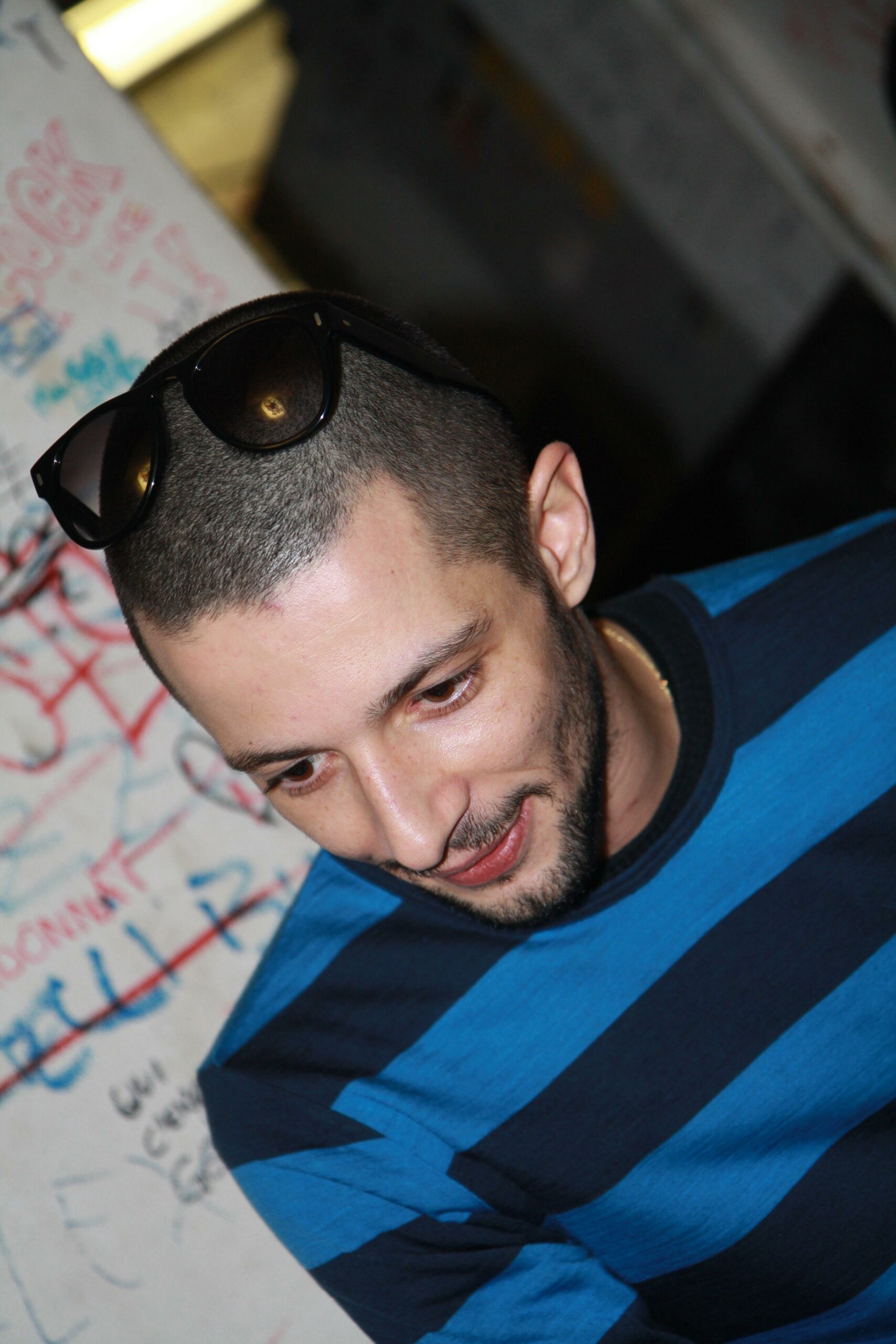
Nesli, born Francesco Tarducci on December 29, 1980, in Senigallia, a town in the Marche region of Italy, is a multifaceted artist known for his contributions to the Italian music scene. As a rapper, singer-songwriter, and music producer, Nesli has crafted a career that spans over two decades, evolving from the underground rap scene to mainstream pop music. His journey is marked by personal struggles, artistic reinvention, and a relentless pursuit of creative expression. This article explores Nesli’s life, his rise to fame, his musical evolution, and the highlights of his career.
Early Life and Beginnings in Music
Francesco Tarducci grew up as the youngest of three siblings in a close-knit Italian family. His older brother, Fabrizio Tarducci, would later gain fame as the rapper Fabri Fibra. The Tarducci household was filled with music, and the brothers shared a passion for the burgeoning Italian hip-hop scene. Nesli, originally known by the nickname “Lines” (a reference to a popular brand of diapers in Italy), derived his stage name from an anagram of this nickname, becoming “Nesly Rice” before eventually shortening it to Nesli.
Nesli’s early life was not without its challenges. At the age of 17, he was involved in a serious incident where he accidentally shot a friend with a gun, leaving the friend critically injured. This event led to Nesli spending six months in a juvenile detention center. The experience had a profound impact on him, driving him to channel his emotions and energy into music, particularly rap, which became both an outlet and a form of redemption.
In 1999, Nesli, alongside his brother Fabri Fibra, released his first demo titled “Fitte da latte.” The demo gained attention in the local music scene and marked the beginning of Nesli’s career in the Italian rap industry. Encouraged by the positive reception, he decided to pursue music full-time, adopting the stage name Nesly Rice and later simply Nesli.
Breakthrough and Early Collaborations
Nesli’s early career was defined by a series of collaborations with other artists in the Italian rap scene. He worked with groups such as Uomini di Mare and Kaso & Maxi B, and his collaboration with the influential rap duo Sottotono on the track “Da me” further established his presence in the industry.
In 2000, Nesli participated in the mixtape “Dinamite” by the collective Teste Mobili, and the following year, he contributed to the album “Cactus” by the group Piante Grasse. These collaborations helped him build a network within the Italian hip-hop community and solidified his reputation as a talented and versatile rapper.
Nesli’s debut solo album, “Ego,” was released in 2003, produced by DJ Myke. The album was notable for its innovative approach, featuring live instrumentation rather than relying solely on sampled beats, which was common in rap music at the time. The lyrics were deeply introspective, reflecting Nesli’s personal experiences and struggles. “Ego” received critical acclaim and positioned Nesli as a unique voice in the Italian rap scene.
Evolution and Success in the 2000s
Following the success of “Ego,” Nesli released his second studio album, “Home,” in 2004. This album marked the beginning of his evolution as an artist, as he started to explore new musical directions and take on the role of a producer. “Home” featured collaborations with his brother Fabri Fibra, as well as Maxi B and Diego Mancino, blending elements of rap with more melodic and introspective sounds.
Nesli’s work as a producer became more prominent in 2006 when he produced much of Fabri Fibra’s critically acclaimed album “Tradimento.” This album catapulted Fabri Fibra to national fame, and Nesli’s contributions to its production were widely recognized.
However, Nesli’s relationship with Fabri Fibra became strained over time, leading to a public fallout. The exact reasons for their rift have never been fully disclosed, but it marked a turning point in Nesli’s career as he began to focus more on his solo work and less on collaborations with his brother.
In 2007, Nesli released his third album, “Le verità nascoste,” under Universal Music. The album was preceded by the singles “Riot” and “Nesli Park,” and it received widespread acclaim. The Italian magazine “Repubblica XL” named “Le verità nascoste” the best hip-hop album of 2007, further cementing Nesli’s status as a leading figure in the Italian music scene.
During this period, Nesli also formed the crew FOBC (Family of Brain Cells) with other artists, including Vacca. The group released several tracks, including “Tu che ne sai,” “Spara,” “Il verdetto,” and “Non mi butto giù,” which showcased Nesli’s versatility and continued relevance in the rap scene.
Transition to Pop and Mainstream Success
As the 2010s began, Nesli’s music started to shift away from traditional rap towards a more melodic and accessible pop sound. In 2010, he released his fifth album, “L’amore è qui,” which featured the singles “Notte vera” and “L’amore è qui.” The album included the track “Capricorno,” which gained significant attention and marked Nesli’s transition into the pop genre.
In 2011, Tiziano Ferro, one of Italy’s most popular pop singers, reinterpreted Nesli’s song “La fine” on his album “L’amore è una cosa semplice.” This collaboration introduced Nesli to a broader audience and underscored his growing influence in the Italian music industry.
Nesli’s sixth album, “Nesliving Vol. 3 – Voglio,” released in 2012, represented a definitive break from his rap roots. The album, which featured singles like “Perdo via,” “Partirò,” and “Ti sposerò,” embraced a pop-oriented sound and topped the Italian album charts in its first week of release. This success marked a new phase in Nesli’s career, where he fully embraced his identity as a pop artist.
In 2013, Nesli continued to build on his pop success by writing the song “Dimentico tutto” for Emma Marrone’s album “Schiena.” The song became a hit, further establishing Nesli as a talented songwriter capable of crafting chart-topping pop songs.
Participation in the Sanremo Music Festival
The Sanremo Music Festival, one of Italy’s most prestigious music competitions, became a significant platform for Nesli’s career in the mid-2010s. In 2015, he made his debut at the festival with the song “Buona fortuna amore,” which garnered widespread attention and demonstrated his ability to connect with mainstream audiences.
Nesli returned to the Sanremo stage in 2017, this time performing in a duet with Alice Paba. The pair sang “Do retta a te,” a song that showcased Nesli’s continued evolution as an artist willing to experiment with different musical styles and collaborate with emerging talents.
In 2021, Nesli was invited back to Sanremo as a guest performer during the festival’s “duets and covers” night, where he performed his song “La fine” with the young artist Fasma. This performance highlighted Nesli’s enduring relevance in the Italian music scene and his ability to connect with new generations of artists and fans.
Personal Life and Legacy
Nesli’s career has been marked by his ability to reinvent himself while staying true to his artistic vision. From his early days as a rapper in the underground scene to his current status as a mainstream pop artist, Nesli has demonstrated a remarkable ability to adapt and evolve. His music, often characterized by introspective lyrics and a deep emotional resonance, has touched on themes of love, pain, and personal growth.
Despite the challenges he has faced, including his public fallout with his brother Fabri Fibra and the pressures of transitioning between musical genres, Nesli has remained a prominent figure in Italian music. His willingness to take risks and explore new artistic directions has earned him both critical acclaim and commercial success.
Nesli’s influence extends beyond his music. He has become a symbol of resilience and transformation, inspiring fans with his story of overcoming personal adversity and continually pushing the boundaries of his creative expression.
Historical Context and Impact
Nesli’s career unfolded during a period of significant change in the Italian music industry. The early 2000s saw the rise of Italian rap as a powerful cultural force, with artists like Fabri Fibra, Marracash, and Mondo Marcio bringing the genre to mainstream attention. Nesli was a key player in this movement, contributing to the growth and evolution of Italian rap.
As the music industry evolved with the rise of digital platforms and social media, Nesli adapted his approach, embracing the opportunities presented by these new technologies. His decision to shift from rap to pop was not just a personal artistic choice but also a reflection of broader trends in the music industry, where genre boundaries were becoming increasingly blurred.
Nesli’s ability to navigate these changes and remain relevant speaks to his talent and versatility as an artist. His work has influenced a generation of Italian musicians, particularly those who seek to blend different genres and create music that resonates with a diverse audience.
Conclusion
Nesli’s journey from a troubled youth in Senigallia to a celebrated figure in Italian music is a testament to his resilience, creativity, and unwavering commitment to his art. His career, marked by both personal and professional challenges, exemplifies the power of music as a means of self-expression and transformation.
As an artist, Nesli has consistently pushed the boundaries of what is possible, moving from rap to pop while maintaining a strong connection with his audience. His impact on the Italian music scene is undeniable, and his legacy as a versatile and innovative musician continues to grow.
For those who have followed Nesli’s career, his story is one of inspiration and a reminder that success in the music industry often requires not just talent but also the courage to evolve and embrace change.


