
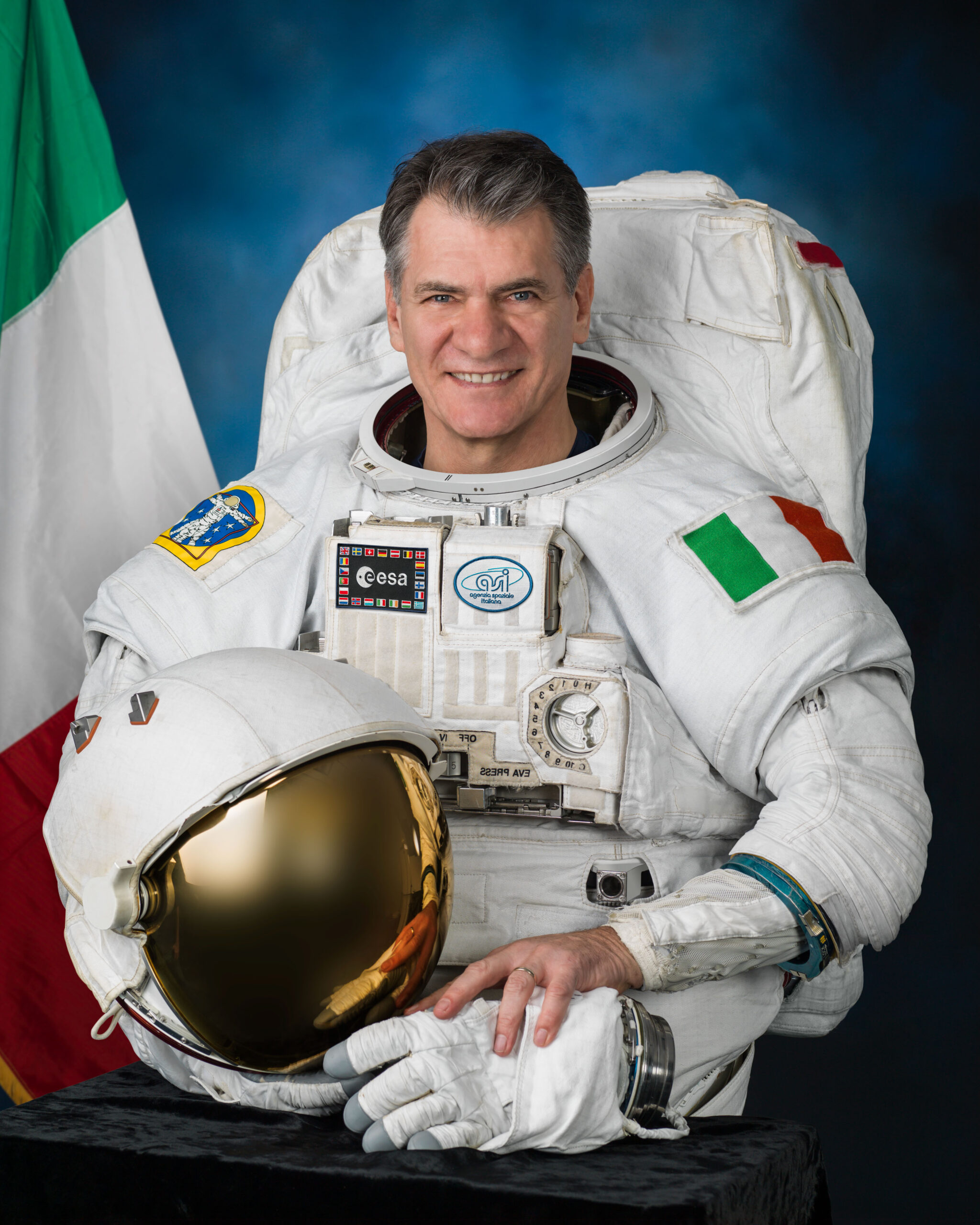
Paolo Nespoli is a name that resonates with the stars, quite literally. Born on April 6, 1957, in Milan, Italy, Nespoli’s journey from the bustling streets of Milan to the vast expanse of space is nothing short of extraordinary. His life is a testament to human perseverance, dedication, and the pursuit of dreams that extend beyond the confines of our planet. This article delves into the life of Paolo Nespoli, exploring his age, rise to fame, and the significant milestones that define his remarkable career.
Early Life and Military Service
Paolo Nespoli’s early life in Milan and later in Verano Brianza laid the foundation for his illustrious career. He attended the “Paolo Frisi” Scientific High School in Desio, graduating in 1977. That same year, he enrolled in the Military Parachuting School in Pisa, where he remained until 1980. During this period, Nespoli honed his skills and became a parachuting instructor, eventually joining the elite ranks of the Italian Special Forces as a paratrooper with the 9th Regiment Col Moschin.
Nespoli’s early years were marked by discipline and a commitment to service. In 1982, he was deployed to Lebanon as part of the Multinational Peacekeeping Force, a mission that would last until 1984. This experience not only showcased his resilience but also instilled in him a profound sense of duty and purpose that would later propel him into the realm of space exploration.
Academic Pursuits and Entry into Aerospace
Following his military service, Nespoli’s thirst for knowledge led him back to academia. In 1988, he earned a Bachelor of Science in Aerospace Engineering from the Polytechnic University of New York. His academic journey continued, and in 1989, he completed a Master of Science in Aeronautics and Astronautics from the same institution. These qualifications laid the groundwork for Nespoli’s entry into the highly competitive field of aerospace engineering.
In 1990, Nespoli added another feather to his cap by obtaining a degree in Mechanical Engineering from the University of Florence. His academic achievements were soon recognized by the European Space Agency (ESA), which hired him in 1991 as an astronaut trainer in Cologne, Germany. Here, Nespoli played a crucial role in preparing European astronauts for their missions, managing and organizing their training activities.
Rise to Fame: Becoming an Astronaut
Paolo Nespoli’s journey to becoming an astronaut began in earnest in 1996 when he moved to the United States to work at NASA’s Johnson Space Center in Houston. He became part of the Spaceflight Training Division, a critical role that involved supporting both flight and ground crews of the International Space Station (ISS).
In 1998, Nespoli’s dream of becoming an astronaut was realized when the Italian Space Agency selected him as an astronaut candidate. He was soon integrated into the European Astronaut Corps (EAC) of the ESA and became part of NASA’s 17th class of astronauts. This marked the beginning of Nespoli’s illustrious career in space exploration.
The 2000s: A Decade of Space Exploration
The new millennium saw Paolo Nespoli firmly establishing himself as a key figure in space exploration. In 2000, he earned the title of Mission Specialist for the Space Shuttle, essentially becoming an on-board engineer. This role was pivotal in his career, as it allowed him to participate in several significant missions.
One of the highlights of Nespoli’s career came in 2007 when he was part of the STS-120 Space Shuttle mission, also known as the Esperia mission. This mission was crucial in the construction of the ISS, and Nespoli’s contributions were invaluable. For his efforts, he was awarded the title of Commendatore of the Order of Merit of the Italian Republic by President Giorgio Napolitano in 2007.
The ISS and Beyond: Paolo Nespoli’s Space Missions
Nespoli’s first long-duration mission in space came in 2010 when he was assigned to the MagISStra mission. This mission saw him spend over five months on the ISS, where he conducted a variety of scientific and technical experiments. Nespoli’s journey began on December 15, 2010, aboard the Soyuz spacecraft, and he returned to Earth on May 24, 2011, landing in the steppes of Kazakhstan.
During this mission, Nespoli faced one of the most challenging moments of his life when his mother, Maria, passed away on May 2, 2011. Despite the immense distance between them, Nespoli found a way to honor her memory by observing a minute of silence aboard the ISS as the spacecraft passed over Italy. This poignant moment underscored the emotional toll that space exploration can take on astronauts and their families.
Upon his return to Earth, Nespoli became a household name, not just in Italy but around the world. His fame extended beyond the scientific community, with Nespoli even becoming the protagonist of a comic story in the popular Italian magazine “Topolino” (Mickey Mouse), titled “Topolino, Paolo Nexp e l’orbita del domani.”
The Second Space Odyssey: Expedition 52/53
In 2015, Nespoli was selected for yet another mission, this time as part of Expedition 52/53 aboard the ISS. At the age of 60, Nespoli was one of the oldest astronauts to participate in such a mission, a testament to his enduring physical and mental prowess. The mission, which launched in late July 2017, saw Nespoli spending approximately six months in orbit, once again contributing to critical scientific research and experiments.
This mission further cemented Nespoli’s legacy as one of the most experienced astronauts in the world. His ability to maintain peak performance at an age when most astronauts have retired is a reflection of his dedication to his craft and his exceptional physical fitness.
Paolo Nespoli’s Legacy and Impact
Paolo Nespoli’s contributions to space exploration are vast and varied. Over the course of his career, he has spent a total of 313 days in space, participated in numerous missions, and played a crucial role in the construction and maintenance of the ISS. His work has not only advanced our understanding of space but has also inspired countless individuals around the world to pursue careers in science, technology, engineering, and mathematics (STEM).
Nespoli’s legacy extends beyond his technical achievements. He is also a prolific communicator, using his experiences in space to engage with the public and share the wonders of space exploration. His book, “Dall’alto i problemi sembrano più piccoli” (From Above, Problems Seem Smaller), offers readers a unique perspective on life, grounded in his experiences as an astronaut.
Conclusion: The Life of a Star Voyager
Paolo Nespoli’s life is a story of passion, perseverance, and the pursuit of the extraordinary. From his humble beginnings in Milan to his remarkable achievements in space, Nespoli has proven that with determination and dedication, the sky is not the limit – it’s just the beginning. As we look to the future of space exploration, Paolo Nespoli’s name will undoubtedly be remembered as one of the pioneers who helped pave the way for the next generation of explorers.


