
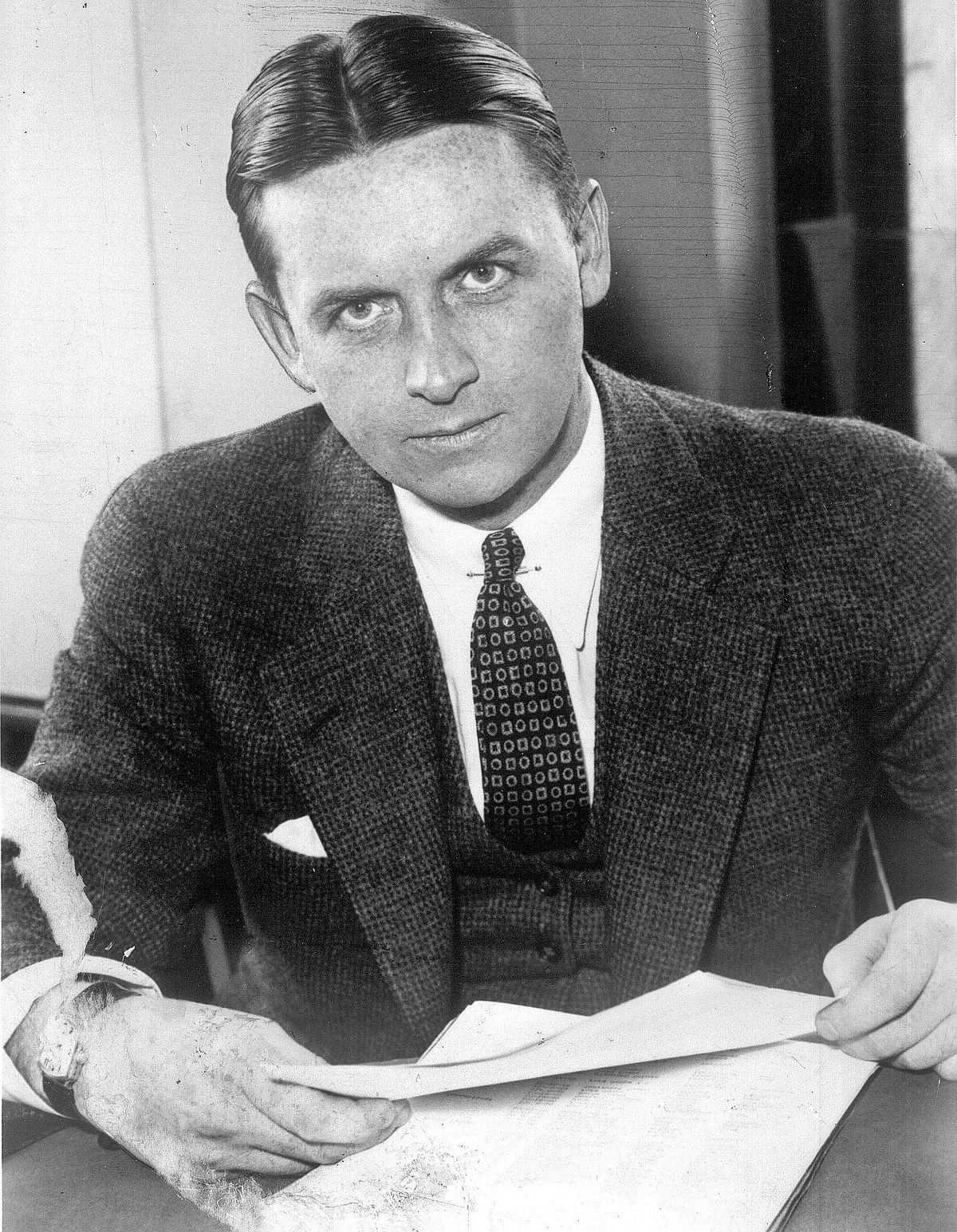
Eliot Ness is a name that has become synonymous with law enforcement, particularly during the tumultuous era of Prohibition in the United States. Born on April 19, 1903, in Chicago, Illinois, Ness was a federal agent whose career was defined by his relentless pursuit of justice, most notably his role in bringing down the infamous gangster Al Capone. This article delves into the life and legacy of Eliot Ness, exploring his early years, rise to fame, and the significant events that shaped his career. We will also consider the historical context of his work and the lasting impact he has had on American law enforcement.
Early Life and Education
Eliot Ness was born into a Norwegian-American family in Chicago, the youngest of five children. His parents, Peter and Emma Ness, were hardworking immigrants who instilled in their children the values of diligence and integrity. From a young age, Eliot exhibited a keen intellect and a strong sense of right and wrong, traits that would later define his career.
Ness attended Christian Fenger High School in Chicago, where he excelled academically. His academic prowess earned him a place at the University of Chicago, where he studied law, economics, and political science. During his time at the university, Ness also became a member of the Sigma Alpha Epsilon fraternity, further broadening his social and professional networks. He graduated in 1925 with a degree in economics, a credential that would serve him well in his future career as a federal agent.
The Beginnings of a Legendary Career
After graduating from university, Ness began his career as a researcher for a retail credit company in Atlanta. However, his ambitions soon led him back to Chicago, where he took a position as an investigator for the U.S. Treasury Department. This role marked the beginning of Ness’s career in law enforcement, a field in which he would soon make a name for himself.
In 1927, Ness joined the Bureau of Prohibition, a division of the Treasury Department tasked with enforcing the Volstead Act, which had established Prohibition in the United States. This was a period of significant social and economic upheaval, as the ban on alcohol led to the rise of organized crime syndicates that made vast fortunes through the illegal production and distribution of liquor. Chicago, in particular, was a hotbed of criminal activity, with figures like Al Capone dominating the city’s underworld.
The Prohibition Era and the Rise of Organized Crime
The Prohibition era, which lasted from 1920 to 1933, was a time of great tension and conflict in the United States. While the intention behind Prohibition was to curb alcohol consumption and its associated social ills, the reality was far more complex. The ban on alcohol created a lucrative black market, and organized crime groups quickly moved to fill the void left by legal breweries and distilleries. These criminal organizations, often referred to as “bootleggers,” used violence and corruption to protect their operations and expand their influence.
Al Capone, perhaps the most notorious of these crime bosses, built a criminal empire in Chicago that generated millions of dollars annually through bootlegging, gambling, and other illicit activities. Despite numerous attempts by law enforcement to bring him to justice, Capone managed to evade prosecution for years, thanks to his extensive network of bribed officials and ruthless enforcers.
The Untouchables and the Fall of Al Capone
Eliot Ness’s role in the fight against organized crime took a decisive turn in 1929 when he was tasked with leading a special team of agents to target Capone’s operations. This team, later known as “The Untouchables,” was composed of handpicked agents who were known for their incorruptibility and determination. Ness’s strategy was to attack Capone’s empire by disrupting his bootlegging operations and gathering evidence of tax evasion, which was seen as the most viable way to bring Capone to justice.
The Untouchables quickly made a name for themselves with their relentless raids on Capone’s distilleries and warehouses. Despite numerous attempts by Capone to bribe or intimidate them, Ness and his team remained steadfast in their mission. Over the course of six months, they seized illegal alcohol worth over a million dollars, striking significant blows to Capone’s operations.
The efforts of Ness and The Untouchables culminated in the arrest and prosecution of Al Capone in 1931. While Capone was never convicted for the violent crimes he was believed to have committed, the evidence gathered by Ness and his team led to Capone’s conviction on charges of tax evasion. He was sentenced to 11 years in federal prison, effectively ending his reign as Chicago’s most feared gangster. Ness’s role in this achievement made him a national hero and solidified his legacy as one of America’s most effective law enforcement officers.
Post-Prohibition Career and Challenges
With the repeal of Prohibition in 1933, Ness’s role within the federal government changed. He was transferred to various positions, first in Ohio, then Kentucky, and finally Tennessee, where he continued to work on alcohol-related cases, though now focused on tax violations rather than outright smuggling.
In 1935, Ness was appointed as the Director of Public Safety in Cleveland, Ohio, a position that placed him in charge of both the police and fire departments. Cleveland at the time was struggling with widespread corruption within its law enforcement agencies, and Ness was brought in to clean up the department. His efforts in Cleveland were initially successful, as he implemented reforms that reduced corruption and improved the efficiency of the police force.
However, Ness’s tenure in Cleveland was not without its difficulties. The city was plagued by a series of brutal murders, known as the Cleveland Torso Murders, which occurred between 1935 and 1938. Despite Ness’s best efforts, the case remained unsolved, and the failure to apprehend the killer tarnished his reputation. Additionally, Ness’s personal life began to suffer during this period. His first marriage ended in divorce, and he began to struggle with alcohol, a bitter irony given his role in enforcing Prohibition.
Later Years and Decline
The later years of Ness’s career were marked by a series of setbacks and disappointments. In 1942, while working in Washington, D.C., Ness was involved in a serious car accident, which some speculated was the result of his increasing reliance on alcohol. Although he continued to work in various government roles, including leading efforts to combat venereal disease among military personnel during World War II, his career never regained the heights it had reached during the Prohibition era.
In 1944, Ness took a position as the chairman of the Diebold Corporation, a private security firm based in Ohio. However, his time at Diebold was short-lived, and by 1947, he had left the company and made an unsuccessful bid for the mayoralty of Cleveland. The defeat was a significant blow to Ness, who had hoped to revive his public career through political office.
The final years of Ness’s life were marked by financial difficulties and a decline in health. He took on a series of low-paying jobs, including working as a salesman for a frozen food company. Despite his earlier fame, Ness struggled to make ends meet, and he was largely forgotten by the public by the time of his death.
Legacy and Cultural Impact
Eliot Ness passed away on May 16, 1957, at the age of 54, from a heart attack. At the time of his death, his once-storied career had faded into obscurity, and he was buried without much fanfare. However, Ness’s legacy was revived posthumously with the publication of the book “The Untouchables,” co-written by Ness and journalist Oscar Fraley, which chronicled his battles against Capone and other criminals during Prohibition.
The book was a bestseller and served as the basis for the 1959 television series “The Untouchables,” which further cemented Ness’s status as an American hero. The 1987 film adaptation, directed by Brian De Palma and starring Kevin Costner as Ness, brought his story to a new generation, making him a cultural icon.
Ness’s life and career continue to be celebrated in popular culture, symbolizing the fight against corruption and organized crime. His determination and integrity in the face of overwhelming odds have made him a lasting figure in the annals of American law enforcement history.
Historical Context and the Significance of Eliot Ness
To fully understand the significance of Eliot Ness’s career, it is essential to consider the broader historical context of the Prohibition era. Prohibition, which lasted from 1920 to 1933, was one of the most controversial and impactful social experiments in American history. While it was intended to reduce alcohol consumption and improve public morals, Prohibition had the unintended consequence of fueling the rise of organized crime.
Gangsters like Al Capone exploited the demand for illegal alcohol, creating vast criminal enterprises that were often more powerful than local law enforcement. The federal government, initially unprepared to deal with this new breed of criminal, eventually ramped up its efforts, leading to the formation of specialized units like The Untouchables.
Ness’s work during this period was significant not only because of his success in bringing down Capone but also because of what it represented: a stand against the corruption and lawlessness that had taken hold in many American cities. His career, though ultimately marked by personal struggles and setbacks, remains a powerful reminder of the challenges faced by law enforcement in times of social upheaval.
Conclusion: A Complex Legacy
Eliot Ness’s life is a study in contrasts. He is remembered as a fearless and incorruptible lawman, the man who took down Al Capone and stood up to the criminal underworld during one of the most dangerous periods in American history. Yet, his later years reveal a more complex figure, one who struggled with personal demons and the pressures of public life.
Ness’s legacy, however, endures. He has become a symbol of the fight against organized crime and the pursuit of justice, and his story continues to inspire new generations. Whether as a character in books, films, or television, Eliot Ness remains an enduring figure in American culture, representing the ideals of integrity, courage, and perseverance in the face of adversity.


