
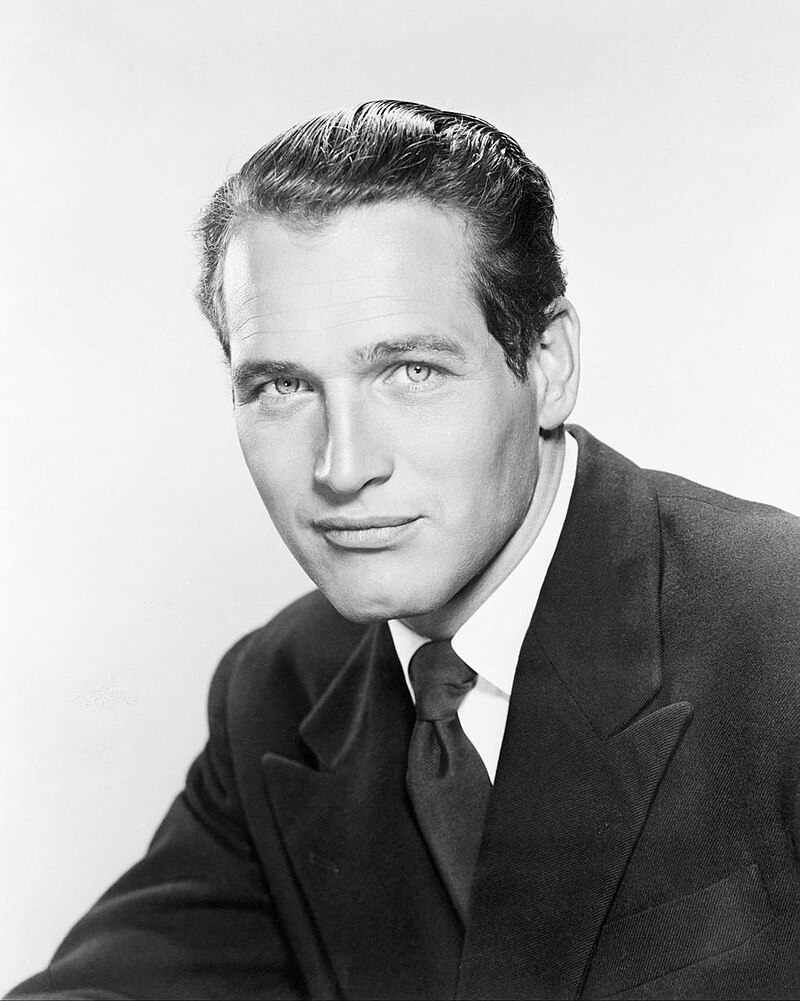
Paul Newman was a legend of the silver screen, a philanthropist, a devoted family man, and a cultural icon. His journey from a small-town boy to one of Hollywood’s most revered actors is a story of talent, determination, and resilience. In this article, we’ll explore Paul Newman’s life, his rise to fame, his contributions to film and philanthropy, and the legacy he left behind.
Early Life and Education
Paul Leonard Newman was born on January 26, 1925, in Shaker Heights, Ohio, a suburb of Cleveland. His father, Arthur Sigmund Newman, was a successful sporting goods store owner, while his mother, Theresa Fetsko, was a homemaker with a passion for the arts. Newman’s early life was marked by a strong sense of family and community, which would later influence his deep commitment to philanthropy.
Newman attended Shaker Heights High School, where he began to explore his interest in acting. After graduating in 1943, he briefly attended Ohio University before enlisting in the United States Navy during World War II. Although he hoped to become a pilot, color blindness prevented him from flying. Instead, he served as a radio operator and gunner in the Pacific Theater.
After the war, Newman returned to education, enrolling at Kenyon College in Gambier, Ohio. He graduated in 1949 with a degree in drama and economics. His time at Kenyon College was instrumental in shaping his future career, as it was here that he honed his acting skills and began to consider acting as a serious profession.
Breaking into Acting: Broadway and Hollywood
Following his graduation, Newman moved to New York City, where he joined the prestigious Actor’s Studio to study under the legendary Lee Strasberg. This experience deepened his understanding of the craft and introduced him to the method acting technique, which would become a cornerstone of his performances.
Newman made his Broadway debut in 1953 in the play “Picnic” by William Inge. His performance caught the attention of Hollywood, and soon after, he was cast in his first film, “The Silver Chalice” (1954). Although the film was not a commercial success, it marked the beginning of Newman’s illustrious career in cinema.
In 1956, Newman’s breakthrough came with the film “Somebody Up There Likes Me,” where he portrayed the real-life boxer Rocky Graziano. The film was both a critical and commercial success, firmly establishing Newman as a rising star in Hollywood.
The Rise to Fame: The 1950s and 1960s
The late 1950s and 1960s were a golden era for Paul Newman. With his striking blue eyes, chiseled features, and natural charisma, he quickly became one of Hollywood’s most sought-after leading men. He starred in a series of iconic films that would define his career and solidify his status as a Hollywood legend.
In 1958, Newman starred alongside Elizabeth Taylor in “Cat on a Hot Tin Roof,” a film adaptation of Tennessee Williams’ play. His portrayal of Brick Pollitt, a troubled former athlete, earned him his first Academy Award nomination for Best Actor. The film’s success further boosted his profile and led to more high-profile roles.
Newman’s versatility as an actor was evident in the variety of roles he took on during this period. He starred in the 1961 film “The Hustler,” playing “Fast” Eddie Felson, a small-time pool hustler who dreams of becoming a champion. The role earned him his second Academy Award nomination and remains one of his most celebrated performances.
In 1967, Newman delivered another iconic performance in “Cool Hand Luke,” where he played the rebellious and indomitable Luke Jackson. The film’s themes of resistance and individualism resonated with audiences during the turbulent 1960s, and Newman’s portrayal earned him a third Academy Award nomination.
Behind the Camera: Newman’s Directorial Ventures
While Paul Newman is best known for his work in front of the camera, he also made significant contributions behind it. In 1968, he directed his first feature film, “Rachel, Rachel,” starring his wife, Joanne Woodward. The film was a critical success, earning four Academy Award nominations, including Best Picture and Best Director.
Newman continued to explore directing throughout his career, though his focus remained primarily on acting. His other notable directorial efforts include “The Effect of Gamma Rays on Man-in-the-Moon Marigolds” (1972) and “Harry & Son” (1984), the latter being a deeply personal project inspired by his relationship with his son, Scott.
Personal Life: Love, Family, and Tragedy
Paul Newman’s personal life was as eventful as his career. In 1949, he married Jackie Witte, and the couple had three children: Scott, Susan, and Stephanie. However, their marriage ended in divorce in 1958, after which Newman married actress Joanne Woodward. The couple met while working on the film “The Long, Hot Summer” (1958) and would go on to become one of Hollywood’s most beloved and enduring couples. They had three daughters together: Elinor, Melissa, and Claire.
Newman’s family life was marked by both joy and tragedy. His son, Scott, struggled with addiction and tragically died from an overdose in 1978. This loss deeply affected Newman and led him to establish the Scott Newman Center, an organization dedicated to preventing substance abuse through education.
A Life of Philanthropy: Newman’s Own and Beyond
Beyond his work in film, Paul Newman was deeply committed to philanthropy. In 1982, he co-founded Newman’s Own, a food company that donates 100% of its profits to charitable causes. The company began with a homemade salad dressing that Newman gave as gifts to friends, but it quickly grew into a multimillion-dollar business, producing a wide range of food products.
To date, Newman’s Own has donated over $570 million to various charities, including those focused on children’s health, education, and the environment. Newman’s philanthropic efforts earned him widespread admiration and several awards, including the Jean Hersholt Humanitarian Award from the Academy of Motion Picture Arts and Sciences in 1994.
In addition to Newman’s Own, Paul Newman and Joanne Woodward founded the Hole in the Wall Gang Camp in 1988, a summer camp for children with serious illnesses. The camp, located in Ashford, Connecticut, was named after the outlaw gang in Newman’s film “Butch Cassidy and the Sundance Kid” (1969). It was the first of what would become a global network of camps serving thousands of children each year.
Later Career and Final Years
As Paul Newman aged, he continued to take on roles that showcased his enduring talent and charisma. In 1986, he finally won an Academy Award for Best Actor for his role in “The Color of Money,” a sequel to “The Hustler,” directed by Martin Scorsese and co-starring Tom Cruise. This win was seen as long overdue by many in Hollywood, as Newman had been nominated several times before.
In the 1990s and 2000s, Newman appeared in a number of films that demonstrated his ability to adapt to different genres and roles. His performances in films like “Nobody’s Fool” (1994), “Road to Perdition” (2002), and the animated film “Cars” (2006), where he voiced the character Doc Hudson, were praised by both critics and audiences.
In 2008, after being diagnosed with lung cancer, Newman retired from acting. He spent his final months surrounded by family at his home in Westport, Connecticut. Paul Newman passed away on September 26, 2008, at the age of 83.
Legacy: A Life Well Lived
Paul Newman’s legacy extends far beyond his impressive body of work as an actor. He was a man of integrity, known for his humility, generosity, and commitment to making the world a better place. His contributions to cinema, philanthropy, and social causes have left an indelible mark on the world.
In addition to his numerous awards and accolades, Paul Newman is remembered as a pioneer in celebrity philanthropy. He demonstrated that fame could be used as a force for good, inspiring others in the entertainment industry and beyond to give back to their communities.
Newman’s Own continues to thrive, carrying on his vision of a business that prioritizes charity over profit. The Hole in the Wall Gang Camp and other charitable initiatives he supported continue to benefit thousands of people worldwide.
Paul Newman was not just a star; he was a legend, a role model, and a true humanitarian. His life is a testament to the power of talent, hard work, and compassion. As we remember Paul Newman, we celebrate a life well-lived and a legacy that will endure for generations to come.


