
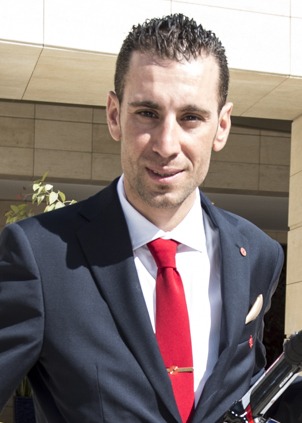
Vincenzo Nibali, born on November 14, 1984, in Messina, Italy, is one of the most celebrated cyclists in modern history. Known for his versatility, resilience, and strategic prowess, Nibali has earned a place among the greatest cyclists of all time. Throughout his career, he has achieved remarkable victories, including winning all three Grand Tours: the Tour de France, Giro d’Italia, and Vuelta a España. Nibali’s journey from a young enthusiast in Sicily to a global cycling icon is a story of dedication, triumph, and unyielding passion for the sport.
Early Life and Introduction to Cycling
Vincenzo Nibali’s passion for cycling began at an early age. Growing up in the southern Italian city of Messina, he was drawn to the bicycle, which would soon become his vehicle to international fame. His early years in the sport were marked by determination and an insatiable drive to succeed. As a junior cyclist, Nibali quickly made a name for himself, winning numerous races and demonstrating a level of talent that set him apart from his peers.
By the time he was competing in the Allievi (Youth) category, Nibali had already accumulated seven victories. His move to the Juniores (Junior) category in 2001 was even more impressive, as he secured 19 wins in his first year and 14 more the following year. These early successes provided a glimpse of what was to come in Nibali’s professional career.
Transition to Professional Cycling
In 2002, Nibali took a significant step in his cycling career by competing in the World Championships in Zolder, Belgium. There, he won a bronze medal in the time trial, signaling his potential on the world stage. The following year, he transitioned to the Under-23 category, where he continued to excel, winning seven races, including two stages of the Tour of Austria.
Nibali’s consistent performance caught the attention of professional teams, and in 2005, he signed his first professional contract with Fassa Bortolo, a prominent Italian cycling team. His debut year was promising, with a sixth-place finish at the Milano-Torino race and a near-podium finish in the Italian national time trial championships.
Rise to Prominence
In 2006, Nibali moved to the Liquigas team, where his career truly began to take off. He secured his first professional victories, including a win at the Grand Prix de Ouest-France, which earned him a spot on the Italian national team for the World Championships time trial.
By 2007, Nibali was becoming a key player in the professional peloton. He was part of the team supporting Danilo Di Luca in the Giro d’Italia, where he finished in the top 20, showcasing his potential in Grand Tours. His performances in time trials were particularly impressive, leading to his repeated selection for the World Championships.
The Breakthrough Year: 2008
The year 2008 marked a significant turning point in Nibali’s career. He won a stage and the overall classification at the Giro del Trentino, a victory that foreshadowed his future successes in Grand Tours. Later that year, he competed in the Giro d’Italia, finishing 11th overall. His participation in the Tour de France that summer further solidified his reputation, where he wore the prestigious white jersey as the best young rider for several stages before losing it to Andy Schleck.
Nibali’s performances continued to improve, and he was selected to represent Italy at the 2008 Beijing Olympics. Though he did not secure a medal, his selection for such a prestigious event at a young age underscored his growing status in the world of cycling.
Major Victories and Grand Tours
2009 was another pivotal year for Nibali. He delivered strong performances at the Giro del Delfinato and won the Giro dell’Appennino. He returned to the Tour de France, finishing seventh overall, further establishing himself as a strong Grand Tour contender. However, his season was marred by a crash at the Eneco Tour, which resulted in a fractured collarbone and forced him to miss the World Championships.
Despite this setback, Nibali bounced back in 2010 with a string of impressive performances. He was called up to replace Franco Pellizotti in the Giro d’Italia, where he won a stage and finished third overall, his first podium finish in a Grand Tour. This success was followed by victory at the Giro di Slovenia and the Trofeo Melinda. Nibali’s crowning achievement of the year came at the Vuelta a España, where he became the first Italian in 20 years to win the race, solidifying his status as one of the sport’s elite.
Consistency and Triumph in the 2010s
The following years saw Nibali continue to rack up victories and podium finishes across the world’s most prestigious races. In 2011, he finished third in the Giro d’Italia after the disqualification of Alberto Contador and competed in the Vuelta a España, finishing seventh. In 2012, he achieved a significant milestone by finishing third in the Tour de France, becoming only the second Italian to finish on the podium in all three Grand Tours, following in the footsteps of Felice Gimondi.
In 2013, Nibali joined the Astana team, where he continued to build on his success. He won the Tirreno-Adriatico and secured the pink jersey at the Giro d’Italia, winning the race with a dominant performance, including a victory in the uphill time trial to Polsa. Although he narrowly missed out on a podium at the World Championships, his consistent performances throughout the year further solidified his reputation.
The Pinnacle: Tour de France Victory
The year 2014 was undoubtedly the high point of Nibali’s career. With a meticulous preparation focused entirely on the Tour de France, Nibali entered the race as one of the favorites. From the second stage, he donned the yellow jersey and never looked back. Nibali’s dominance was evident throughout the race, and he became the first Italian since Marco Pantani in 1998 to win the Tour de France. His victory also made him the sixth cyclist in history to win all three Grand Tours, a testament to his versatility and endurance.
Later Career and Continued Success
Nibali continued to compete at the highest level in the following years, achieving significant victories and podium finishes. In 2016, he won the Giro d’Italia with a spectacular comeback, reclaiming the pink jersey on the penultimate stage in the Alps. His tactical acumen and resilience were on full display as he secured his second Giro title.
In 2017, Nibali finished third in the Giro d’Italia and second in the Vuelta a España, demonstrating his continued competitiveness in Grand Tours. He also won the Giro di Lombardia for the second time, cementing his status as one of the most accomplished cyclists of his generation.
2018 saw Nibali claim a surprise victory at the Milano-Sanremo, one of cycling’s five Monuments, further adding to his impressive palmarès. However, his attempt to win another Tour de France was thwarted by an unfortunate crash caused by overzealous fans, which resulted in a fractured vertebra and forced him to abandon the race.
Announcing Retirement and Legacy
As Nibali’s career progressed into the 2020s, he continued to race with determination, though his results began to reflect the natural decline that comes with age. In 2022, during the Giro d’Italia, Nibali announced that he would retire at the end of the season. His decision marked the end of an illustrious career that had seen him rise from a young talent in Sicily to one of the most successful and respected cyclists in the world.
Nibali’s legacy in the sport is profound. Known as “Lo Squalo” (The Shark), a nickname that reflects his aggressive racing style and predatory instincts in the mountains, Nibali is celebrated not only for his victories but also for his sportsmanship and dedication to the sport. His ability to excel in a wide range of races, from Grand Tours to one-day classics, makes him one of the most versatile cyclists of his era.
Historical Context and Impact
Vincenzo Nibali’s career coincided with a period of significant evolution in professional cycling. As the sport grappled with issues such as doping scandals and the increasing commercialization of races, Nibali stood out as a rider who achieved success through hard work, tactical intelligence, and a deep love for cycling. His victories in all three Grand Tours placed him in an elite group of riders, and his win at the Tour de France in particular was a moment of national pride for Italy, a country with a rich cycling heritage.
Nibali’s impact on the sport extends beyond his results. He is widely regarded as a role model for younger cyclists, admired for his humility, work ethic, and ability to overcome adversity. His contributions to Italian cycling have been significant, inspiring a new generation of riders to pursue greatness in the sport.
Conclusion
Vincenzo Nibali’s career is a remarkable story of talent, perseverance, and triumph. From his early days in Sicily to his victories on the world’s biggest stages, Nibali has proven himself to be one of the greatest cyclists of his generation. His achievements in winning all three Grand Tours, coupled with his success in one-day races and his enduring presence in the peloton, have left an indelible mark on the sport.
As Nibali rides into retirement, his legacy will continue to inspire future generations of cyclists. His journey serves as a testament to what can be achieved through dedication, passion, and an unrelenting pursuit of excellence. Vincenzo Nibali’s story is not just one of personal success, but of a deep connection to the sport of cycling and the values it represents.


