
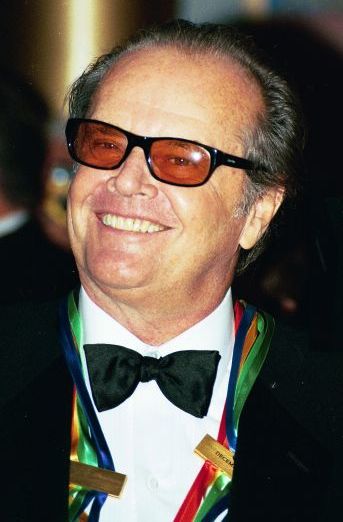
Jack Nicholson, an iconic figure in Hollywood, has left an indelible mark on the film industry with a career spanning over six decades. Born on April 22, 1937, in Neptune, New Jersey, as John Joseph Nicholson, he has become one of the most celebrated actors of his time. Known for his versatile roles, Nicholson’s life is a tapestry of extraordinary talent, complex relationships, and a profound impact on popular culture. This article explores the key milestones in Nicholson’s life, his rise to fame, and the lasting legacy he has created in the entertainment world.
Early Life and Unconventional Upbringing
Jack Nicholson’s early life was anything but conventional. Raised by his grandmother Ethel May and believing she was his mother, Nicholson only discovered at the age of 37 that his “sister” June was, in fact, his biological mother. This shocking revelation, which came to light through a Time magazine reporter’s investigation, was a testament to the complexities of Nicholson’s family dynamics. His father left shortly after his birth, leaving Nicholson to be raised in a family environment full of secrets and unconventional roles.
Growing up in Neptune City, Nicholson attended Manasquan High School, where he was voted “Class Clown” by his peers—a fitting precursor to his future career in Hollywood. However, his early years were also marked by a sense of rebellion and nonconformity, traits that would later define many of his most famous roles.
The Move to Los Angeles and Early Career
At 17, Nicholson moved to Los Angeles, where he began his career in the film industry. His early days in Hollywood were far from glamorous. Nicholson initially worked as an office assistant at MGM’s cartoon studio, where he considered pursuing a career as an animator. However, his passion for acting soon took over, and he enrolled in Jeff Corey’s acting classes, where he studied alongside future stars like Martin Landau.
Nicholson’s early roles were in low-budget horror films, with his first appearance in “The Cry Baby Killer” (1958). These films, often produced by Roger Corman, were far from the critical acclaim he would later receive, but they were essential in honing his craft and developing the distinct screen presence that would become his trademark.
Breakthrough with “Easy Rider” and the Path to Stardom
Jack Nicholson’s breakthrough came with the counterculture classic “Easy Rider” (1969), where he played the role of George Hanson, a lawyer who joins two bikers on a cross-country journey. His portrayal of Hanson, a character who embodies the disillusionment of the 1960s, earned him his first Academy Award nomination for Best Supporting Actor. The film, a cultural touchstone of its era, marked the beginning of Nicholson’s ascent to stardom.
“Easy Rider” was more than just a film role; it was a reflection of the changing social landscape of America during the late 1960s. Nicholson’s performance captured the spirit of a generation questioning authority and seeking new ways of living. His success in this film opened the doors to more substantial roles in Hollywood, paving the way for a series of critically acclaimed performances.
The Golden Era: Iconic Roles and Critical Acclaim
The 1970s and 1980s were a golden era for Jack Nicholson, during which he solidified his reputation as one of the most talented and versatile actors in Hollywood. This period saw him take on a variety of roles that showcased his range, from the intense and brooding to the charming and comedic.
One of Nicholson’s most celebrated performances came in the film “Five Easy Pieces” (1970), directed by Bob Rafelson. In this film, Nicholson played Bobby Dupea, a former piano prodigy turned oil rigger, who is caught between his working-class life and his upper-class family background. The film’s famous diner scene, where Nicholson’s character attempts to order a meal in a diner that doesn’t serve “plain toast,” has become an iconic moment in cinema history.
Nicholson’s collaboration with director Roman Polanski in “Chinatown” (1974) further cemented his status as a leading actor. In the film, he played Jake Gittes, a private detective who uncovers a web of corruption and deceit in 1930s Los Angeles. “Chinatown” is widely regarded as one of the greatest films of all time, and Nicholson’s performance is often cited as one of his best. His portrayal of Gittes earned him another Academy Award nomination, further solidifying his position as a top-tier actor.
In 1975, Nicholson delivered what is arguably his most famous performance in “One Flew Over the Cuckoo’s Nest,” directed by Milos Forman. His role as Randle P. McMurphy, a rebellious patient in a mental institution, won him his first Academy Award for Best Actor. The film, which is one of only three films to win the “Big Five” Academy Awards (Best Picture, Best Director, Best Actor, Best Actress, and Best Screenplay), is a poignant exploration of individuality versus institutional control. Nicholson’s portrayal of McMurphy is both heart-wrenching and inspiring, capturing the essence of a character who refuses to be broken by the system.
Expanding Horizons: Diverse Roles and Continued Success
As Nicholson’s career progressed, he continued to take on a wide variety of roles that demonstrated his ability to master different genres. In 1980, he starred as Jack Torrance in Stanley Kubrick’s horror masterpiece “The Shining.” Nicholson’s portrayal of Torrance, a writer who descends into madness while staying at an isolated hotel, has become one of the most iconic performances in horror film history. His delivery of the line “Here’s Johnny!” is now legendary, epitomizing the terrifying unraveling of his character’s sanity.
Nicholson’s versatility was further showcased in films like “Terms of Endearment” (1983), where he played Garrett Breedlove, an astronaut who becomes romantically involved with a widow played by Shirley MacLaine. His performance in this film earned him his second Academy Award, this time for Best Supporting Actor.
In 1989, Nicholson took on the role of the Joker in Tim Burton’s “Batman,” bringing a new level of depth and menace to the character. His performance was both charismatic and chilling, earning widespread acclaim and solidifying his status as one of Hollywood’s most bankable stars.
Personal Life and Relationships
Jack Nicholson’s personal life has been as colorful as his on-screen roles. Known for his charm and charisma, Nicholson has been linked to numerous high-profile relationships over the years. Despite his many romances, Nicholson has only been married once, to actress Sandra Knight from 1962 to 1968. The couple had one daughter, Jennifer Nicholson, who has also pursued a career in the entertainment industry.
One of Nicholson’s most notable relationships was with actress Anjelica Huston, with whom he was involved for 17 years. Their relationship was often tumultuous, marked by Nicholson’s infidelities, yet it remains one of the most significant partnerships of his life. Nicholson also had relationships with Rebecca Broussard, with whom he has two children, Lorraine and Raymond, and actress Lara Flynn Boyle.
Nicholson’s personal life, like his career, has been marked by a refusal to conform to societal expectations. He has often spoken candidly about his views on relationships, marriage, and family, reflecting the same sense of independence that characterizes many of his film roles.
Legacy and Cultural Impact
Jack Nicholson’s influence on the film industry and popular culture is undeniable. With twelve Academy Award nominations and three wins, he is one of the most honored actors in the history of the Oscars. His roles have spanned a wide range of genres, from drama and comedy to horror and romance, showcasing his extraordinary range as an actor.
Nicholson’s impact extends beyond his performances. He has been a vocal advocate for various social and political causes, including opposition to the Vietnam War and support for civil rights movements. His activism, combined with his larger-than-life persona, has made him a cultural icon, revered not only for his talent but also for his willingness to speak out on important issues.
In addition to his acting accolades, Nicholson is also known for his love of sports, particularly basketball. A longtime fan of the Los Angeles Lakers, Nicholson is a fixture at their games, often seen courtside cheering on his team. His passion for the sport has become part of his public persona, further endearing him to fans.
The Later Years and Semi-Retirement
In recent years, Jack Nicholson has taken a step back from acting, with his last major film role being in “How Do You Know” (2010). While rumors of his retirement have circulated, Nicholson himself has never confirmed that he has retired from acting entirely. However, his appearances on screen have become increasingly rare, leading many to believe that the legendary actor is enjoying a well-deserved break from the demands of Hollywood.
Nicholson’s legacy is firmly established, with his films continuing to inspire new generations of actors and filmmakers. His influence on the craft of acting, particularly his ability to portray complex, often flawed characters, remains a benchmark for aspiring actors. Nicholson’s body of work is a testament to his extraordinary talent and his enduring impact on the film industry.
Conclusion
Jack Nicholson is more than just an actor; he is a symbol of Hollywood’s golden era and a testament to the power of versatility, charisma, and unrelenting dedication to the craft. From his early days in low-budget horror films to his status as one of the most celebrated actors in cinematic history, Nicholson’s career is a journey of remarkable achievements and iconic performances.
His ability to connect with audiences, whether through the rebellious spirit of McMurphy in “One Flew Over the Cuckoo’s Nest,” the eerie madness of Jack Torrance in “The Shining,” or the devilish charm of the Joker in “Batman,” has made him a legend in his own time. Nicholson’s life and career continue to be a source of fascination and admiration, both within the film industry and among fans worldwide.
As Jack Nicholson enjoys his later years, his influence on cinema remains as strong as ever. His films, his performances, and his unique approach to the art of acting have left an indelible mark on the history of film, ensuring that his legacy will endure for generations to come.


