
Introduction
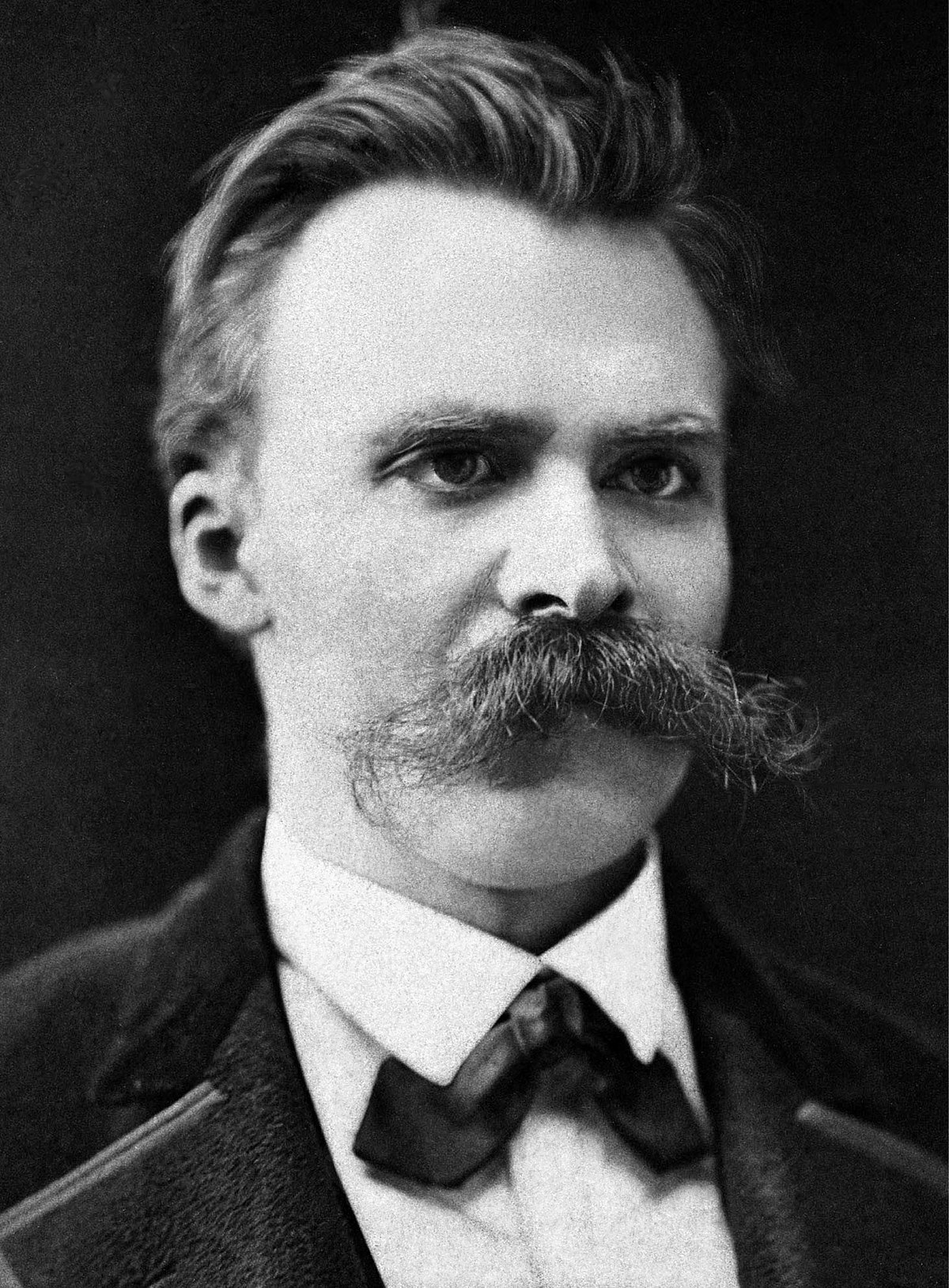
Friedrich Nietzsche, born on October 15, 1844, in Röcken, Saxony, Prussia, is one of the most influential philosophers of the 19th century. His ideas have profoundly shaped the intellectual landscape of the modern world, influencing fields as diverse as philosophy, literature, psychology, and even politics. Nietzsche’s work is characterized by its critique of traditional morality, religion, and the foundations of Western philosophy, particularly through concepts like the “will to power” and the “Übermensch” (often translated as “superman” or “overman”). This article delves into Nietzsche’s life, his rise to intellectual fame, and the lasting impact of his thought.
Early Life and Education
Friedrich Wilhelm Nietzsche was born into a deeply religious Protestant family. His father, Carl Ludwig Nietzsche, was a Lutheran pastor, and his mother, Franziska Oehler, was also deeply religious. Nietzsche’s early upbringing was steeped in Christian values, which later became a central focus of his philosophical critique.
Tragedy struck early in Nietzsche’s life when his father died in 1849, leaving his mother to raise Friedrich and his younger sister Elisabeth. The family moved to Naumburg, where Nietzsche attended a prestigious private school, Pforta. At Pforta, Nietzsche excelled in his studies, particularly in Latin, Greek, and music, which became lifelong passions.
In 1864, Nietzsche entered the University of Bonn to study theology and classical philology, but he soon abandoned theology, disillusioned by the dogmatic nature of religious studies. He transferred to the University of Leipzig, where he immersed himself in the study of philology under the tutelage of Friedrich Wilhelm Ritschl. It was during this period that Nietzsche encountered the works of Arthur Schopenhauer, whose pessimistic philosophy deeply influenced him.
The Birth of Nietzschean Philosophy
Nietzsche’s early philosophical development was closely tied to his academic career. In 1869, at the remarkably young age of 24, he was appointed as a professor of classical philology at the University of Basel in Switzerland. However, his interests soon shifted from philology to philosophy, driven by his growing disillusionment with the cultural and intellectual climate of the time.
In 1872, Nietzsche published his first major work, “The Birth of Tragedy from the Spirit of Music.” This book, which combined his love of music with his philosophical insights, was not well received by the academic community. In it, Nietzsche argued that the tragic art of the ancient Greeks, particularly as exemplified in the works of Aeschylus and Sophocles, represented the highest form of human expression. He introduced the concepts of the Apollonian and Dionysian as metaphors for the dual aspects of human nature: the rational, ordered, and structured (Apollonian) and the chaotic, passionate, and instinctual (Dionysian). Despite its initial lack of success, The Birth of Tragedy laid the groundwork for many of Nietzsche’s later ideas.
Break with Traditional Philosophy and Morality
In the 1870s, Nietzsche began to distance himself from traditional philosophy and its preoccupations with metaphysics, ethics, and the search for objective truth. Instead, he focused on the psychological and existential dimensions of human life. This period of his life was marked by a deepening friendship with the composer Richard Wagner, whose music and ideas initially captivated Nietzsche. However, this friendship eventually soured as Nietzsche became increasingly critical of Wagner’s work, which he saw as overly nationalistic and pandering to the masses.
Nietzsche’s philosophical evolution during this time is evident in his Untimely Meditations (1873-1876), a series of essays that critique contemporary culture and intellectual life. In these essays, Nietzsche attacks the historical and scientific tendencies of his time, which he believed stifled creativity and the human spirit. His writing during this period also reflects his growing interest in the idea of the “free spirit,” an individual who rejects conventional moral values in favor of personal autonomy and self-creation.
Key Works and the Development of Core Ideas
The 1880s marked a period of intense intellectual productivity for Nietzsche, during which he developed many of his most famous ideas. This decade saw the publication of several of his most important works, including “Thus Spoke Zarathustra,” “Beyond Good and Evil,” and “On the Genealogy of Morality.”
Thus Spoke Zarathustra (1883-1885) is perhaps Nietzsche’s most famous work, written in a poetic and prophetic style. In it, Nietzsche presents the character of Zarathustra, a prophetic figure who proclaims the death of God and the coming of the Übermensch, a new type of human being who transcends the limitations of conventional morality. The book is a profound exploration of themes such as the will to power, eternal recurrence, and the rejection of traditional moral values.
In Beyond Good and Evil (1886), Nietzsche critiques traditional morality and the philosophical systems that have upheld it. He argues that concepts of good and evil are not universal truths but are instead expressions of the will to power—humanity’s innate drive to assert and enhance its power. Nietzsche calls for a revaluation of all values, urging individuals to create their own values rather than adhering to those imposed by society.
On the Genealogy of Morality (1887) further develops these ideas by tracing the origins of moral concepts. Nietzsche contends that modern moral values, particularly those associated with Christianity, are rooted in a “slave morality” that arose from the resentment of the weak against the strong. He contrasts this with “master morality,” which values strength, nobility, and self-affirmation.
The Concept of the Übermensch and Will to Power
Two of Nietzsche’s most enduring and influential concepts are the Übermensch and the will to power. The Übermensch, or “overman,” represents Nietzsche’s vision of a new kind of human being who transcends the limitations of conventional morality and creates new values. The Übermensch is not bound by the traditional dichotomies of good and evil but instead embodies a life-affirming ethos that embraces the fullness of human existence.
The will to power is another central concept in Nietzsche’s philosophy. It refers to the fundamental drive that he believed underlies all human behavior—the desire to assert and enhance one’s power. For Nietzsche, the will to power is not merely a quest for dominance over others but a creative force that drives individuals to overcome obstacles, achieve greatness, and realize their potential.
These ideas have had a profound impact on subsequent philosophical thought, particularly in existentialism and postmodernism. However, they have also been misinterpreted and misused, most notably by the Nazi regime, which distorted Nietzsche’s ideas to support their ideology of racial superiority. It is important to note that Nietzsche himself was vehemently opposed to anti-Semitism and nationalism, and his concept of the Übermensch was never intended as a justification for the oppression of others.
Later Years and Decline
Despite his intellectual achievements, Nietzsche’s later years were marked by physical and mental decline. He suffered from a variety of ailments, including severe migraines, vision problems, and a possible syphilitic infection. These health issues forced him to resign from his professorship at Basel in 1879, after which he lived a nomadic life, moving between various European cities in search of a more favorable climate for his health.
By 1889, Nietzsche’s mental health had deteriorated to the point where he suffered a complete mental breakdown. The exact cause of his madness is still debated, with theories ranging from syphilis to a genetic disorder. He spent the last 11 years of his life in a state of near-total mental incapacitation, cared for by his mother and sister.
Nietzsche died on August 25, 1900, at the age of 55. His sister, Elisabeth Förster-Nietzsche, became the custodian of his literary estate. Unfortunately, Elisabeth was a fervent nationalist and anti-Semite, and she played a significant role in the posthumous misinterpretation and appropriation of Nietzsche’s ideas by the Nazi regime.
Legacy and Influence
Despite the controversies surrounding his life and work, Nietzsche’s influence on modern thought is undeniable. His ideas have been instrumental in the development of existentialism, postmodernism, and psychoanalysis. Philosophers such as Martin Heidegger, Jean-Paul Sartre, and Michel Foucault have all drawn upon Nietzsche’s work in developing their own theories.
Nietzsche’s critique of traditional morality and his call for the revaluation of values have also had a lasting impact on literature, art, and cultural criticism. Writers like James Joyce, Thomas Mann, and Hermann Hesse were influenced by Nietzsche’s ideas, as were artists and composers who sought to break free from traditional forms and create new modes of expression.
In contemporary culture, Nietzsche’s concepts of the Übermensch and the will to power continue to resonate, often appearing in discussions of self-actualization, leadership, and personal development. However, it is crucial to approach Nietzsche’s work with a critical eye, recognizing both its profound insights and the potential for misinterpretation.
Conclusion
Friedrich Nietzsche was a philosopher whose ideas challenged the very foundations of Western thought. His critiques of morality, religion, and traditional philosophy opened new avenues of inquiry and laid the groundwork for much of 20th-century intellectual thought. Though his life was marked by struggle and his ideas have been subject to misinterpretation, Nietzsche’s influence on modern philosophy and culture is immense and enduring. As we continue to grapple with the questions he raised, Nietzsche’s work remains a vital and provocative force in the ongoing search for meaning and understanding in a complex world.


