
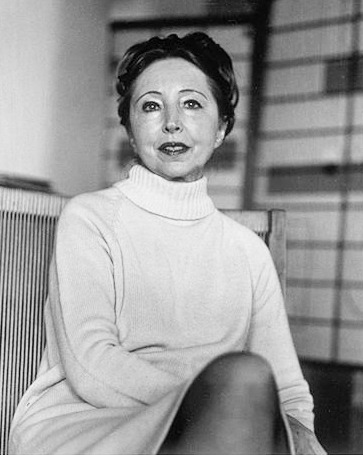
Anaïs Nin, born Angela Anaïs Juana Antolina Rosa Edelmira Nin y Culmell on February 21, 1903, in Neuilly-sur-Seine, France, is a literary icon whose work has left an indelible mark on modern literature. Her unique blend of fiction, autobiographical writing, and her deep exploration of human sexuality and psychology made her a groundbreaking figure in 20th-century literature. This article delves into the life and career of Anaïs Nin, exploring her journey to fame, the key works that define her legacy, and the cultural and historical context that shaped her writing.
Early Life and the Origins of Her Writing
Anaïs Nin was born into a family with a rich cultural background. Her father, Joaquin Nin, was a Cuban pianist, and her mother, Rosa Culmell, was a classically trained singer of Cuban and French descent. The Nin family’s musical and artistic inclinations deeply influenced Anaïs, fostering an environment where creativity and expression were highly valued.
Nin’s early life was marked by upheaval and change. At the age of eleven, her father abandoned the family, an event that had a profound impact on her psyche and her future writing. The young Anaïs began writing a diary—a practice she would maintain throughout her life—as a way to cope with her feelings of abandonment and to express her inner world. This diary, initially conceived as a letter to her estranged father, would later become one of her most famous works, offering an intimate glimpse into her thoughts, emotions, and experiences.
Move to the United States and Early Marriage
In the wake of her father’s departure, Anaïs, along with her mother and two brothers, moved to New York City. The transition from Europe to the bustling metropolis of New York was a significant shift, exposing her to a new cultural milieu and setting the stage for her development as a writer.
At the age of twenty, Anaïs married Hugh Parker Guiler, a banker who would later adopt the pseudonym Ian Hugo and pursue a career in filmmaking and engraving. Their marriage, however, was far from conventional. While it provided Nin with financial stability, it also became a source of frustration and confinement for her. The couple’s relationship, although enduring, was marked by emotional distance and infidelity, themes that would later emerge in her writing.
Paris and the Birth of Her Literary Career
In 1929, Nin and Guiler moved to Paris, where Anaïs found herself at the epicenter of a vibrant intellectual and artistic community. The French capital, with its bohemian lifestyle and rich cultural heritage, was a magnet for artists, writers, and thinkers from around the world. It was here that Anaïs Nin’s literary career truly began to take shape.
Living in Louveciennes, a suburb of Paris, Nin began writing the first part of what would become her famous diaries. These journals, which she meticulously kept over the years, document not only her personal experiences but also her relationships with some of the most influential figures of the time. Among these was the American writer Henry Miller, author of “Tropic of Cancer” and “Tropic of Capricorn,” with whom Nin developed a deep personal and professional relationship. Their intense and often tumultuous affair would have a lasting impact on both of their works.
During this period, Nin also published her first book, “D.H. Lawrence: An Unprofessional Study” (1932), a critical work on the English author D.H. Lawrence. This book marked the beginning of her exploration into themes of sexuality, passion, and the human psyche—topics that would become central to her later writings.
Exploration of Psychoanalysis
Anaïs Nin’s fascination with the human mind led her to psychoanalysis, a field that was rapidly gaining prominence in the early 20th century. Her interest in psychoanalysis was both personal and professional; she sought therapy to better understand herself and to explore the psychological underpinnings of her creative process.
Nin began therapy with Otto Rank, a disciple of Sigmund Freud, who had developed his own theories on creativity and the artist’s role in society. Rank’s influence on Nin was profound, and their relationship soon transcended the boundaries of therapist and patient, evolving into a romantic affair. This period of introspection and self-discovery deepened Nin’s understanding of human emotions and motivations, insights that she would later weave into her literary work.
In 1939, as World War II loomed over Europe, Nin returned to New York. Although she initially pursued a career in psychoanalysis, she soon realized that her true passion lay in writing. She returned to literature with renewed vigor, drawing on her psychoanalytic experiences to enrich her narratives.
Literary Works and Legacy
Anaïs Nin’s literary output is vast and varied, spanning several decades and encompassing multiple genres. Her work is often characterized by its lyrical prose, its focus on the inner lives of her characters, and its exploration of themes such as identity, sexuality, and the subconscious.
One of her most significant early works is “House of Incest” (1936), a surrealistic novel that delves into the complexities of human desire and identity. The book, with its dreamlike quality and abstract narrative, is a prime example of Nin’s unique literary style.
Nin’s other notable works include “Winter of Artifice” (1939), a collection of three novellas that further explore the themes of love, betrayal, and self-discovery. These stories are marked by their psychological depth and their exploration of the darker aspects of human nature.
The 1940s and 1950s saw the publication of several of Nin’s most famous works, including “Under a Glass Bell” (1944), “Ladders to Fire” (1946), and “Children of the Albatross” (1947). These books are part of a series known as “Cities of the Interior,” which examines the lives of women as they navigate the complexities of love, creativity, and self-expression.
One of Nin’s most controversial works is “Delta of Venus” (1977), a collection of erotic short stories that was published posthumously. The stories, written in the 1940s, were initially commissioned by a private collector, but they later gained widespread acclaim for their candid exploration of female sexuality. “Delta of Venus” is often seen as a pioneering work in the genre of erotic literature, and it has become one of Nin’s most enduring legacies.
Nin’s diaries, which she began writing as a young girl, are perhaps her most famous work. These journals, published in multiple volumes, offer a deeply personal account of her life, thoughts, and experiences. They provide invaluable insights into her relationships, her creative process, and her struggles as a woman in a male-dominated literary world. The diaries have been praised for their honesty, their literary merit, and their portrayal of a woman who defied societal norms to live life on her own terms.
Personal Life and Relationships
Anaïs Nin’s personal life was as complex and unconventional as her writing. Her marriage to Hugh Parker Guiler, while enduring, was marked by infidelity and emotional distance. Nin had numerous lovers throughout her life, including Henry Miller, Otto Rank, and Rupert Pole, whom she secretly married in 1955 despite still being married to Guiler.
Nin’s relationships were often tumultuous and passionate, reflecting her intense need for emotional and intellectual stimulation. She was a woman who refused to be confined by traditional notions of marriage and fidelity, and her personal life was a constant search for fulfillment and self-expression.
Nin’s second marriage to Rupert Pole was a secret she kept for many years, only revealing the truth shortly before her death. This double life is indicative of Nin’s complex nature and her ability to compartmentalize different aspects of her life.
Influence on Feminism and Erotica
Anaïs Nin’s work has had a lasting impact on both feminist literature and the genre of erotica. Her candid exploration of female sexuality, her emphasis on the importance of women’s voices in literature, and her defiance of traditional gender roles have made her a significant figure in the feminist movement.
Nin’s erotic writing, particularly in “Delta of Venus,” challenged the male-dominated narratives of sexuality that were prevalent at the time. Her work presented female desire as complex, multifaceted, and worthy of exploration in its own right. This was a radical departure from the way women’s sexuality had been portrayed in literature, and it opened the door for future generations of female writers to explore these themes more freely.
Final Years and Legacy
In the final years of her life, Anaïs Nin continued to write and publish, even as she battled cancer. She received an honorary doctorate from the Philadelphia College of Art in 1973, a recognition of her contributions to literature and the arts.
Nin passed away on January 14, 1977, in Los Angeles, California. She was 73 years old. Her legacy lives on through her extensive body of work, which continues to inspire and challenge readers around the world.
Anaïs Nin’s influence on literature, particularly in the realms of feminist and erotic writing, cannot be overstated. She was a trailblazer who dared to write about topics that were considered taboo, and she did so with a lyrical beauty and psychological depth that set her apart from her contemporaries.
Her diaries, in particular, remain a testament to her life and her artistry, offering an intimate portrait of a woman who was unafraid to explore the depths of her own soul and to share that exploration with the world. Through her writing, Anaïs Nin has secured her place as one of the most important and influential writers of the 20th century.
Conclusion
Anaïs Nin’s life and work are a testament to the power of the written word to explore the complexities of the human experience. Her literary contributions, from her pioneering erotic fiction to her deeply introspective diaries, have left a lasting impact on the world of literature. As a woman who lived life on her own terms, Nin’s legacy continues to inspire readers and writers alike to challenge societal norms, to embrace their creativity, and to explore the depths of their own humanity.


