
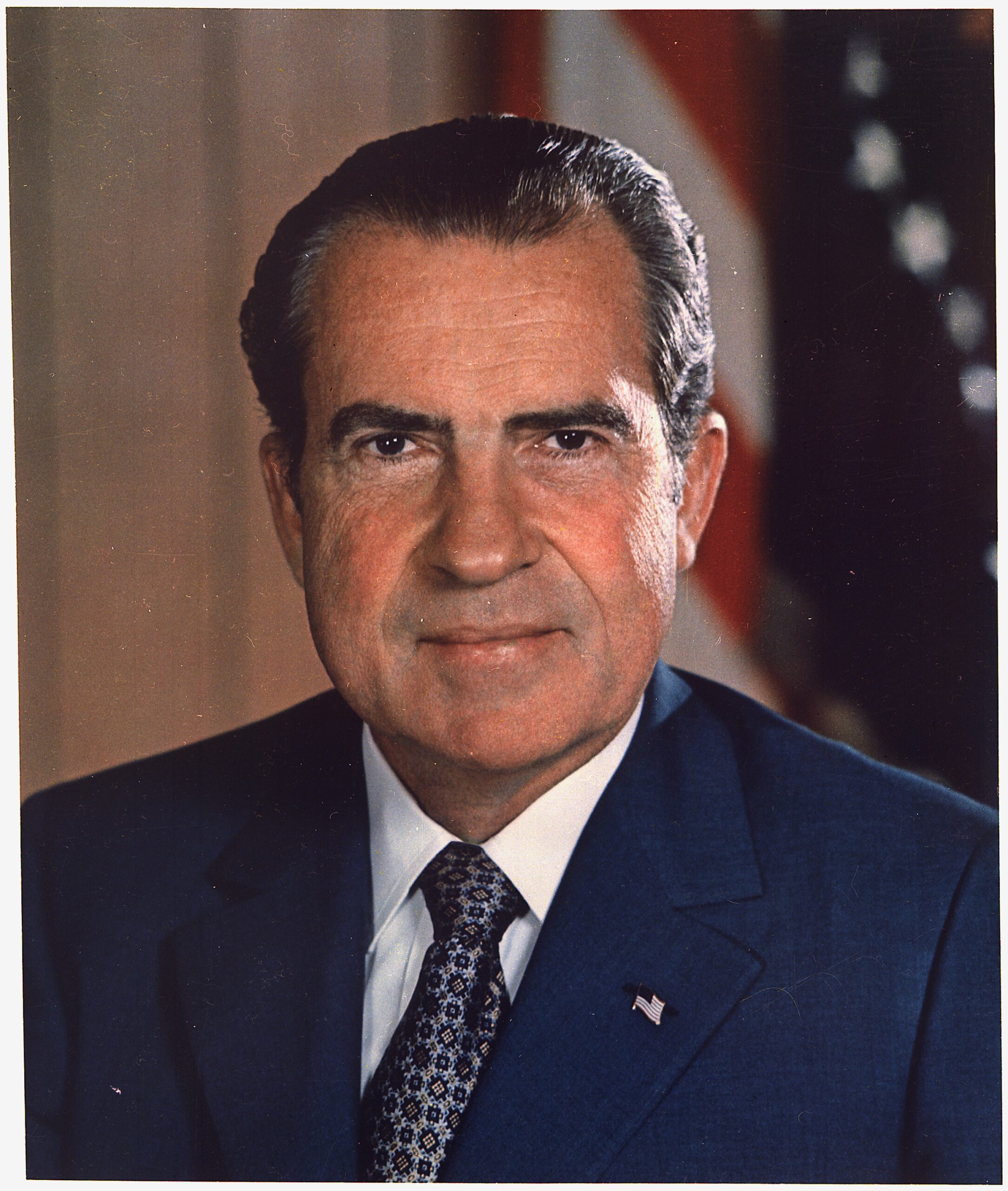
Richard Milhous Nixon, the 37th President of the United States, is one of the most complex and controversial figures in American history. His life, career, and presidency were marked by significant achievements and equally profound failures. Born on January 9, 1913, in Yorba Linda, California, Nixon’s journey from a modest upbringing to the highest office in the land is a story of ambition, resilience, and ultimately, a dramatic fall from grace.
Early Life and Education
Nixon was born into a modest Quaker family, the second of five sons. His father, Frank Nixon, owned a lemon ranch, and his mother, Hannah Milhous Nixon, was a devout Quaker who instilled in him a strong sense of discipline and morality. Despite financial hardships, Nixon excelled academically. He attended Whittier College, where he was a standout student, involved in debate and student government, and later earned a scholarship to Duke University School of Law, where he graduated third in his class.
Military Service and Entry into Politics
After graduating from law school, Nixon began practicing law in California. However, with the outbreak of World War II, he joined the Navy, where he served as a lieutenant commander in the Pacific Theater. His military service was a formative experience, instilling in him a deep sense of duty and patriotism that would later define his political career.
Nixon’s political career began in earnest in 1946 when he was elected to the U.S. House of Representatives. He quickly gained national attention for his role in the House Un-American Activities Committee (HUAC), where he helped to prosecute Alger Hiss, a former State Department official accused of being a Soviet spy. This case solidified Nixon’s reputation as a staunch anti-communist and propelled him into the national spotlight.
Rise to National Prominence
In 1950, Nixon was elected to the U.S. Senate, and two years later, he was chosen as Dwight D. Eisenhower’s running mate in the 1952 presidential election. As Vice President, Nixon played a critical role in the Eisenhower administration, particularly in foreign affairs. He traveled extensively, meeting with world leaders like Nikita Khrushchev and Fidel Castro, and was instrumental in shaping U.S. foreign policy during the Cold War.
Nixon’s vice presidency was not without controversy. In 1952, during the campaign, he faced accusations of financial improprieties, leading to the famous “Checkers speech,” where he defended himself on national television, saving his place on the Republican ticket. The speech was a masterclass in political communication, showcasing Nixon’s ability to connect with the American public on a personal level.
The 1960 Presidential Election
Nixon’s first bid for the presidency came in 1960 when he ran against John F. Kennedy. The election was one of the closest in American history, and Nixon’s loss is often attributed to his poor performance in the first-ever televised presidential debates. Kennedy’s charisma and telegenic presence contrasted sharply with Nixon’s haggard appearance, highlighting the growing importance of television in politics.
After his defeat, Nixon returned to California, where he ran for governor in 1962. He lost again, leading many to believe his political career was over. In a bitter concession speech, Nixon famously declared, “You won’t have Nixon to kick around anymore.” However, this was not the end of his political journey.
The Comeback and the Presidency
Nixon staged one of the most remarkable comebacks in American political history. By 1968, the political landscape had shifted dramatically. The Vietnam War had divided the nation, and civil unrest was widespread. Nixon, now positioning himself as a voice of stability and order, capitalized on the growing discontent. Running on a platform of “law and order” and a promise to bring “peace with honor” in Vietnam, Nixon won the presidency, defeating Vice President Hubert H. Humphrey.
Once in office, Nixon implemented several significant domestic policies, including the establishment of the Environmental Protection Agency (EPA) and the Occupational Safety and Health Administration (OSHA). He also enforced desegregation in Southern schools and introduced initiatives like revenue sharing with states, demonstrating his ability to govern pragmatically.
Foreign Policy Achievements
Nixon’s presidency is perhaps best remembered for its foreign policy achievements. His administration pursued a policy of détente with the Soviet Union, leading to the Strategic Arms Limitation Talks (SALT) and the Anti-Ballistic Missile Treaty, which helped to ease Cold War tensions. However, his most significant diplomatic achievement was the opening of relations with the People’s Republic of China.
In 1972, Nixon made a historic visit to China, the first by a sitting U.S. president. This visit marked a dramatic shift in international relations, as it paved the way for the normalization of relations between the two countries. Nixon’s trip to China was a masterstroke of diplomacy, using the relationship with China as leverage in dealings with the Soviet Union, thereby altering the global balance of power.
The Vietnam War and Its Aftermath
Nixon inherited the Vietnam War from his predecessors and faced the daunting task of ending U.S. involvement. His policy of “Vietnamization” aimed to gradually withdraw American troops while training and equipping South Vietnamese forces to take over the fight. Despite these efforts, the war dragged on, and public opposition in the United States grew increasingly intense.
In 1973, Nixon achieved a breakthrough with the signing of the Paris Peace Accords, which effectively ended U.S. involvement in Vietnam. However, the war left deep scars on the American psyche and contributed to a sense of disillusionment with government.
The Watergate Scandal and Resignation
The most defining and controversial moment of Nixon’s presidency came with the Watergate scandal. In June 1972, five men were caught breaking into the Democratic National Committee headquarters at the Watergate complex in Washington, D.C. The subsequent investigation revealed a widespread pattern of political espionage and sabotage orchestrated by members of Nixon’s re-election campaign.
As evidence mounted, it became clear that Nixon had been involved in the cover-up of the break-in. The release of the “Smoking Gun” tape, which recorded Nixon ordering the FBI to halt its investigation, led to an erosion of his political support. Facing almost certain impeachment, Nixon became the first and only U.S. president to resign from office on August 8, 1974.
Post-Presidency and Legacy
After his resignation, Nixon retired to his home in San Clemente, California. For a time, he remained largely out of the public eye, writing his memoirs and reflecting on his presidency. However, by the late 1970s and early 1980s, Nixon began to re-emerge as a public figure. He wrote several books on foreign policy and became an elder statesman, offering advice to subsequent presidents and engaging in diplomatic efforts.
Nixon’s death on April 22, 1994, marked the end of a tumultuous era in American politics. In the years since, his legacy has been the subject of intense debate. On one hand, he is remembered for his significant contributions to foreign policy and his efforts to advance civil rights and environmental protection. On the other hand, his involvement in Watergate and the subsequent cover-up has left an indelible stain on his reputation.
Conclusion
Richard Nixon’s life was one of extraordinary highs and devastating lows. He was a man of immense talent and ambition, whose achievements in domestic and foreign policy were overshadowed by the scandal that brought down his presidency. Nixon’s story serves as a cautionary tale about the dangers of unchecked power and the corrosive effects of political corruption. Yet, it also highlights the complexity of leadership and the capacity for redemption. Nixon’s legacy is a reminder that history’s judgment is never simple and that the full measure of a leader’s life cannot be captured in a single narrative.


