
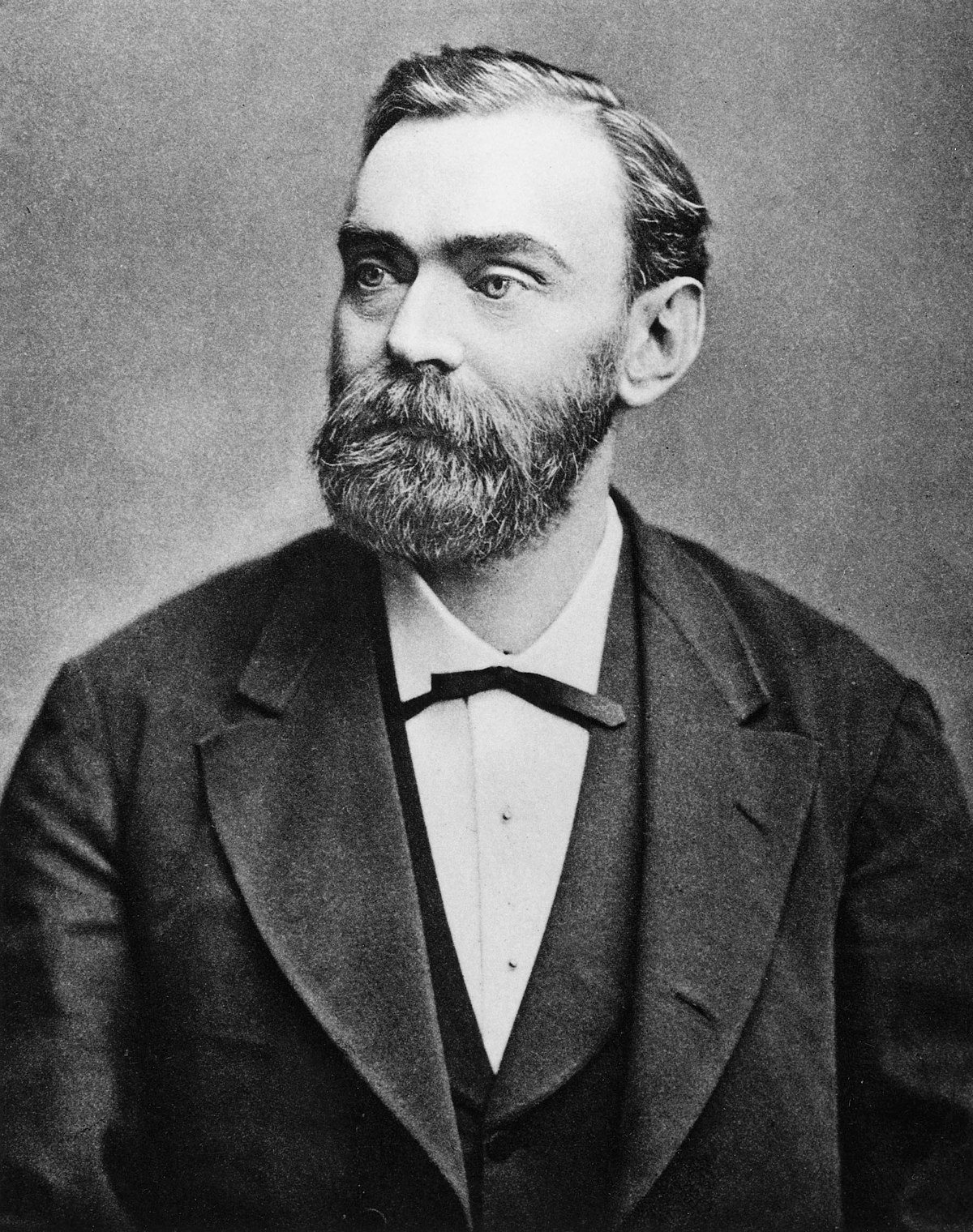
Introduction: The Man Behind the Nobel Prize
Alfred Nobel, born on October 21, 1833, in Stockholm, Sweden, is a name that resonates globally, primarily due to the prestigious Nobel Prizes that bear his name. These awards, given annually for achievements in physics, chemistry, medicine, literature, and peace, are among the most esteemed honors in the world. However, the story of Alfred Nobel himself is one of innovation, wealth, internal conflict, and a profound legacy that extends far beyond the invention for which he is most infamous—dynamite.
Early Life: A Foundation in Science and Innovation
Alfred Nobel was born into a family that valued education and ingenuity. His father, Immanuel Nobel, was an engineer and inventor who had his own share of successes and failures. Immanuel’s work took the Nobel family to Saint Petersburg, Russia, when Alfred was nine years old. Here, Immanuel started a mechanical workshop that provided equipment for the Russian army, and the family’s fortunes improved.
Alfred Nobel received a private education, where he showed a keen interest in literature, chemistry, and languages. By the time he was 17, he was fluent in multiple languages, including Swedish, Russian, French, English, and German. His father encouraged his scientific inclinations, particularly in chemistry, and sent him to study chemical engineering in Paris. This international education laid the groundwork for Alfred’s future as a global innovator and industrialist.
The Invention of Dynamite: A Double-Edged Sword
The most significant turning point in Alfred Nobel’s life came with his development of dynamite in 1867. Before this, he had been working with nitroglycerin, a highly volatile and dangerous substance discovered by the Italian chemist Ascanio Sobrero. Nitroglycerin was effective as an explosive but was extremely difficult to handle, often leading to deadly accidents. Nobel’s own younger brother, Emil, died in one such accident at the family’s factory.
Determined to find a safer way to use nitroglycerin, Nobel experimented with different substances that could stabilize it. He eventually found that mixing nitroglycerin with a type of silica created a malleable paste that could be shaped into rods and safely transported. Nobel named this new invention “dynamite,” derived from the Greek word “dynamis,” meaning “power.”
Dynamite was revolutionary. It provided a much safer and more efficient way to blast rock for mining, tunnel building, and construction projects. This invention brought Alfred Nobel immense wealth as he founded factories and laboratories across more than 20 countries to produce dynamite and other explosives.
Wealth and Inner Conflict: The Burden of Invention
While dynamite made Alfred Nobel one of the wealthiest men of his time, it also became a source of deep internal conflict. Nobel had envisioned his invention as a tool for progress, something that could help build infrastructure and improve lives. However, he was acutely aware that dynamite was also being used for destructive purposes, particularly in warfare. This dual use of his invention haunted him, leading to a profound moral dilemma.
Nobel’s awareness of the destructive power of his inventions was starkly highlighted when a French newspaper erroneously published his obituary in 1888, mistaking the death of his brother Ludvig for his own. The obituary titled “The Merchant of Death is Dead” condemned Nobel for profiting from the invention of explosives. This event is said to have deeply affected Nobel and influenced his decision to leave a more positive legacy.
The Nobel Prizes: A Legacy of Peace and Progress
In his final will, Alfred Nobel made a remarkable decision that would shape his legacy for generations. Upon his death, he left the majority of his fortune to establish the Nobel Prizes, awards to be given annually without distinction of nationality. The prizes were to be awarded in five categories: Physics, Chemistry, Medicine, Literature, and Peace. Nobel’s will specified that the Peace Prize was to be awarded to the person or organization that “shall have done the most or the best work for fraternity between nations, for the abolition or reduction of standing armies and for the holding and promotion of peace congresses.”
Nobel’s decision to fund these prizes was both unprecedented and revolutionary. At the time, there were no global awards of such magnitude and prestige. The establishment of the Nobel Prizes reflected Nobel’s belief in the importance of rewarding and encouraging advancements that benefit humanity. The first Nobel Prizes were awarded in 1901, five years after Nobel’s death in San Remo, Italy, on December 10, 1896.
The Impact of the Nobel Prizes
The Nobel Prizes quickly became the most prestigious awards in their respective fields, symbolizing the pinnacle of human achievement. The selection process is rigorous, with nominations reviewed by expert committees to ensure that the recipients are truly deserving of the honor. The Nobel Prizes have recognized some of the greatest minds and most significant contributions to human knowledge and peace, including luminaries such as Albert Einstein, Marie Curie, Martin Luther King Jr., and Malala Yousafzai.
The Nobel Peace Prize, in particular, has become a symbol of the global quest for peace and justice. Awarded in Oslo, Norway, the Peace Prize has been given to a diverse range of recipients, from political leaders and diplomats to grassroots organizations and activists. It reflects Nobel’s hope that his legacy would contribute to a more peaceful world.
Personal Life: A Reclusive Genius
Despite his global fame and immense wealth, Alfred Nobel was a private and somewhat solitary figure. He never married, although he had several close relationships throughout his life. One of the most significant was with the Austrian pacifist Bertha von Suttner, who is believed to have influenced Nobel’s decision to include the Peace Prize in his will. Von Suttner was an outspoken advocate for disarmament and peace, and her work resonated deeply with Nobel’s own concerns about the misuse of his inventions.
Nobel was also a prolific writer and a lover of literature, often composing poetry and plays in his spare time. His intellectual curiosity extended beyond science and technology to include philosophy, history, and the arts. Nobel’s writings reveal a man who was deeply reflective and concerned with ethical and existential questions, particularly regarding the impact of his work on society.
The Nobel Foundation and Its Work
The Nobel Foundation, established according to Alfred Nobel’s will, manages the finances and administration of the Nobel Prizes. The Foundation ensures that the prizes are awarded in a manner consistent with Nobel’s vision, maintaining the integrity and prestige of the awards. Over the years, the Foundation has also adapted to changes in the world, expanding the scope of the prizes and ensuring that they remain relevant in the modern era.
The selection committees for each prize are composed of experts in the respective fields, and the process is designed to be impartial and rigorous. The Nobel Prizes are awarded annually on December 10th, the anniversary of Nobel’s death, in a ceremony that includes a formal banquet attended by members of the Swedish royal family, international dignitaries, and the prize recipients.
The Enduring Legacy of Alfred Nobel
Alfred Nobel’s legacy is a complex and multifaceted one. On one hand, he was the inventor of dynamite, an explosive that has been used both for constructive and destructive purposes. On the other hand, he is the founder of the Nobel Prizes, which have become a symbol of excellence and humanitarianism.
Nobel’s life and work underscore the dual-edged nature of scientific and technological advancement. His internal struggle with the uses of his inventions reflects the broader ethical challenges that come with innovation. Nobel’s decision to use his fortune to reward those who contribute to the betterment of humanity was a way of reconciling these challenges, ensuring that his name would be associated not just with destruction, but with progress and peace.
Today, the Nobel Prizes continue to inspire and motivate individuals and organizations around the world to strive for excellence and to make meaningful contributions to society. Nobel’s vision of a world where scientific discovery, literary achievement, and the pursuit of peace are celebrated remains as relevant as ever.
Final Thoughts: Alfred Nobel’s Lasting Influence
Alfred Nobel’s life is a testament to the power of invention and the responsibilities that come with it. His story is one of contrasts—between wealth and solitude, invention and destruction, fame and privacy. Yet, through it all, Nobel remained committed to leaving a positive mark on the world.
The Nobel Prizes are a reflection of Nobel’s belief in the potential of humanity to achieve greatness, not just through innovation, but through compassion and a commitment to peace. His legacy serves as a reminder that even in the face of ethical dilemmas and personal challenges, it is possible to choose a path that benefits others and contributes to the common good.
As we continue to face the complexities of modern life, Alfred Nobel’s life and the prizes that bear his name remind us of the importance of striving for progress, not just for ourselves, but for the betterment of all humanity.


