
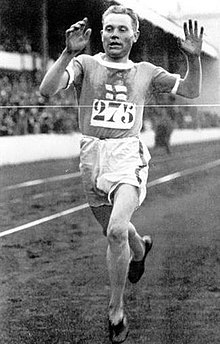
Paavo Johannes Nurmi, born on June 13, 1897, in Turku, Finland, is widely regarded as one of the greatest middle and long-distance runners in history. Known as one of the “Flying Finns,” alongside other legendary athletes like Ville Ritola and Hannes Kolehmainen, Nurmi’s athletic achievements in the 1920s set new standards in track and field. Over his illustrious career, Nurmi secured nine Olympic gold medals and three silver medals, solidifying his place as a legend in the world of athletics. This article explores the life, fame, and key moments that defined Paavo Nurmi’s extraordinary career, offering detailed insights into his legacy and the historical context in which he thrived.
Early Life and Background: The Making of a Legend
Paavo Nurmi was born into a working-class family in the coastal city of Turku, Finland. The late 19th and early 20th centuries were a time of significant political and social change in Finland, which was then an autonomous Grand Duchy under Russian control. These years were marked by growing national consciousness and a push for independence, sentiments that would later resonate with Nurmi’s own disciplined and determined character.
From a young age, Nurmi showed an interest in running, often racing through the forests and fields of his native land. His early years were shaped by the rugged Finnish landscape, which not only forged his physical endurance but also instilled in him a deep connection to nature. This connection is often reflected in the legendary tales that surround his life, where he is depicted racing against mythical creatures like fauns, centaurs, and elves—figures deeply embedded in Finnish folklore.
At the age of 17, Nurmi purchased his first pair of running shoes, marking the beginning of a journey that would see him rise to the pinnacle of the sporting world. His early training was characterized by a meticulous and scientific approach; he was known to run with a stopwatch in hand, carefully measuring his pace and progress. This methodical approach earned him the nickname “The Phantom Finn” or “The Human Stopwatch.”
Rise to Fame: The Olympic Glory of the 1920s
Paavo Nurmi’s rise to international fame began with his participation in the 1920 Antwerp Olympics. These games were the first to be held after World War I, and they provided a platform for Nurmi to showcase his exceptional talent. He won his first Olympic gold medal in the 10,000 meters, a victory that was soon followed by golds in the individual and team cross-country events. He also secured a silver medal in the 5,000 meters, narrowly missing out on a clean sweep of victories.
The 1924 Paris Olympics were the zenith of Nurmi’s career. These games saw him achieve a feat that remains unmatched in Olympic history: within just one hour, Nurmi won both the 1,500 meters and the 5,000 meters finals. His triumphs did not stop there; he also claimed gold in the individual and team cross-country events and the 3,000 meters team event. Nurmi’s dominance was so overwhelming that he was practically unbeatable in every event he entered.
The Paris Olympics cemented Nurmi’s status as a global sports icon. His ability to seamlessly transition between different distances and still outperform his competitors was a testament to his unparalleled endurance and strategic brilliance. Nurmi’s success in these games made him a symbol of Finnish resilience and excellence, elevating him to near-mythical status in his homeland.
The 1928 Amsterdam Olympics and the Controversy of 1932
By the time of the 1928 Amsterdam Olympics, Paavo Nurmi was a seasoned athlete with a reputation that preceded him. He continued to demonstrate his prowess on the track, winning gold in the 10,000 meters and silver in the 5,000 meters and 3,000 meters steeplechase. These victories brought his total Olympic medal count to 12, further establishing him as one of the most decorated Olympians of all time.
However, Nurmi’s career faced a significant setback in 1932 when he was barred from competing in the Los Angeles Olympics. The International Amateur Athletic Federation (IAAF) ruled that Nurmi had violated the amateurism rules, having received monetary compensation for his participation in various events. At that time, the Olympics were strictly amateur, and any athlete deemed a professional was disqualified from participating.
This ruling sparked considerable controversy, as many believed that Nurmi’s exclusion was unjust and deprived him of the opportunity to add to his already impressive medal haul. Despite this disappointment, Nurmi’s legacy remained intact, and he continued to be celebrated as a national hero in Finland.
The Later Years: From Athlete to National Symbol
After his competitive career ended, Paavo Nurmi remained an influential figure in Finnish sports and culture. He retired from athletics without regrets, focusing instead on his business ventures, including managing a haberdashery store. Nurmi’s post-athletic life was characterized by the same discipline and humility that defined his running career. He avoided the limelight, preferring a quiet life away from public attention.
In 1952, during the Helsinki Olympics, Nurmi made a memorable return to the international stage. He was given the honor of carrying the Olympic torch into the stadium, a symbolic gesture that recognized his contributions to the sport and his enduring legacy. The sight of Nurmi, now in his fifties, carrying the torch was a poignant moment, as it reminded the world of the glory days of one of the greatest athletes in Olympic history.
Paavo Nurmi passed away on October 2, 1973, at the age of 76. His death marked the end of an era, and he was accorded a state funeral, a rare honor that underscored his importance to the Finnish nation. Nurmi’s influence extended far beyond his athletic achievements; he was a symbol of Finnish identity, embodying the values of perseverance, humility, and excellence.
The Legacy of Paavo Nurmi: A Lasting Impact
Paavo Nurmi’s legacy is one of unparalleled athletic achievement and deep cultural significance. His dominance in middle and long-distance running during the 1920s set new standards in the sport, and his methodical approach to training influenced generations of athletes who followed.
Nurmi’s influence on Finnish culture cannot be overstated. He was more than just an athlete; he was a national icon who represented the spirit of a nation striving for recognition and success on the global stage. His quiet determination and relentless pursuit of excellence resonated with the Finnish people, who saw in him a reflection of their own struggles and aspirations.
In recognition of his contributions to sport and his lasting impact, several honors have been bestowed upon Nurmi. A statue of him stands proudly outside the Olympic Stadium in Helsinki, a permanent reminder of his legacy. In 2000, during the Helsinki European Capital of Culture celebrations, an opera titled “Paavo the Great. A Great Race. A Great Dream” was performed in his honor, celebrating his life and achievements.
Moreover, Nurmi’s name continues to be associated with excellence in athletics. The Paavo Nurmi Games, an annual track and field event held in Turku, attract top athletes from around the world, further cementing his legacy in the sport he once dominated.
Conclusion
Paavo Nurmi’s life and career are a testament to the power of discipline, strategic thinking, and the relentless pursuit of excellence. His achievements on the track, particularly during the 1920s, redefined the possibilities of middle and long-distance running and set a standard that athletes continue to aspire to today.
Nurmi’s legacy extends beyond his nine Olympic gold medals and his status as one of the greatest runners in history. He is a symbol of Finnish national pride and a beacon of what can be achieved through hard work, dedication, and humility. As we reflect on his life, it is clear that Paavo Nurmi’s impact will continue to be felt for generations to come, both in the world of athletics and beyond.


