
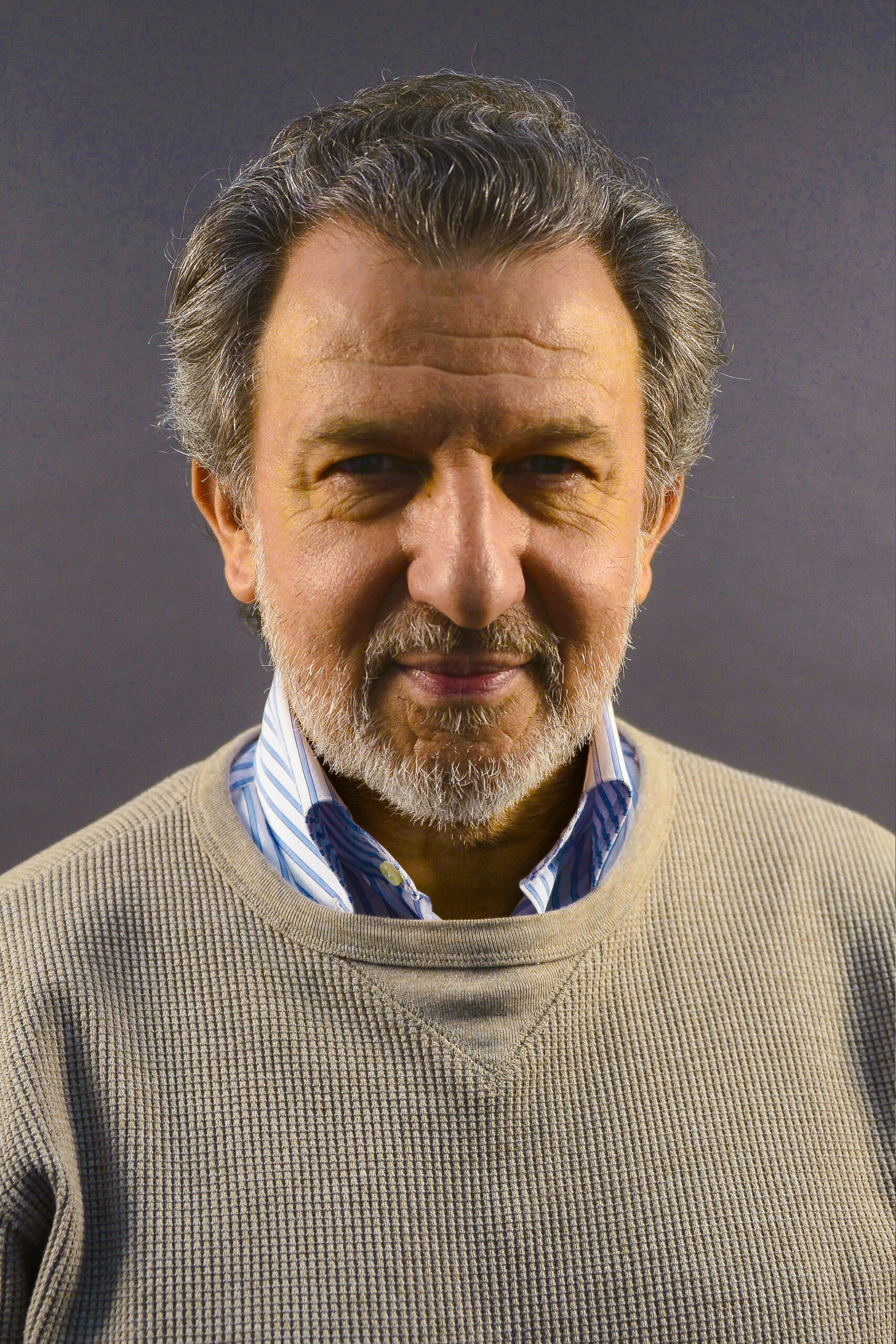
Early Life and Educational Background
Piergiorgio Odifreddi, born on July 13, 1950, in Cuneo, Italy, is a distinguished mathematician, logician, and public intellectual. His journey from a small town in Italy to becoming one of the most prominent voices in the fields of logic and mathematics is a tale of relentless pursuit of knowledge and a passion for critical thinking.
Odifreddi’s early education was heavily influenced by his family’s professional background—his parents were surveyors, a profession that certainly shaped his initial interest in geometry and mathematics. He began his formal education at a local elementary school run by the Giuseppine Sisters. However, his academic path took a significant turn when he entered the Seminary of Cuneo for middle school, a decision that reflects the traditional upbringing common in many Italian families at the time.
During his time at the seminary, Odifreddi formed connections with several notable figures, including Celestino Migliore, who would later become the Vatican’s observer at the United Nations. However, by the age of 14, Odifreddi decided to leave the seminary, marking the beginning of his journey toward a more secular and scientific approach to life. He then enrolled at the Technical Institute for Surveyors in Cuneo, where he studied alongside future prominent personalities like Flavio Briatore.
Odifreddi’s passion for mathematics led him to the University of Turin, where he pursued a degree in mathematics. His academic prowess was evident, and in 1973, he graduated with honors, specializing in logic—a field that would define much of his career.
Academic Career and Specialization in Logic
After earning his degree, Odifreddi sought to deepen his knowledge and expertise in logic, which led him to the United States. Between 1978 and 1980, he studied at the University of Illinois at Urbana-Champaign and the University of California, Los Angeles (UCLA), two institutions renowned for their research in logic and mathematics. This period was crucial for Odifreddi, as he immersed himself in the advanced theories and practices of mathematical logic, setting the stage for his future contributions to the field.
Odifreddi’s academic career took a dramatic turn in 1982 when he traveled to the Soviet Union to study at the University of Novosibirsk in Siberia. During his time there, he and two other Italians were detained by Soviet authorities in what appeared to be a retaliatory move for the arrest of a Soviet spy in Italy. The incident, which involved high-level diplomatic negotiations, ended with Odifreddi’s release after six months, thanks to the intervention of Italian President Sandro Pertini and Foreign Minister Giulio Andreotti.
Upon his return to Italy, Odifreddi resumed his academic career, teaching logic at the University of Turin. His expertise in the field continued to grow, and by 1985, he was a visiting professor at Cornell University, where he collaborated with prominent logicians such as Richard Platek and Anil Nerode. This period marked the beginning of Odifreddi’s international academic presence, which included teaching stints at prestigious institutions like Monash University in Melbourne and the Academia Sinica in Beijing.
Contributions to Mathematical Logic and Popular Science
Throughout the late 1980s and 1990s, Piergiorgio Odifreddi established himself as a leading figure in the field of mathematical logic. His 1989 publication, “Classical Recursion Theory,” is considered a seminal work in the theory of functions and sets of natural numbers. This book, along with his other academic writings, has had a profound impact on the study of logic, earning him numerous accolades, including the Galileo Prize from the Italian Mathematical Union in 1998.
Odifreddi’s academic achievements were complemented by his commitment to popularizing science and mathematics. He has authored several books aimed at making complex mathematical concepts accessible to a broader audience. His 2000 book, “La matematica del Novecento. Dagli insiemi alla complessità” (“The Mathematics of the Twentieth Century. From Sets to Complexity”), is a comprehensive exploration of the major developments in mathematics during the 20th century. This work, like many of his others, reflects Odifreddi’s ability to bridge the gap between rigorous academic research and public understanding.
In 2001, Odifreddi published “C’era una volta un paradosso. Storie di illusioni e verità rovesciate” (“Once Upon a Time There Was a Paradox. Stories of Illusions and Reversed Truths”), which further established his reputation as a skilled communicator of complex ideas. The book was well-received, earning him the Peano Prize from the Mathesis of Turin and the Fiesole Narrative Prize for scientific dissemination.
Political Involvement and Public Life
In addition to his academic and literary achievements, Piergiorgio Odifreddi has been an active participant in public life, often intertwining his scientific knowledge with social and political commentary. His critical stance on religion and his advocacy for secularism have made him a controversial figure, particularly in Italy, where the influence of the Catholic Church is significant.
Odifreddi’s political engagement became more pronounced in the mid-2000s when he decided to enter politics at the invitation of Walter Veltroni, then a prominent figure in the Italian Democratic Party (PD). In 2007, Odifreddi was elected as a representative in the PD’s primary elections and later became a member of the party’s Manifesto of Values Commission. His involvement in politics was driven by his desire to promote a rational, scientific approach to policy-making, though his tenure in the party was not without friction.
In 2008, Odifreddi left the Democratic Party in protest against what he perceived as its increasing alignment with clerical interests. However, he returned the following year to support Ignazio Marino’s candidacy for party secretary, indicating his ongoing commitment to influencing the direction of Italian politics through a lens of scientific rationality.
Odifreddi’s involvement in public debates extends beyond politics. He has been a regular contributor to Italian media, appearing on television programs such as “Crozza Italia” alongside comedian Maurizio Crozza and participating in discussions on controversial topics, including the Catholic Church’s stance on various social issues. His outspoken nature and willingness to challenge established norms have made him a polarizing figure, but also a respected voice in debates on science, religion, and society.
Literary Contributions and Awards
Odifreddi’s contributions to literature, particularly in the realm of popular science, have been widely recognized. His works are characterized by their clarity, wit, and the ability to make complex subjects accessible to non-specialists. His 2003 book, “Il diavolo in cattedra. La logica matematica da Aristotele a Godel” (“The Devil in the Chair. Mathematical Logic from Aristotle to Godel”), explores the historical development of logic from ancient Greece to the 20th century, providing readers with a deep understanding of the evolution of mathematical thought.
In 2005, Odifreddi was awarded the title of Commander of the Order of Merit of the Italian Republic, one of Italy’s highest honors, in recognition of his contributions to science and education. The same year, he published “Penna, pennello, bacchetta. Le tre invidie del matematico” (“Pen, Brush, Baton. The Three Envy of the Mathematician”), a book that delves into the intersections of mathematics with art, literature, and music, demonstrating the broad scope of Odifreddi’s intellectual curiosity.
Odifreddi has also been recognized internationally for his efforts in promoting science. In 2006, he received the Italgas Prize for Scientific Communication, and the following year, he was awarded the Capo d’Orlando Prize for scientific dissemination. These accolades highlight his success in making complex scientific ideas accessible to the public and his role as a leading figure in the global scientific community.
Recent Years and Continuing Influence
In the 2010s, Piergiorgio Odifreddi continued to expand his influence in both academia and popular culture. His later works, including “C’è spazio per tutti. Il grande racconto della geometria” (“There is Space for Everyone. The Great Story of Geometry”) and “Una vita di fuga. Il grande racconto della geometria moderna” (“A Life on the Run. The Great Story of Modern Geometry”), published by Mondadori, explore the history and impact of geometry, further cementing his reputation as a leading science communicator.
Odifreddi’s presence in the media has also remained strong. In 2011, he joined the cast of the television show “Il senso della vita” (“The Meaning of Life”), aired on Canale 5, where he discussed topics ranging from science and philosophy to current events. His ability to engage with a wide audience on such a variety of topics reflects his versatility as a thinker and communicator.
In 2016, Odifreddi took a public stance in the Italian constitutional referendum, advocating for a “No” vote, which eventually led to the resignation of then-Prime Minister Matteo Renzi. This involvement in political discourse underscores Odifreddi’s ongoing commitment to participating in the public debate, using his platform to influence important national issues.
Today, Piergiorgio Odifreddi continues to be an influential figure in the world of mathematics, logic, and public discourse. His writings, teachings, and public appearances have inspired generations of students, scholars, and the general public to think critically and question the world around them. As a prolific author, educator, and commentator, Odifreddi’s legacy is one of intellectual rigor, curiosity, and an unwavering commitment to the pursuit of knowledge.


