
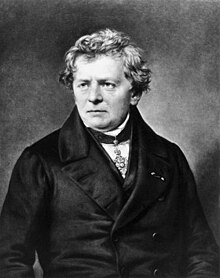
Georg Simon Ohm, born on March 16, 1789, in Erlangen, Germany, is a name synonymous with one of the most fundamental principles in physics—the Ohm’s Law. His life and work have left an indelible mark on the scientific community, particularly in the field of electricity. However, Ohm’s journey to fame was anything but straightforward. This article delves into his life, exploring his early years, the challenges he faced, the milestones of his career, and the legacy that continues to influence science today.
Early Life and Family Background
Georg Ohm was born into a modest family in Erlangen, Bavaria. His father, Johann Wolfgang Ohm, was a self-educated blacksmith, while his mother, Maria Elizabeth Beck, came from a family of tailors. Despite their lack of formal education, Ohm’s parents were determined to provide their children with a robust intellectual foundation. This was particularly true for Johann Wolfgang, who, despite his trade, was deeply committed to educating his children, especially in the fields of mathematics, physics, and philosophy.
The Ohm family faced numerous hardships, including the loss of several children in infancy, a common tragedy during that era. Out of seven siblings, only Georg, his brother Martin (who later became a notable mathematician), and his sister Elizabeth Barbara survived to adulthood. The rigorous education provided by their father set the stage for both Georg and Martin to excel academically, even in the face of limited formal schooling.
Education and Early Career Challenges
Georg Ohm’s formal education began at the Erlangen Gymnasium when he was eleven years old. However, the quality of education he received there was far from inspiring. The curriculum was rigid and uninspired, a stark contrast to the dynamic and thorough instruction he received at home from his father. The gap between the formal education system and his father’s teachings became evident as Georg and Martin advanced rapidly in their studies, particularly in mathematics and the sciences.
In 1805, at the age of sixteen, Ohm entered the University of Erlangen. However, his university years were marked by a lack of focus and discipline. Instead of dedicating himself to his studies, Ohm spent much of his time indulging in social activities such as dancing, skating, and playing billiards. His father, disappointed by his son’s lack of seriousness, withdrew him from the university after three semesters.
Ohm was then sent to Switzerland, where he secured a position as a mathematics teacher at a school in Gottstadt bei Nydau in 1806. It was here that Ohm began to take his studies seriously, largely due to the influence of Karl Christian von Langsdorf, a professor who had moved from Erlangen to Heidelberg. Langsdorf recognized Ohm’s potential and encouraged him to study the works of great mathematicians like Euler, Laplace, and Lacroix. Following this advice, Ohm dedicated himself to self-study, which eventually led him back to the University of Erlangen, where he earned his doctorate in 1811.
Professional Struggles and Early Scientific Work
Despite earning his doctorate, Ohm’s early professional life was marked by a series of disappointments and challenges. He briefly joined the faculty at the University of Erlangen as a professor of mathematics but found the prospects there dismal. Financial difficulties forced him to accept a teaching position at a poorly regarded school in Bamberg in 1813. This period of Ohm’s life was characterized by deep frustration, as he struggled to find a platform that would allow him to pursue his scientific ambitions.
During his time in Bamberg, Ohm authored an elementary textbook on geometry, but his dissatisfaction with his career trajectory remained. The school where he taught eventually closed in 1816, and Ohm was transferred to another school in Bamberg, where he continued to teach mathematics under less than ideal conditions.
A significant turning point came in 1817 when Ohm was offered a position at the Jesuit Gymnasium of Cologne. This school was far superior to his previous posts, boasting a well-equipped physics laboratory. It was here that Ohm began to conduct his own experiments, particularly after learning of Hans Christian Ørsted’s discovery of electromagnetism in 1820. Initially, Ohm’s experiments were driven by personal interest and his desire to deepen his understanding of the subject, but they soon took on a more serious and systematic character.
The Path to Ohm’s Law
By 1825, Ohm had become determined to secure a university position, realizing that achieving this goal would require him to publish significant scientific work. He began to focus his research on the mathematical relationships governing electrical circuits, inspired by the works of French scientists such as Fourier, Lagrange, and Poisson.
In 1825, Ohm published his first paper, which examined the decrease in electromagnetic force produced by a wire as its length increased. This work was based on meticulous experimentation and laid the groundwork for what would later become known as Ohm’s Law. The following year, Ohm published two more papers that provided a mathematical description of electrical conduction, modeled on Fourier’s study of heat conduction. These papers were crucial steps toward the formulation of Ohm’s Law, which posits that the current flowing through a conductor between two points is directly proportional to the voltage across the two points and inversely proportional to the resistance between them.
In 1827, Ohm published his most famous work, “Die galvanische Kette, mathematisch bearbeitet” (“The Galvanic Circuit Investigated Mathematically”). This book laid out his complete theory of electricity, including the mathematical basis for what would later be called Ohm’s Law. Despite the groundbreaking nature of this work, it was initially met with little enthusiasm. The scientific community, particularly in Germany, was not yet ready to embrace the mathematically rigorous approach that Ohm advocated. Furthermore, the conservative academic establishment in Germany was resistant to the changes that Ohm’s work implied, preferring to adhere to traditional, less quantitative approaches to physics.
The Struggles for Recognition
Ohm’s work was groundbreaking, but it did not immediately bring him the recognition he deserved. The academic and scientific establishments in Germany were slow to accept his theories, partly due to the prevailing preference for qualitative over quantitative methods in the study of physics. Additionally, Ohm’s personality and his intimate, perhaps introverted, nature did not lend themselves to the kind of networking and self-promotion that might have helped his career.
The response to his book was lukewarm, and Ohm faced considerable opposition from influential figures such as Johannes Schultz, a powerful figure in Berlin’s educational ministry, and Georg Friedrich Pohl, a professor of physics. These challenges led Ohm to resign from his position in Cologne in 1828, and he spent the next several years teaching in Berlin without any formal academic appointment.
It wasn’t until the 1830s that Ohm began to receive the recognition he had long sought. In 1833, he accepted a position at the Polytechnic School of Nuremberg, which, although not a university post, conferred upon him the title of professor. This role allowed Ohm to continue his research and teaching, albeit still without the level of recognition he deserved.
Late Recognition and Legacy
The tide finally began to turn for Ohm in the 1840s. In 1841, the Royal Society of London awarded him the prestigious Copley Medal, one of the highest honors in the scientific community, for his contributions to the field of electrical science. This recognition was followed by his election as a foreign member of the Royal Society in 1842. Other European scientific societies, including those in Berlin, Turin, and Munich, began to acknowledge Ohm’s work by electing him as a corresponding member.
Despite these honors, it wasn’t until 1849, just five years before his death, that Ohm achieved his lifelong dream of securing a university position. He was appointed as the curator of the physics collection at the University of Munich and began lecturing there. In 1852, he was finally appointed to the chair of physics at the University of Munich, a position he had sought for most of his career.
Ohm continued to work on various scientific problems until his death on July 6, 1854, in Munich. His contributions to physics, particularly his formulation of Ohm’s Law, have had a lasting impact on the field, influencing generations of scientists and engineers. Today, Ohm’s Law is a fundamental principle taught in physics courses around the world, and the unit of electrical resistance, the ohm, is named in his honor.
Conclusion: The Enduring Legacy of Georg Ohm
Georg Ohm’s life is a testament to the perseverance required to achieve scientific progress. Despite facing significant challenges, both professionally and personally, Ohm remained committed to his work, driven by a passion for understanding the natural world. His story is not just one of scientific achievement, but also one of resilience in the face of adversity.
Ohm’s legacy continues to resonate in the world of science and engineering. His formulation of Ohm’s Law provided a crucial foundation for the development of electrical theory and has had a profound influence on the design and operation of electrical systems. The challenges he faced in gaining recognition for his work serve as a reminder of the importance of persistence and the often difficult path to innovation.
As we remember Georg Ohm, it is important to recognize not just the laws and principles that bear his name, but also the personal struggles and the determination that defined his life. His contributions to science are a lasting reminder of the power of human curiosity and the relentless pursuit of knowledge.


