
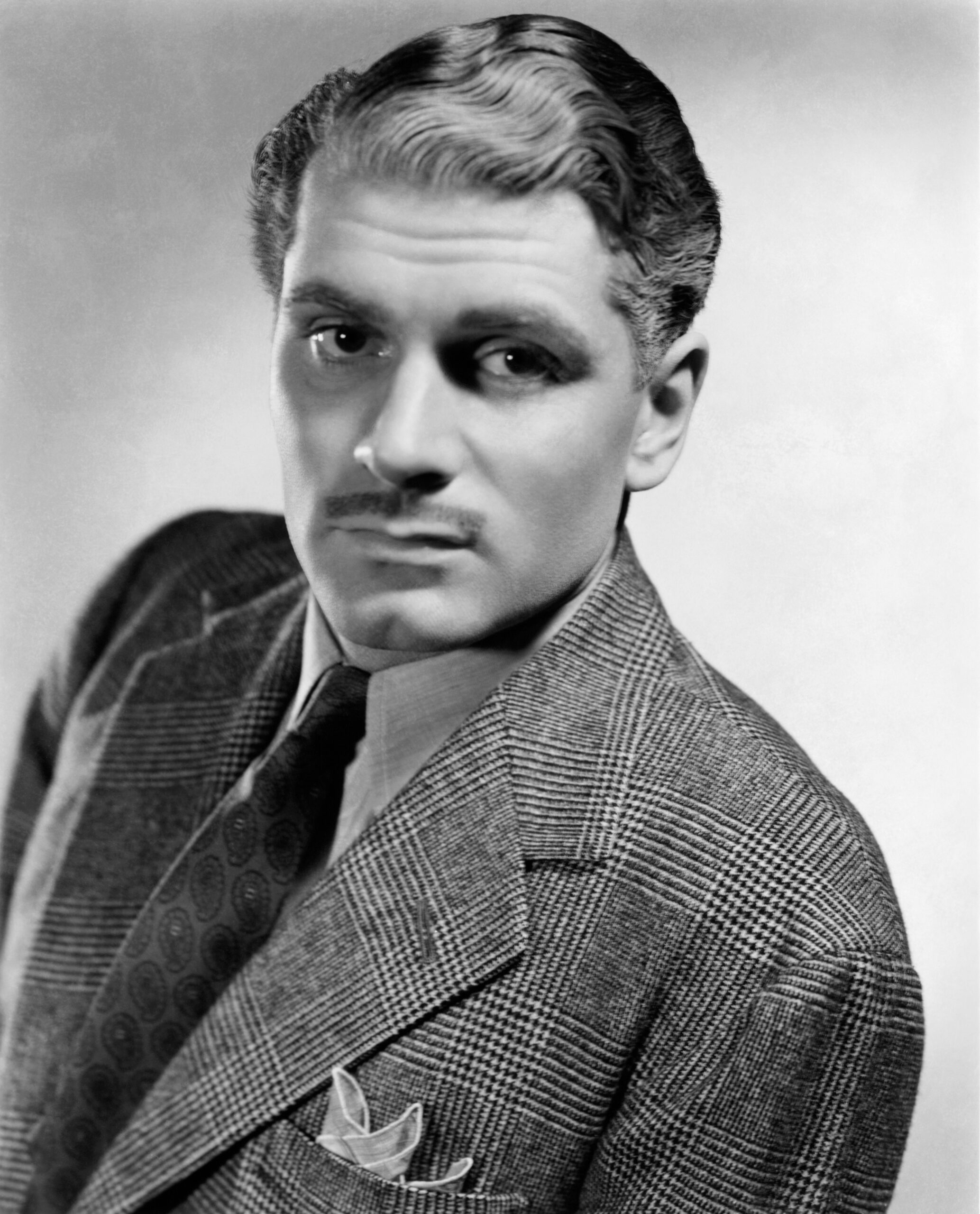
Laurence Kerr Olivier, born on May 22, 1907, in Dorking, England, stands as a towering figure in the annals of theatrical and cinematic history. Renowned for his unparalleled contributions to drama and film, Olivier’s career spanned over six decades, and his influence on acting and directing remains profound. This article delves into Olivier’s illustrious life, his rise to fame, and the highlights that defined his exceptional career.
Early Life and Beginnings in Acting
Laurence Olivier was born into a family with a strong religious background. His father, a preacher in the Church of England, was of Huguenot descent, and his mother was deeply involved in amateur theater. From an early age, Olivier exhibited a remarkable talent for acting. His early exposure to the stage came through performances in school plays, where his skills were first noticed by the celebrated actress Ellen Terry. At the age of fifteen, Olivier’s budding talent was further honed under the guidance of Elsie Fogerty, a prominent acting coach.
Olivier’s formal acting career began in 1925 when he joined the Birmingham Repertory Company. His early work was marked by a series of roles that showcased his versatility and depth. By 1930, he had made his West End debut, and his performance in Noel Coward’s “Private Lives” brought him considerable acclaim. This early success set the stage for a prolific career that would blend theater and film, with Shakespearean roles becoming a central focus.
Shakespearean Mastery and Theater Contributions
Olivier’s career was significantly shaped by his work with Shakespeare. His involvement with the Old Vic Theatre in London, where he served as Artistic Director from 1944 to 1949, was pivotal. During this time, Olivier became known for his powerful interpretations of Shakespearean roles, which established him as one of the foremost actors of his generation. His performances were characterized by a blend of physical prowess and emotional depth, bringing Shakespeare’s complex characters to life in a way that captivated audiences.
In 1935, Olivier’s passion for Shakespearean drama led him to co-found the Old Vic Theatre Company, which played a crucial role in revitalizing interest in Shakespeare’s works. His tenure at the Old Vic was marked by several landmark productions, including his celebrated portrayal of Hamlet, which would become a defining moment in his career.
Transition to Film and Hollywood
Olivier’s transition from theater to film was marked by several significant achievements. His first major film role came in 1939 with the adaptation of Emily Brontë’s “Wuthering Heights.” Olivier’s portrayal of Heathcliff was widely praised and established him as a leading figure in cinema. His success continued with the release of “Rebecca” (1940), directed by Alfred Hitchcock, where Olivier’s performance as Maxim de Winter further solidified his reputation.
The 1940s and 1950s saw Olivier’s film career flourish. His adaptation of Shakespeare’s “Henry V” (1944), which he both directed and starred in, won him an Academy Award for Best Actor and a Special Oscar for his achievements in the film. The film’s innovative use of color and sound techniques set a new standard for cinematic adaptations of Shakespeare’s plays. Following this success, Olivier’s adaptation of “Hamlet” (1948) won four Oscars, including Best Actor and Best Picture, and further cemented his place in cinematic history.
Legacy and Later Career
Olivier’s contributions to film continued with notable performances in “Richard III” (1956) and “Othello” (1965). His portrayal of King Richard III, in particular, was praised for its psychological complexity and dramatic intensity. His film career was complemented by his work in television and theater, where he continued to influence and inspire new generations of actors.
In addition to his acting career, Olivier made significant contributions to the field of theater as a director. His role as the Director of the National Theatre of Great Britain from 1962 to 1973 was instrumental in shaping the organization’s artistic vision and ensuring its prominence in the British theater scene. Under his leadership, the National Theatre became known for its high-quality productions and innovative approach to classical and contemporary works.
Personal Life and Honors
Olivier’s personal life was as dramatic as his on-screen performances. He was married three times: first to Jill Esmond, with whom he had a son, Tarquin, and later to Vivien Leigh, the acclaimed actress known for her role as Scarlett O’Hara in “Gone with the Wind.” Olivier’s marriage to Leigh was both professionally and personally significant, as they often collaborated on stage and screen. His third marriage was to Joan Plowright, with whom he had three children. Plowright remained a steadfast support throughout Olivier’s life, and their partnership was celebrated for its mutual respect and creative collaboration.
Throughout his career, Olivier received numerous accolades and honors. In 1947, he was knighted, and in 1960, he was made a baronet. His contributions to the arts were further recognized with an Academy Award for Lifetime Achievement in 1976. Olivier’s legacy endures through his extensive body of work and his impact on both theater and film.
Conclusion
Laurence Olivier’s life and career represent a remarkable journey through the world of acting and directing. From his early days on the stage to his groundbreaking work in film, Olivier’s influence is felt across multiple disciplines. His innovative approach to Shakespearean drama and his dedication to the craft of acting have left an indelible mark on the arts. Olivier’s career serves as a testament to the power of theatrical and cinematic expression, and his legacy continues to inspire actors and filmmakers around the world.
Explore More About Laurence Olivier
For those interested in delving deeper into Laurence Olivier’s life and career, exploring his filmography and theatrical productions provides a richer understanding of his contributions to the arts. His work remains a benchmark for excellence in both theater and film.


