
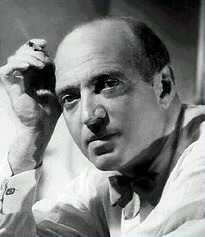
Max Ophüls, born Maximilian Oppenheimer on May 6, 1902, in Saarbrücken, Germany, is a distinguished name in the history of cinema. His work, marked by a unique stylistic approach and a profound understanding of human emotions, has cemented his legacy as one of the great directors of the 20th century. This article explores Ophüls’ life, career, and the enduring impact of his films, providing a comprehensive look at his age, fame, and life highlights.
Early Life and Career Beginnings
Max Ophüls was born into a Jewish industrialist family in Saarbrücken. His early life was marked by a shift from journalism to theater, driven by a passion for the performing arts. At 19, Ophüls began his career in theater, changing his last name from Oppenheimer to Ophüls to avoid any potential embarrassment or damage to his family’s textile business due to his artistic pursuits. This name change marked the beginning of his journey in the world of entertainment.
From 1921 to 1924, Ophüls worked as an actor in both Germany and Austria. His initial foray into the film industry began in 1924 when he transitioned to directing. He also ventured into theater production, including a notable tenure as the director of the Burgtheater in Vienna. During this period, Ophüls traveled extensively across Germany, including cities like Berlin, Frankfurt, Stuttgart, and Dortmund, honing his craft and expanding his influence in the arts.
Transition to Film and Emigration
The late 1920s saw Ophüls’ focus shift towards cinema. He started working with UFA, a major German film production company. His directorial debut came in 1930 with a children’s film. Despite his growing success, the rise of antisemitism in Germany made it increasingly difficult for Ophüls to continue his work there. His film “Liebelei” (1933), adapted from Arthur Schnitzler’s play, faced censorship by the Nazis, leading Ophüls to emigrate.
Ophüls and his family fled to France, where he directed “Une histoire d’amour” (1933), a French version of “Liebelei.” His work during this period included directing “La signora di tutti” (1934) in Italy and “Les jeux de l’argent” (1936) in the Netherlands. In 1938, Ophüls became a French citizen and adapted Goethe’s novel “The Sorrows of Young Werther” into a film.
World War II and Hollywood
With the outbreak of World War II, Ophüls was conscripted into the French army. After a brief period of military training, he was assigned to a radio division where he worked on anti-Nazi broadcasts. The advancing German forces forced Ophüls and his family to flee first to the south of France and then to Switzerland. In Switzerland, he directed two theatrical productions: “Romeo and Juliet” and “Henry VIII and His Sixth Wife.”
In 1941, Ophüls emigrated to the United States, settling in Hollywood. However, his arrival was met with mixed reactions. His European directorial style was unfamiliar to American audiences, and he faced competition from other European filmmakers who had also sought refuge in the U.S. After five years of struggling to find work, Ophüls secured a directing role in the film “Vendetta” (1946), produced by Howard Hughes. Unfortunately, the production was interrupted due to Hughes’ financial troubles, and the film was not released until 1949.
Success and Legacy
Ophüls’ American career took off with “Letter from an Unknown Woman” (1948), a film that remains one of his most celebrated works. The film’s success led to further opportunities, and in 1950, Ophüls returned to Europe, specifically France, where he continued to make significant contributions to cinema. His films from this period include “La Ronde” (1950), “Le Plaisir” (1952), and “The Earrings of Madame de…” (1953).
Ophüls’ directorial style was characterized by intricate, circular camera movements and a distinctive approach to storytelling that combined a light, seemingly frivolous presentation with profound, tragic themes. His films often explored the complexities of human relationships and the underlying melancholy of life, all while employing a visually dynamic and fluid style that enhanced their emotional impact.
In 1955, Ophüls directed his final film, “Lola Montès,” which was later partially re-edited by the production company. Max Ophüls passed away from a heart attack in Hamburg, Germany, on March 25, 1957. He was not buried in Germany but instead rests in the famous Père Lachaise Cemetery in Paris.
Conclusion
Max Ophüls’ career was marked by significant achievements and challenges, from his early theater work in Germany to his influential films in France and Hollywood. His unique directorial style and his ability to blend lightness with deep emotional resonance have left an indelible mark on the world of cinema. Despite the adversities he faced, including fleeing from Nazi Germany and struggling to establish himself in Hollywood, Ophüls’ legacy endures through his films, which continue to be celebrated for their artistic excellence and emotional depth.
Explore More About Max Ophüls
For a deeper dive into Max Ophüls’ life and work, consider exploring his filmography and the impact of his unique cinematic style on modern filmmaking.


