
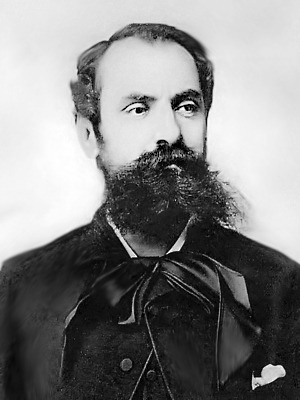
Alfredo Oriani, born on August 22, 1852, in Faenza, Ravenna, Italy, remains an enigmatic figure in the Italian literary and intellectual landscape. Though his works were not widely recognized during his lifetime, Oriani’s contributions to literature, philosophy, and political thought have since garnered significant attention. His life and work, marked by a profound sense of patriotism and intellectual rigor, offer a rich tapestry of insights into the socio-political dynamics of late 19th and early 20th-century Italy.
Early Life and Education
Alfredo Oriani was born into an aristocratic but economically declining family in the countryside of Faenza. His early life was shaped by the tension between the noble lineage of his family and their financial struggles. This dichotomy between social status and economic reality would later influence his views on society and politics.
Oriani pursued his education with a sense of determination, beginning his studies in Bologna, continuing in Rome, and finally graduating with a degree in Law from the University of Naples in 1872. Despite his legal education, Oriani quickly realized that his true passion lay elsewhere. His love for solitude, meditation, and literature led him to abandon his legal career and retreat to his family’s estate in Casola Valsenio, near Ravenna.
The Emergence of the Writer
In the isolation of his family villa, Alfredo Oriani began to cultivate his literary talents. His early works, including the autobiographical “Memorie inutili” (Useless Memories) published in 1876, reveal a complex personality, marked by romanticism and a deep sense of patriotism. This romanticism, intertwined with his patriotic fervor, would become a recurring theme in his later works.
Oriani’s early literary output includes a series of novels and stories that often explored controversial themes. His 1877 novel “Al di là” (Beyond), which depicted a love affair between two women, and the 1879 collection of stories “Gramigna,” were ahead of their time and earned him a reputation as a writer of “obscene” literature. Despite the negative reception from the more conservative elements of society, these works highlighted Oriani’s willingness to challenge societal norms and explore the darker aspects of human nature.
Philosophical and Political Thought
As Oriani’s literary career progressed, he began to delve deeper into philosophical and political thought. His work was heavily influenced by the ideals of Giuseppe Mazzini, an Italian politician, journalist, and activist for the unification of Italy, as well as by the philosophies of Friedrich Hegel and Friedrich Nietzsche. These influences are evident in his later works, where Oriani grappled with complex ideas about freedom, republicanism, and the nature of the state.
In 1886, Oriani published “Matrimonio” (Marriage), a polemical essay in which he took a firm stance against divorce, a hotly debated issue in Italy at the time. This work signaled a shift in Oriani’s focus from purely literary pursuits to more overtly political and philosophical themes. His subsequent works, such as “Fino a Dogali” (Up to Dogali) in 1889 and “La lotta politica in Italia” (The Political Struggle in Italy) in 1892, further solidified his reputation as a thinker deeply engaged with the political currents of his time.
Literary Works and Legacy
Despite his growing interest in political and philosophical issues, Oriani never abandoned his literary ambitions. The 1890s saw the publication of several of his most important novels, including “Il nemico” (The Enemy) and “Gelosia” (Jealousy) in 1894, “La disfatta” (The Defeat) in 1896, and “Vortice” (Vortex) in 1899. These works, characterized by their exploration of human emotions and social conflicts, showcased Oriani’s ability to weave complex narratives that reflected the turbulent nature of Italian society during this period.
One of Oriani’s most significant works, however, was his historical-philosophical treatise “La rivolta ideale” (The Ideal Revolt), published in 1908. This work represents the culmination of Oriani’s intellectual journey, blending his literary talent with his philosophical and political insights. In “La rivolta ideale,” Oriani argues for a form of idealism that transcends the material concerns of society, advocating for a return to the spiritual and moral values that he believed were being eroded by modernity.
The Impact of Fascism on Oriani’s Legacy
Alfredo Oriani’s death on October 18, 1909, in Casola Valsenio, marked the end of a life marked by intellectual exploration and personal struggle. However, his legacy was far from settled. In the years following his death, Oriani’s works and ideas were co-opted by the rising Fascist movement in Italy, which sought to claim him as a precursor to their ideology.
This appropriation of Oriani’s thought by Fascism has significantly complicated his legacy. While it is true that Oriani’s works contain elements that could be interpreted as supportive of nationalist ideals, it is also clear that his overall philosophy was deeply rooted in democratic and republican values. The Fascists’ radicalization of Oriani’s ideas has led to a misrepresentation of his true intellectual stance, a fact that has been recognized by later scholars and thinkers, including Antonio Gramsci and Benedetto Croce.
Gramsci, an Italian Marxist philosopher and communist politician, understood the deeper, more nuanced aspects of Oriani’s thought. He recognized Oriani as “the most honest and passionate representative of the Italian national-popular greatness,” suggesting that Oriani’s work, when viewed in its entirety, reflects a commitment to the democratic and republican ideals that were at odds with the authoritarianism of Fascism.
Historical Context and Nuances
Understanding Alfredo Oriani’s work and legacy requires a nuanced appreciation of the historical context in which he lived and wrote. Italy in the late 19th and early 20th centuries was a nation in flux, grappling with the challenges of unification, modernization, and the search for a national identity. Oriani’s work reflects these tensions, offering a window into the intellectual and cultural currents of the time.
His engagement with the ideas of Mazzini, Hegel, and Nietzsche places him within a broader European tradition of thought that was wrestling with questions of freedom, authority, and the role of the individual in society. Oriani’s exploration of these themes in his novels and essays reflects his deep concern with the direction in which Italian society was heading.
At the same time, Oriani’s work also reflects the personal struggles of a man who felt increasingly alienated from the world around him. His retreat to the solitude of his family’s estate, his ongoing battles with the literary establishment, and his eventual co-opting by Fascism all speak to the difficulties he faced in finding a place for his ideas within the rapidly changing landscape of Italian culture.
Rediscovery and Reappraisal
In recent years, there has been a renewed interest in Alfredo Oriani’s work, as scholars and readers seek to understand his true contributions to Italian literature and thought. This reappraisal has led to a more nuanced understanding of Oriani as a complex figure whose work cannot be easily categorized or reduced to a single ideological stance.
Oriani’s novels, essays, and philosophical works are now recognized for their depth and originality, offering valuable insights into the challenges of modernity and the search for meaning in a rapidly changing world. His exploration of themes such as love, jealousy, patriotism, and the struggle for individual freedom continues to resonate with readers today, offering a timeless reflection on the human condition.
Conclusion
Alfredo Oriani’s life and work offer a fascinating glimpse into the intellectual and cultural currents of late 19th and early 20th-century Italy. As a writer, philosopher, and political thinker, Oriani grappled with some of the most pressing issues of his time, from the challenges of Italian unification to the broader questions of freedom and authority that were shaping the modern world.
Despite the controversies that have surrounded his legacy, particularly the Fascist appropriation of his ideas, Oriani’s work remains a vital part of Italy’s literary and intellectual heritage. His novels and essays continue to be studied and appreciated for their depth, complexity, and relevance to contemporary issues.
In understanding Alfredo Oriani, we gain not only a deeper appreciation of his individual genius but also a richer understanding of the broader historical and cultural forces that have shaped modern Italy. His life and work stand as a testament to the enduring power of ideas and the importance of intellectual honesty in the face of societal change.


