
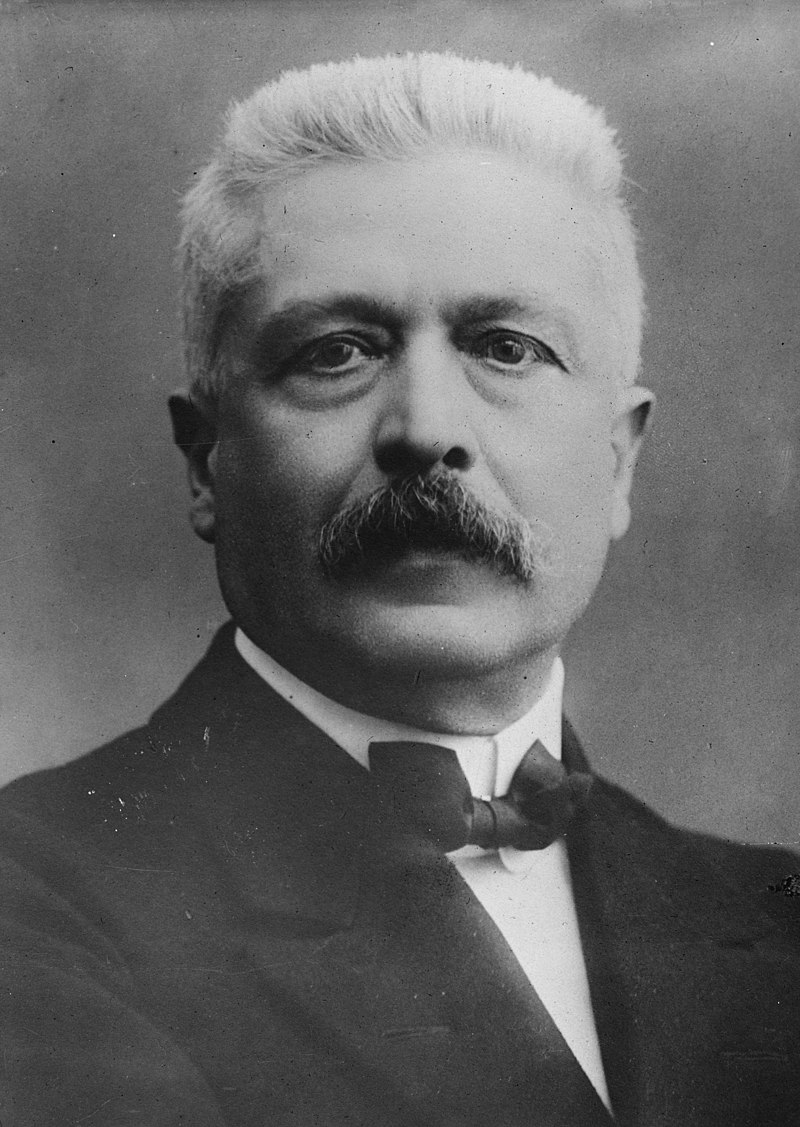
Vittorio Emanuele Orlando was a key figure in Italian political and legal history, known for his substantial contributions as a jurist and politician during a pivotal era. Born on May 19, 1860, in Palermo, Sicily, Orlando’s career spanned the turbulent years of Italy’s political transformation, including both World Wars and the rise of fascism.
Early Life and Education
Orlando was born into a culturally and intellectually stimulating environment. His father was an accomplished lawyer, and young Vittorio followed in his footsteps, delving into the study of law with a passion that led him to significant early achievements. At the age of 20, despite not yet having completed his degree, he won a competition at the Lombard Institute of Sciences and Letters with his study on electoral reform. This victory set the stage for his future prominence in legal academia.
In 1889, Orlando published Principi di diritto costituzionale (Principles of Constitutional Law), and the following year, Principi di diritto amministrativo (Principles of Administrative Law). The latter work was particularly influential, marking the foundation of modern public law in Italy. His academic prowess earned him a position at the University of Palermo, and later at the University of Rome, solidifying his reputation as a leading legal scholar.
Political Career
Orlando’s entry into politics was marked by his election as a deputy for Partinico in 1897. Aligning himself with Giovanni Giolitti, a dominant figure in Italian politics, Orlando quickly became a prominent player in the political arena. In 1903, he was appointed Minister of Public Instruction, and four years later, he moved to the Ministry of Justice, where he played a key role in managing relations with the Vatican.
His support for Pope Pius X’s opposition to the modernist movement enhanced his standing with the Church, which proved beneficial when he later supported Italy’s entry into World War I. Initially a neutralist, Orlando shifted his stance and endorsed the war effort, reflecting the complex and often shifting nature of Italian politics during this period.
Prime Ministership and World War I
The outbreak of World War I brought significant changes to the Italian government. In November 1914, Orlando was appointed Minister of Justice under Prime Minister Salandra. However, the situation evolved rapidly, and following Italy’s entry into the war and the fall of Caporetto in 1917, Orlando was appointed Prime Minister and Minister of the Interior.
During his tenure, Orlando had to navigate numerous challenges, including military setbacks and diplomatic crises. His leadership during the war was marked by his commitment to Italy’s war effort and his complex relationships with both military leaders and international allies.
Post-War Challenges and the Treaty of Versailles
The conclusion of World War I in November 1918 marked a period of intense diplomatic and political activity for Orlando. The Treaty of Versailles, however, left Italy with what was perceived as a “mutilated victory,” a term reflecting widespread dissatisfaction with the treaty’s terms. Orlando’s efforts to secure favorable terms for Italy were thwarted by the complex negotiations and competing interests at the Paris Peace Conference.
His disagreements with Foreign Minister Sidney Sonnino over territorial claims, including Fiume and Dalmatia, and his humiliation by U.S. President Woodrow Wilson, led to Orlando’s departure from the conference and subsequent resignation from the government in June 1919.
The Rise of Fascism and Later Years
Orlando’s relationship with the rising fascist movement was complex. Initially, he showed a degree of support for the new regime, participating in the drafting of the Acerbo Law, which consolidated fascist power in the parliament. However, he later became a vocal critic of the fascist government.
In 1924, he ran as a candidate in Sicily for the fascist bloc but soon became an opposition figure, particularly after Mussolini’s dictatorial regime became more entrenched. Orlando’s opposition to fascism became more pronounced in the late 1920s and 1930s, reflecting his commitment to democratic principles.
During World War II, Orlando played a role in the efforts to remove Mussolini from power. He was consulted by King Vittorio Emanuele III in July 1943, and his work contributed to the proclamation that the fascist regime had fallen. Serving as President of the Chamber of Deputies from June 25, 1944, to September 25, 1945, Orlando was a key figure in the transitional government.
Orlando retired from academia in 1931 due to age but continued to be active in politics and public life. He passed away on December 1, 1952, in Rome, at the age of 92, leaving behind a legacy of significant contributions to Italian legal and political history.
Conclusion
Vittorio Emanuele Orlando’s life was marked by his intellectual contributions and his involvement in crucial political events. From his early achievements in legal scholarship to his leadership during World War I and his complex relationship with fascism, Orlando’s career reflects the dynamic and often turbulent nature of early 20th-century Italian politics. His legacy continues to be remembered for his pivotal role in shaping modern Italian political and legal frameworks.


