
Introduction
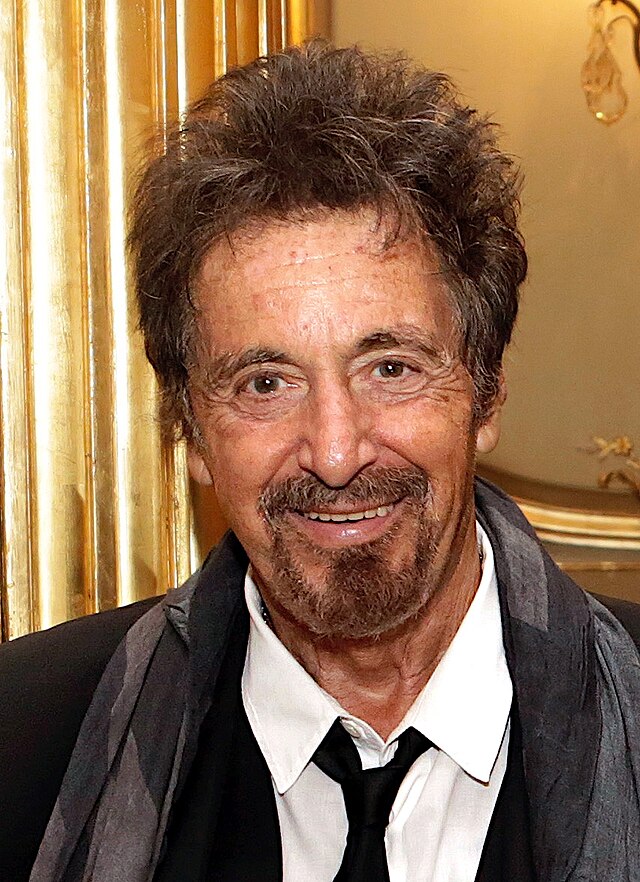
Alfredo James “Al” Pacino, born on April 25, 1940, in the Harlem neighborhood of New York City, is one of the most iconic actors in the history of American cinema. With a career spanning over five decades, Pacino has delivered some of the most memorable performances in film history. Known for his intense acting style and his ability to embody complex characters, Pacino has left an indelible mark on Hollywood and has become a symbol of the American dream. This article delves into the life, career, and legacy of Al Pacino, exploring the journey that has made him one of the most revered figures in the entertainment industry.
Early Life and Background
Al Pacino was born into a family of Italian immigrants, with roots tracing back to the island of Sicily. His parents, Salvatore Pacino and Rose Gelardi, separated when he was just a baby, leaving him to be raised by his mother and grandparents in the South Bronx. Growing up in a rough neighborhood, Pacino faced numerous challenges, including poverty and the absence of a father figure. Despite these hardships, he found solace in the world of movies and acting, developing a passion that would shape his future.
Pacino’s early years were marked by a sense of loneliness and alienation. He struggled academically and was often seen as a troublemaker in school, leading to multiple expulsions. By the age of 17, he dropped out of high school and moved to Greenwich Village, where he pursued his interest in acting. To support himself, Pacino took on various odd jobs, including working as a janitor, postal clerk, and shoe shiner. Despite these challenges, he remained committed to his dream of becoming an actor.
Early Career and Breakthrough
Pacino’s dedication to his craft led him to study acting at the Herbert Berghof Studio under the tutelage of renowned acting coach Charles Laughton. His talent was soon recognized, and in 1966, he was accepted into the prestigious Actors Studio, where he studied under Lee Strasberg, a key figure in the development of method acting. This training would prove crucial to Pacino’s development as an actor, helping him to refine his craft and prepare for the challenges of the industry.
Pacino’s breakthrough came in 1969 when he made his Broadway debut in the play “Does a Tiger Wear a Necktie?” His performance earned him a Tony Award, marking the beginning of his rise to fame. The following year, he made his film debut in “Me, Natalie,” but it was his role as a heroin addict in “The Panic in Needle Park” (1971) that caught the attention of Hollywood and established him as a promising young actor.
The Godfather and International Stardom
Pacino’s career reached new heights in 1972 when he was cast as Michael Corleone in Francis Ford Coppola’s epic crime drama “The Godfather.” Despite initial doubts about his suitability for the role, Pacino’s portrayal of the reluctant mafia boss became one of the most iconic performances in film history. His ability to convey the internal conflict of Michael Corleone, a man torn between loyalty to his family and his moral values, earned him critical acclaim and his first Academy Award nomination.
“The Godfather” was a massive success, and Pacino’s performance made him an international star. He reprised his role in “The Godfather Part II” (1974), which further solidified his reputation as one of the finest actors of his generation. The sequel, often regarded as one of the greatest films ever made, earned Pacino another Academy Award nomination and cemented his status as a Hollywood legend.
The 1970s: A Decade of Iconic Performances
The 1970s were a defining decade for Pacino, as he delivered a series of performances that showcased his range and intensity as an actor. In 1973, he starred in “Serpico,” a biographical crime drama based on the life of NYPD officer Frank Serpico, who exposed corruption within the police department. Pacino’s portrayal of the whistleblower earned him a Golden Globe Award and another Academy Award nomination.
The following year, Pacino starred in “Dog Day Afternoon” (1975), a film inspired by a real-life bank robbery in Brooklyn. His portrayal of Sonny Wortzik, a man driven to desperate measures, was both heartbreaking and riveting, earning him yet another Academy Award nomination. The film’s success further established Pacino as a leading actor of his generation.
In 1979, Pacino starred in the legal drama “…And Justice for All,” where he played a lawyer struggling with the ethical dilemmas of the American legal system. His performance, marked by a powerful courtroom monologue, earned him another Oscar nomination and showcased his ability to tackle complex moral issues on screen.
Struggles and Resilience in the 1980s
While the 1970s were a period of tremendous success for Pacino, the 1980s presented new challenges. His intense dedication to his craft, combined with the pressures of fame, began to take a toll on his personal life. Pacino struggled with alcohol addiction, a problem that he later acknowledged had nearly derailed his career. Despite these difficulties, he continued to work, delivering memorable performances in films like “Scarface” (1983), where he played the notorious drug lord Tony Montana.
“Scarface,” directed by Brian De Palma, became a cult classic, and Pacino’s portrayal of Montana, with his larger-than-life persona and infamous line “Say hello to my little friend,” became one of the most iconic characters in cinema history. The film’s success, however, was not immediate; it received mixed reviews upon release but later gained a massive following and became a staple of pop culture.
Despite the success of “Scarface,” the latter half of the 1980s was a challenging period for Pacino. Films like “Revolution” (1985) and “Sea of Love” (1989) received lukewarm responses, and Pacino began to withdraw from the public eye. During this time, he focused on his theater work, returning to the stage with performances in “American Buffalo” and Shakespearean plays like “Richard III” and “Julius Caesar.” These roles allowed him to reconnect with his roots in theater and provided a much-needed respite from the pressures of Hollywood.
Resurgence and Continued Success in the 1990s
The 1990s marked a resurgence in Pacino’s career, beginning with his acclaimed performance in “The Godfather Part III” (1990). Although the film did not achieve the same level of success as its predecessors, Pacino’s portrayal of an older, more reflective Michael Corleone was praised for its depth and emotional complexity.
In 1992, Pacino starred in “Scent of a Woman,” a film that would earn him his first Academy Award for Best Actor. His portrayal of Lieutenant Colonel Frank Slade, a blind, irascible retired Army officer, was both powerful and nuanced. The role allowed Pacino to display his range as an actor, blending humor, pathos, and intensity in a performance that remains one of his most celebrated.
The 1990s also saw Pacino take on a variety of roles that demonstrated his versatility. He played a charismatic lawyer in “The Devil’s Advocate” (1997), starred alongside Johnny Depp in the crime drama “Donnie Brasco” (1997), and delivered a memorable performance as a worn-out cop in Michael Mann’s “Heat” (1995). Each of these roles added to Pacino’s legacy as an actor capable of delivering compelling performances across different genres.
Directorial Ventures and Later Work
In addition to his work in front of the camera, Pacino also explored directing. In 1996, he directed and starred in “Looking for Richard,” a documentary that examined the relevance of Shakespeare’s “Richard III” to contemporary audiences. The film, a passion project for Pacino, showcased his deep love for Shakespeare and his commitment to making the Bard’s work accessible to modern viewers.
Throughout the 2000s and 2010s, Pacino continued to take on diverse roles in film and television. He portrayed Shylock in “The Merchant of Venice” (2004), starred in the political drama “Angels in America” (2003), and played real-life figures such as Jack Kevorkian in “You Don’t Know Jack” (2010) and Joe Paterno in “Paterno” (2018). These performances further demonstrated Pacino’s ability to inhabit a wide range of characters, from historical figures to fictional antiheroes.
Despite his advancing age, Pacino has remained a formidable presence in Hollywood. In 2019, he reunited with Martin Scorsese for “The Irishman,” a crime epic that also starred Robert De Niro and Joe Pesci. Pacino’s portrayal of labor union leader Jimmy Hoffa earned him widespread acclaim and another Academy Award nomination, solidifying his status as one of the greatest actors of his time.
Personal Life and Legacy
Al Pacino has always been fiercely protective of his private life, maintaining a level of mystery and distance from the public. He has never married, but he is the father of three children from his relationships with acting coach Jan Tarrant and actress Beverly D’Angelo. Pacino’s personal life, while often kept out of the spotlight, has been marked by his dedication to his family and his ongoing commitment to his craft.
Pacino’s legacy as an actor is unparalleled. His contributions to cinema have earned him numerous awards and accolades, including an Academy Award, two Tony Awards, and a Golden Globe Cecil B. DeMille Award for lifetime achievement. His influence on the craft of acting is profound, with countless actors citing him as an inspiration.
Beyond his achievements, Pacino’s dedication to his work and his ability to consistently deliver powerful performances have made him a cultural icon. His characters, from Michael Corleone to Tony Montana, have become part of the fabric of American cinema, representing the complexities of the human experience in all its forms.
Conclusion
Al Pacino’s journey from a troubled youth in the South Bronx to becoming one of the most celebrated actors in Hollywood is a story of resilience, talent, and passion. His ability to bring characters to life with intensity and authenticity has made him a legend in the film industry. As he continues to take on new roles and challenge himself creatively, Pacino’s legacy as one of the greatest actors of all time is assured.


