
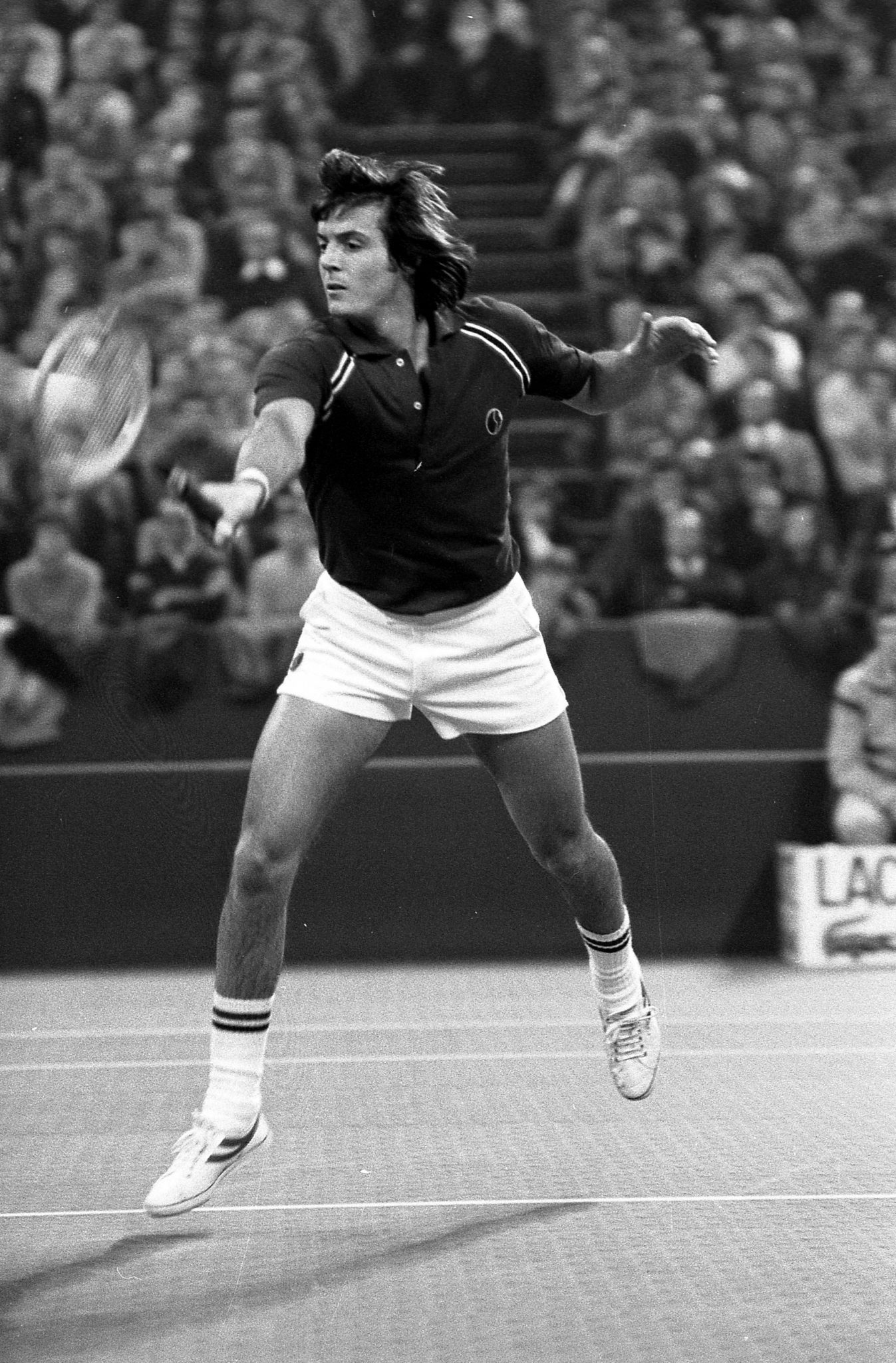
Adriano Panatta, born on July 9, 1950, in Rome, Italy, is one of the most iconic figures in the history of Italian tennis. His life and career are marked by remarkable achievements, fierce competition, and a deep love for the sport that defined much of his life. In this comprehensive exploration, we will delve into his age, fame, and the life highlights that made him a legendary athlete.
Early Life and Background
Adriano Panatta’s journey began in humble surroundings. His father, Ascenzio, was a custodian at the tennis courts of Tre Fontane in the EUR district of Rome. It was here, on these very courts, that Panatta was introduced to the sport that would shape his future. From a young age, he showed a natural affinity for tennis, quickly mastering the basics and impressing those around him with his determination and skill.
The proximity to the tennis courts allowed Panatta to spend countless hours practicing, and it wasn’t long before he began to outshine his peers. Despite his early promise, Panatta’s friends were initially skeptical of his dedication to the sport, nicknaming him “Ascenzietto,” a playful nod to his father. However, this skepticism would soon fade as Panatta’s talent became undeniable.
Rise to Prominence
Panatta’s rise to prominence in the world of tennis was swift. By the time he was in his early twenties, he had already begun to make a name for himself on the national circuit. His breakthrough moment came in 1970 during the Italian National Championships, where he faced the legendary Nicola Pietrangeli, the reigning champion and a revered figure in Italian tennis. In a match that would go down in history, Panatta defeated Pietrangeli, signaling the arrival of a new era in Italian tennis.
Panatta’s victory was not just a passing moment of brilliance; it marked the beginning of a new style of play that was more aggressive, youthful, and modern. His success against Pietrangeli, who represented the old guard of Italian tennis, was a clear indication that Panatta was poised to become a dominant force in the sport.
The Golden Years
The 1970s were the golden years of Adriano Panatta’s career. He was known for his exceptional technical skills, particularly his powerful forehand and his ability to execute precise volleys and drop shots. His game was characterized by a high level of tactical intelligence, which allowed him to outmaneuver his opponents on the court.
One of the most significant highlights of Panatta’s career was his performance at the 1976 French Open (Roland Garros). This tournament solidified his status as one of the world’s top players. Panatta’s victory in Paris was particularly memorable because he managed to defeat Bjorn Borg, one of the greatest players in tennis history, not once, but twice. This feat is a testament to Panatta’s skill and determination.
In addition to his success at Roland Garros, 1976 was also the year when Panatta led the Italian national team to victory in the Davis Cup, one of the most prestigious tournaments in international tennis. The Italian team’s triumph in the Davis Cup was a moment of immense pride for the country, and Panatta’s role in this victory further cemented his legacy.
Challenges and Setbacks
Despite his success, Panatta’s career was not without its challenges. One of the criticisms often leveled against him was his inconsistency. While he was capable of moments of brilliance, there were also periods when his performance was less than stellar. This inconsistency was sometimes attributed to his laid-back attitude, which some saw as a form of laziness. However, those who knew Panatta well understood that his relaxed demeanor was part of his unique approach to the game.
Another factor that may have contributed to Panatta’s occasional dips in form was his physical condition. Although he possessed extraordinary talent, some critics argued that his physique was not ideally suited to the rigors of professional tennis. This, combined with his sporadic dedication to training, meant that Panatta’s career was marked by highs and lows.
Despite these setbacks, Panatta remained a formidable competitor throughout the 1970s. He continued to achieve significant victories, including winning the WCT Finals in Houston in 1977 and the Florence tournament twice, in 1975 and 1980. He also reached the finals of the Italian Open in 1978, where he once again faced Bjorn Borg, losing in a hard-fought match.
Legacy and Influence
Adriano Panatta’s influence on tennis extends beyond his achievements on the court. He is credited with popularizing the sport in Italy, inspiring a new generation of players who looked up to him as a role model. His success helped raise the profile of Italian tennis on the international stage, and his charismatic personality made him a beloved figure among fans.
Panatta’s legacy is also reflected in his contributions to the sport after his retirement. He has remained active in the tennis community, working as a commentator and coach, and sharing his insights and experience with younger players. His passion for the game has never waned, and he continues to be a respected voice in the world of tennis.
Personal Life and Beyond Tennis
In addition to his tennis career, Panatta has led a rich and fulfilling personal life. In 2020, at the age of 70, he married Anna Bonamigo, a testament to the enduring nature of his charm and charisma. Panatta’s personal life has always been closely intertwined with his professional achievements, and his relationships have often been a source of inspiration and support throughout his career.
Panatta’s love for tennis is evident in the way he has continued to engage with the sport, even after his retirement from professional play. In 2009, he published his first book, “Più dritti che rovesci,” co-written with journalist Daniele Azzolini. The book is a reflection on his career, filled with anecdotes, insights, and stories that provide a deeper understanding of the man behind the tennis legend.
Historical Context and Impact
To fully appreciate Adriano Panatta’s impact on tennis, it’s essential to consider the historical context in which he rose to fame. The 1970s were a transformative period for tennis, with the sport becoming more globalized and competitive. Panatta’s emergence as a top player during this time was significant not only for Italy but for the sport as a whole.
Panatta’s style of play was a departure from the traditional, elegant tennis that had dominated the earlier decades. His aggressive approach, combined with his technical prowess, made him a formidable opponent on any surface, but particularly on clay courts. His success on clay, a surface that requires a unique blend of patience and power, is especially noteworthy given the challenges it presents.
Panatta’s rivalry with players like Bjorn Borg also played a crucial role in shaping the narrative of tennis during the 1970s. Their matches were highly anticipated events, and the tension and excitement they generated helped elevate the profile of tennis worldwide.
Conclusion
Adriano Panatta’s life and career are a testament to the power of passion, talent, and perseverance. From his humble beginnings in Rome to his triumphs on the international stage, Panatta has left an indelible mark on the world of tennis. His achievements during the 1970s, particularly his victory at the 1976 French Open and his role in Italy’s Davis Cup win, are milestones that continue to inspire new generations of tennis players.
Beyond his accomplishments on the court, Panatta’s legacy is also defined by his contributions to the sport as a mentor, commentator, and author. His love for tennis, combined with his charismatic personality, has made him a beloved figure in Italy and beyond.
As we reflect on Adriano Panatta’s life and career, it is clear that he is more than just a tennis player; he is a symbol of Italian excellence and a source of inspiration for athletes around the world. His story is a reminder that with dedication and passion, it is possible to overcome any obstacle and achieve greatness.


