
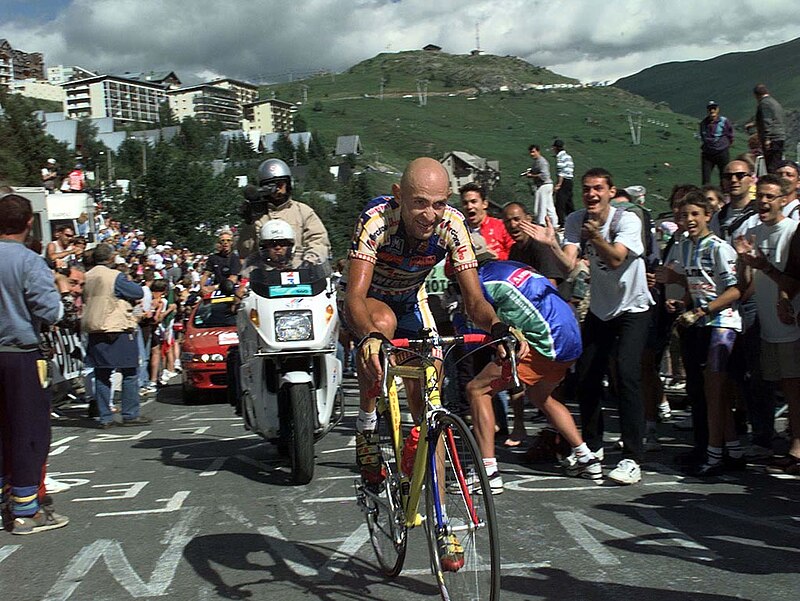
Marco Pantani, born on January 13, 1970, in Cesena, Italy, remains one of the most iconic and controversial figures in the world of professional cycling. Known as “Il Pirata” (The Pirate) for his distinctive bandana and aggressive riding style, Pantani’s life was a rollercoaster of triumphs and tragedies, marked by extraordinary athletic achievements and a deeply tragic personal downfall. This article delves into the life, career, and legacy of Marco Pantani, exploring the nuances of his fame, the historical context of his achievements, and the controversies that surrounded him.
Early Life and Career Beginnings
Marco Pantani grew up in Cesenatico, a town famous for its strong cycling tradition. From an early age, Pantani showed a natural talent for cycling, and his potential was quickly recognized. He turned professional on August 5, 1992, with the Carrera Tassoni team, a pivotal moment that would set the stage for his meteoric rise in the sport.
In the early years of his career, Pantani was known for his climbing prowess, a skill that would later define his legacy. His first major victory came in 1994 during the Giro d’Italia, where he won the Merano stage. This victory was followed by a triumphant performance in the Aprica stage, which solidified his reputation as one of the most promising climbers in professional cycling.
Rise to Fame: The Tour de France and Giro d’Italia
Pantani’s rise to international fame was nothing short of spectacular. In 1995, he secured a victory in the Flumserberg stage of the Giro di Svizzera. However, it was his performance in the Tour de France that year that truly catapulted him into the limelight. Pantani’s victories in the Alpe d’Huez and Guzet Neige stages made headlines worldwide, and his unique style of wearing a bandana instead of the traditional cycling cap earned him the nickname “Il Pirata.”
The same year, Pantani won a bronze medal at the World Championships in Duitama, Colombia. However, his ascent was abruptly interrupted by a severe accident during the Milano-Torino race, which resulted in a long period of recovery and forced him to miss an entire season.
Despite this setback, Pantani made a triumphant return in 1997 with the Mercatone Uno team. His perseverance paid off when he won the Alpe d’Huez and Morzine stages of the Tour de France. These victories, combined with his distinctive climbing ability, made him a household name and a fan favorite.
The Pinnacle of Success: 1998 Giro d’Italia and Tour de France
The year 1998 marked the peak of Pantani’s career. In a remarkable display of endurance and skill, he won both the Giro d’Italia and the Tour de France, a rare feat that placed him among the elite group of cyclists who have achieved this double victory in the same year. His performances in the Piancavallo, Montecampione, Plateau de Beille, and Les Deux Alpes stages were nothing short of legendary.
Pantani’s victory in the Tour de France, in particular, was a defining moment. Arriving at the Parc des Princes in Paris wearing the coveted yellow jersey, Pantani cemented his place in cycling history. His ability to dominate the most challenging mountain stages with an aggressive and fearless approach endeared him to fans and earned him widespread acclaim.
Controversy and Downfall: The 1999 Giro d’Italia Incident
Just as Pantani seemed poised to dominate the cycling world, his career took a tragic turn. In 1999, during the Giro d’Italia, Pantani was leading the race and appeared to be on the verge of another major victory. However, on the morning after his triumph in the Madonna di Campiglio stage, Pantani was disqualified from the race following a doping test that revealed an abnormally high hematocrit level, indicating the possible use of performance-enhancing drugs.
This incident marked the beginning of Pantani’s personal and professional decline. Despite maintaining his innocence and arguing that the test results were flawed, Pantani faced intense scrutiny from the media and the cycling community. The disqualification shattered his confidence, and he struggled to cope with the accusations and the pressure.
The Struggles with Mental Health and Addiction
Pantani’s struggles extended beyond the realm of professional cycling. The emotional toll of the doping scandal, combined with the physical strain of his career, led to a downward spiral that included bouts of depression and substance abuse. Pantani’s attempts to return to his former glory were met with limited success. He made several comebacks, including a notable victory in the Mont Ventoux stage of the 2000 Tour de France, but he was never able to regain the dominance he once held.
Pantani’s final years were marked by a series of personal crises. He withdrew from the 2003 Giro d’Italia after a fall, finishing in 14th place, far from the heights he had once reached. He later checked into a clinic near Padua to treat his addiction and depression, but his condition continued to deteriorate.
Tragic End: The Death of Marco Pantani
On February 14, 2004, Marco Pantani was found dead in a hotel room in Rimini, Italy. The cause of death was determined to be an overdose of heroin. The news of his passing sent shockwaves through the sports world and beyond, leading to an outpouring of grief and tributes from fans, fellow athletes, and media outlets.
Pantani’s death highlighted the darker side of professional sports, particularly the pressures faced by athletes at the pinnacle of their careers. The tragedy of Pantani’s life was not only in his untimely death but also in the way his once-celebrated career had unraveled so dramatically.
Legacy and Posthumous Recognition
Despite the controversies and the tragic end to his life, Marco Pantani remains a beloved figure in the world of cycling. His exploits on the mountains are still remembered with awe, and his nickname, “Il Pirata,” has become synonymous with his fearless and aggressive racing style.
In the years following his death, Pantani’s legacy has been the subject of much reflection and debate. In 2005, a bronze statue of Pantani was unveiled in his hometown of Cesenatico, capturing him in his signature climbing pose. The statue stands as a testament to his impact on the sport and the enduring admiration of his fans.
In August 2014, the investigation into Pantani’s death was reopened, with claims that he may not have died by suicide, as originally believed. While the case remains unresolved, the reopening of the investigation underscores the enduring fascination with Pantani’s life and the questions that still surround his death.
Historical Context: The Era of Doping in Cycling
To fully understand Marco Pantani’s story, it’s essential to consider the broader context of professional cycling during the 1990s and early 2000s. This period was marred by widespread doping scandals that implicated many of the sport’s top athletes. The use of performance-enhancing drugs, particularly EPO (erythropoietin), became a significant issue, leading to increased scrutiny and stricter testing protocols.
Pantani’s disqualification from the 1999 Giro d’Italia was part of a larger crackdown on doping in the sport. While Pantani maintained his innocence, the incident highlighted the challenges faced by athletes in an era where the line between natural talent and artificial enhancement was often blurred.
Conclusion: The Complex Legacy of Marco Pantani
Marco Pantani’s life and career are emblematic of the triumphs and tragedies that can accompany greatness. His extraordinary achievements on the bike, particularly his victories in the Giro d’Italia and Tour de France, are a testament to his talent and determination. However, his struggles with mental health, addiction, and the pressures of fame reveal the vulnerabilities that can lie behind even the most celebrated public figures.
Pantani’s story is a reminder of the human cost of professional sports, where the pursuit of excellence can sometimes come at a great personal price. His legacy, while complex, continues to inspire and provoke reflection among fans and athletes alike. As the world of cycling moves forward, the memory of Marco Pantani, “Il Pirata,” remains an enduring symbol of both the heights of sporting achievement and the depths of personal despair.


