
Introduction
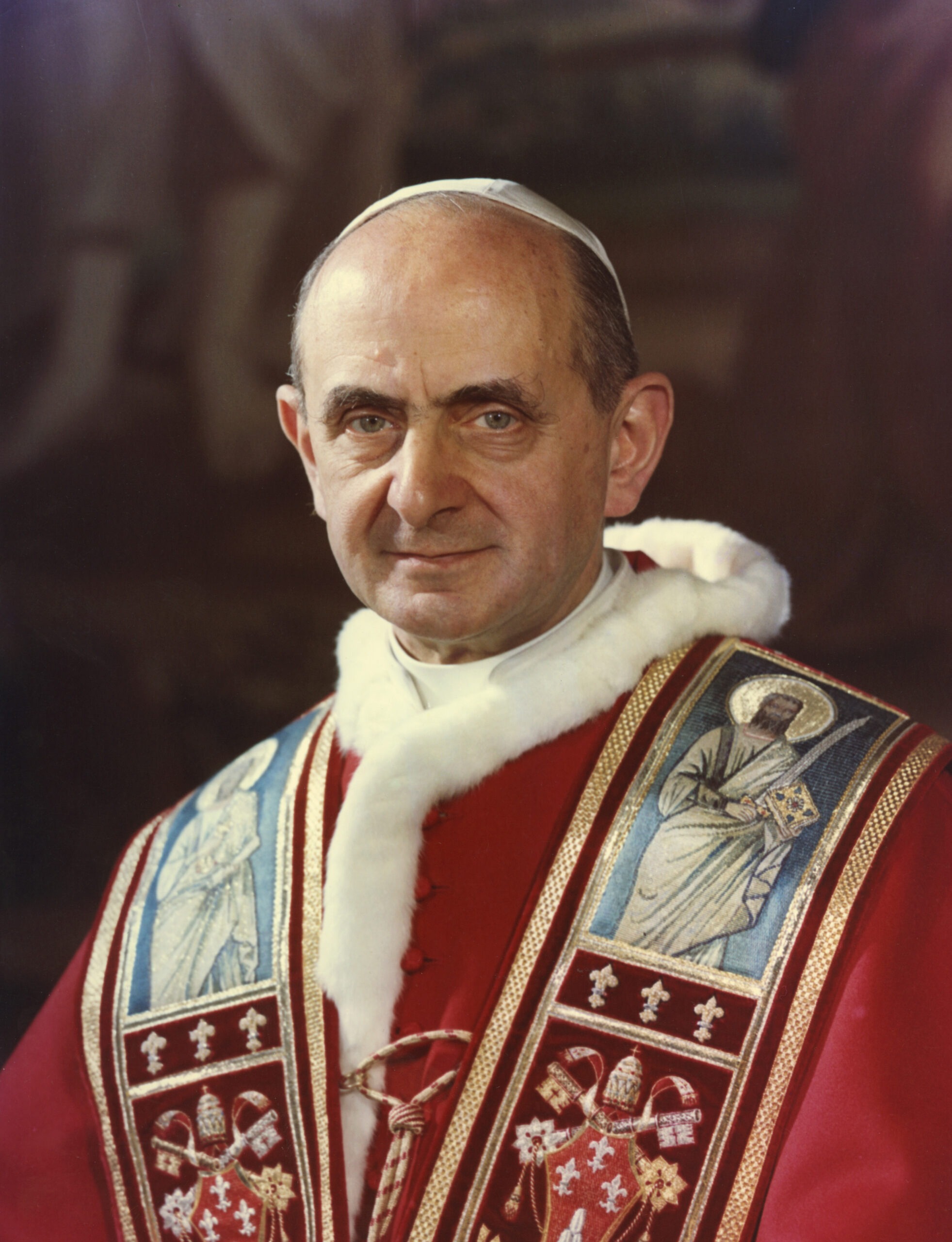
Pope Paul VI, born Giovanni Battista Enrico Antonio Maria Montini on September 26, 1897, in Concesio, near Brescia, Italy, is one of the most significant figures in the history of the Catholic Church. His papacy, which spanned from 1963 to 1978, was marked by monumental changes within the Church, profound social and political challenges, and a deep commitment to dialogue and modernization. This article provides an in-depth look at Pope Paul VI’s life, his rise to prominence, and the lasting impact of his papacy.
Early Life and Education
Giovanni Battista Montini was born into a devout Catholic family. His father, Giorgio Montini, was a prominent figure in Catholic political circles, directing the newspaper “Il Cittadino di Brescia” and serving as a deputy in the Italian Parliament under the banner of the Italian Popular Party, founded by Luigi Sturzo. His mother, Giuditta Alghisi, was equally devout, instilling in her children the values of faith and service.
Giovanni Battista had two brothers, Francesco and Ludovico. Due to his fragile health, young Giovanni was enrolled as an external student at the Jesuit college “Cesare Arici” in Brescia, where he received a strong foundation in classical studies. His early education was deeply influenced by the Jesuits, known for their rigorous intellectual and spiritual training.
In 1907, at the age of ten, Giovanni received the sacraments of First Communion and Confirmation from Pope Pius X during an audience in Rome. This event was a formative moment in his spiritual development, reinforcing his commitment to the Church.
After completing his secondary education at the public high school “Arnaldo da Brescia” in 1916, Montini began to engage with Catholic intellectual circles. He contributed to the student newspaper “La Fionda” and joined the Italian Catholic University Federation (FUCI), where he would later serve as ecclesiastical assistant, guiding young Catholic students in their faith and studies.
Early Priesthood and Vatican Service
Giovanni Battista Montini was ordained as a priest on May 29, 1920. Following his ordination, he moved to Rome to further his education, studying philosophy, civil law, and canon law. His academic pursuits were complemented by his work in the Vatican Secretariat of State, where he quickly rose through the ranks due to his intellectual abilities and dedication.
In 1925, Montini was appointed ecclesiastical assistant to FUCI, a position that allowed him to influence a generation of young Catholics during a time of great political and social change in Italy. His work with FUCI also brought him into contact with leading Catholic intellectuals and future leaders of the Church.
Montini’s talents were recognized by the Vatican, and in 1937, he was appointed as the Sostituto (Deputy) of the Secretariat of State, working closely with Cardinal Eugenio Pacelli, who would later become Pope Pius XII. During this period, Montini was deeply involved in the Church’s diplomatic efforts, particularly as World War II loomed on the horizon.
World War II and Post-War Challenges
The outbreak of World War II presented unprecedented challenges for the Catholic Church. Pope Pius XII and Montini worked tirelessly to maintain the Church’s neutrality while providing humanitarian aid to those affected by the conflict. Montini played a key role in drafting the Pope’s radio messages, which called for peace and condemned the horrors of war.
Despite accusations of collaboration with Nazi sympathizers, Montini and the Vatican secretly worked to protect Jews and other persecuted groups. The Church provided sanctuary to thousands of Italian Jews, hiding them in Vatican City and other Church properties. Montini’s efforts during this time underscored his commitment to peace and justice, principles that would later define his papacy.
After the war, Montini continued to serve in the Secretariat of State, where he became increasingly involved in the Church’s response to the challenges of the post-war world. In 1952, he supported the candidacy of Alcide De Gasperi, a devout Catholic and leader of the Christian Democrats, in Italy’s national elections. Montini’s influence in political and ecclesiastical circles grew, setting the stage for his future role as Archbishop of Milan.
Archbishop of Milan
In November 1954, Montini was appointed Archbishop of Milan, one of the most important dioceses in Italy. His tenure as Archbishop was marked by his efforts to engage with the diverse social and economic realities of Milan, a city at the heart of Italy’s industrial and cultural life. Montini established the Christian Workers’ Associations, which sought to build bridges between the Church and the working class, addressing their spiritual and social needs.
Montini’s leadership in Milan demonstrated his ability to navigate complex social dynamics and his commitment to social justice. His work in Milan earned him a reputation as a forward-thinking churchman who was unafraid to address the challenges of modern society.
In 1958, following the election of Pope John XXIII, Montini was elevated to the rank of cardinal. His appointment as cardinal further solidified his standing within the Church and positioned him as a key player in the Vatican’s future.
The Second Vatican Council
Pope John XXIII called the Second Vatican Council in 1962, a historic assembly that aimed to address the Church’s relationship with the modern world. Montini played a crucial role in the Council, helping to shape its direction and outcomes. When Pope John XXIII died in 1963, Montini was elected as his successor, taking the name Pope Paul VI.
As Pope, Paul VI made it his mission to continue and complete the work of the Second Vatican Council. The Council brought about significant changes in the Church, including reforms in liturgy, an emphasis on ecumenism, and a renewed focus on the Church’s role in promoting social justice and human rights. Paul VI’s leadership was instrumental in guiding the Church through this period of transformation.
Papal Reforms and Global Outreach
Pope Paul VI is often remembered for his commitment to modernizing the Church while maintaining its core doctrines. He was a tireless advocate for peace, dialogue, and social justice. One of his first acts as Pope was to sell the papal tiara, with the proceeds going to charity. This symbolic gesture reflected his desire to lead a Church that was humble and service-oriented.
In 1964, Paul VI became the first Pope in modern times to travel outside Europe, embarking on a historic pilgrimage to the Holy Land. During this journey, he met with Patriarch Athenagoras of Constantinople, marking a significant step toward healing the centuries-old schism between the Catholic and Orthodox Churches. This meeting was a powerful symbol of Paul VI’s commitment to ecumenism and reconciliation.
Paul VI’s global outreach continued with visits to India, Africa, Asia, and Latin America. He addressed the United Nations in 1965, calling for an end to war and the promotion of social justice. His travels and speeches underscored the universal mission of the Church and its responsibility to engage with the world’s social and political issues.
Challenges and Controversies
Pope Paul VI’s papacy was not without its challenges. The 1960s and 1970s were a time of social upheaval, and the Church faced internal and external pressures. The rise of secularism, the spread of Marxist ideologies, and the questioning of traditional moral teachings posed significant challenges to the Church’s authority.
One of the most controversial moments of Paul VI’s papacy was the publication of the encyclical “Humanae Vitae” in 1968. This document reaffirmed the Church’s opposition to artificial contraception, emphasizing that procreation should occur within the context of marriage. The encyclical sparked widespread debate and dissent within the Church, with many Catholics questioning the Church’s stance on issues related to sexuality and family life.
Despite the controversies, Paul VI remained steadfast in his commitment to the Church’s teachings. He believed that the Church’s role was to uphold moral principles, even in the face of opposition. His encyclical “Populorum Progressio,” published in 1967, highlighted the Church’s concern for the poor and called for greater efforts to address global inequalities.
The Final Years and Legacy
Pope Paul VI’s later years were marked by continued efforts to promote peace and social justice. He instituted the World Day of Peace, celebrated annually on January 1, as a way to encourage global efforts toward peace and reconciliation. His commitment to dialogue with other faiths and his efforts to bridge divides within the Church left a lasting legacy.
In 1978, the kidnapping and murder of Italian Prime Minister Aldo Moro by the Red Brigades deeply affected Paul VI. Moro was a close friend of the Pope, and his death was a personal and political tragedy. Paul VI’s heartfelt appeal for Moro’s release, published in Italian newspapers, demonstrated his deep compassion and his desire for peace in a time of violence.
Pope Paul VI died on August 6, 1978, at the papal residence in Castel Gandolfo, following a heart attack. His death marked the end of an era, but his influence on the Church continues to be felt. He was beatified by Pope Francis on October 19, 2014, and canonized on October 14, 2018, affirming his legacy as a holy and devoted servant of the Church.
Conclusion
Pope Paul VI was a pivotal figure in the history of the Catholic Church, guiding it through a period of significant change and challenge. His commitment to modernizing the Church, promoting peace, and addressing social issues left an indelible mark on the Church and the world. Despite the controversies and difficulties of his papacy, Paul VI’s legacy is one of humility, dialogue, and a deep commitment to the mission of the Church. His life and work continue to inspire Catholics and people of all faiths around the world.


