
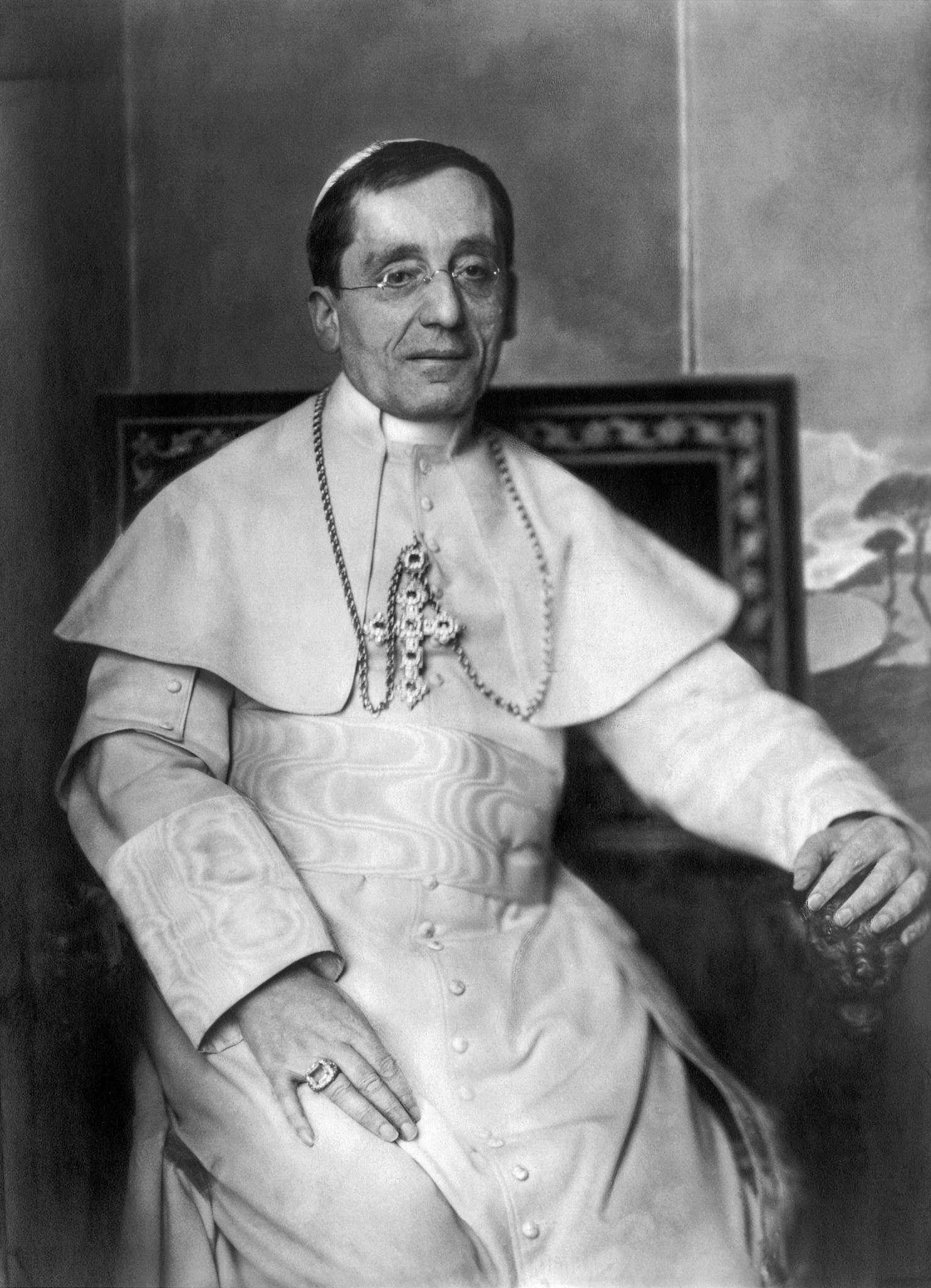
Pope Benedict XV, born Giacomo Paolo Giovanni Battista della Chiesa on November 21, 1854, in Pegli, Genoa, is a figure whose legacy is often overshadowed by the turbulent times in which he served. Despite the challenges of his era, his life and papacy are marked by significant contributions to the Catholic Church and global diplomacy. This article delves into the life, fame, and pivotal moments of Pope Benedict XV, offering insights into his journey from a young man in Genoa to one of the most influential religious leaders during the early 20th century.
Early Life and Education
Giacomo della Chiesa was born into a noble family, the third of four children to Giovanna and Giuseppe della Chiesa. His family belonged to the aristocratic lineage of the Migliorati, a fact that influenced his upbringing and early education. Despite his desire to join the diocesan seminary, Giacomo was compelled by his father to pursue studies in law. He graduated in 1875 with a doctorate in law from the Royal University of Genoa, a path that, while not his first choice, provided him with a strong foundation in legal and diplomatic matters—skills that would later prove invaluable in his ecclesiastical career.
Path to Priesthood and Early Ecclesiastical Career
Following his graduation, Giacomo was finally able to follow his true calling. He entered the seminary in Genoa and later moved to Rome, where he attended the Collegio Capranica and the Pontifical Gregorian University, earning a degree in theology. On December 21, 1878, he was ordained as a priest, marking the beginning of a distinguished ecclesiastical career.
Giacomo’s talents were quickly recognized, and he joined the Pontifical Academy of Ecclesiastical Nobles, the Vatican’s diplomatic service. His first significant diplomatic assignment was as secretary to Mariano Rampolla del Tindaro, the Apostolic Nuncio in Madrid. His time in Madrid was formative, as he honed his diplomatic skills and developed a deep understanding of international affairs. When Rampolla was appointed Cardinal and Secretary of State by Pope Leo XIII in 1887, della Chiesa was brought back to Rome, where he served in the Secretariat of State.
The Road to the Papacy
Della Chiesa’s rise within the Church hierarchy continued, despite political challenges. In 1907, he was appointed Archbishop of Bologna, a position he held until 1914. During this time, he was also created a cardinal by Pope Pius X on May 25, 1914. His appointment as cardinal came just a few months before the death of Pope Pius X, and to the surprise of many, Giacomo della Chiesa was elected pope on September 3, 1914, taking the name Benedict XV. His election was unexpected due to his association with the moderate wing of the Church, which was not favored by the more conservative factions within the conclave.
Pontificate During World War I
Benedict XV’s papacy began under the shadow of World War I, which had erupted just weeks before his election. His diplomatic skills were immediately put to the test as he sought to position the Vatican as a mediator for peace. He refused to hold a coronation in St. Peter’s Basilica, opting instead for a more modest ceremony in the Sistine Chapel, a choice that symbolized his commitment to humility and peace.
One of his first major acts as pope was the issuance of the encyclical “Ad Beatissimi Apostolorum” on November 1, 1914, in which he called for peace and urged world leaders to end the war. Despite his efforts, including offering a detailed seven-point peace proposal in 1917, Benedict XV’s appeals were largely ignored by the warring nations, reflecting the limited influence the Vatican had on secular powers during this period.
Legacy and Contributions
Pope Benedict XV is perhaps best remembered for his relentless efforts to end the war, which he famously referred to as a “useless slaughter.” His papacy was characterized by a profound commitment to peace and humanitarian efforts. Under his leadership, the Vatican organized extensive relief work for war victims, regardless of nationality, and provided aid to prisoners of war and civilians affected by the conflict.
In 1917, he founded the Congregation for the Oriental Churches, reflecting his dedication to fostering unity within the broader Christian community, particularly with the Eastern Churches. He also promulgated the first edition of the Code of Canon Law in 1917, a monumental task that standardized Church law and was in effect until it was revised in 1983.
Following the war, Benedict XV continued to advocate for peace and reconciliation. In 1919, he issued the apostolic letter “Maximum Illud,” which emphasized the importance of missionary work free from political interests, marking a new direction for the Church’s global mission efforts. His 1920 encyclical “Pacem Dei Munus” further underscored the need for peace, stressing that true reconciliation could only be achieved through faith.
During his papacy, Benedict XV also took significant steps in promoting saints who symbolized peace and reconciliation. In 1920, he canonized Joan of Arc, who had been a figure of national unity and religious devotion, and named St. Anthony of Padua as the patron of the Custody of the Holy Land.
Death and Final Years
Pope Benedict XV’s health began to decline in the early 1920s. On January 22, 1922, he passed away in Rome due to complications from bronchopneumonia, which he contracted after being exposed to the rain for an extended period. His death marked the end of a papacy that, despite being relatively short, had a lasting impact on the Church and the world.
Historical Context and Nuances
Benedict XV’s papacy is often overshadowed by the larger events of World War I and the subsequent political changes in Europe. However, his efforts to mediate peace and his humanitarian initiatives laid the groundwork for the Vatican’s later role in global diplomacy. His decision to take the name Benedict was a tribute to Pope Benedict XIV, a fellow native of Bologna, who was known for his scholarly contributions and efforts to balance church doctrine with the changing political landscape of the 18th century.
Benedict XV’s nuanced approach to the complex political environment of his time, coupled with his deep commitment to the spiritual and humanitarian mission of the Church, make him a pivotal figure in early 20th-century history. His legacy is a reminder of the power of diplomacy, compassion, and the pursuit of peace in the face of seemingly insurmountable challenges.
Conclusion
Pope Benedict XV’s life and papacy were defined by his dedication to peace, his diplomatic acumen, and his unwavering commitment to the humanitarian values of the Church. Despite the challenges of his time, including the outbreak of World War I and the isolation of the Vatican, Benedict XV’s efforts to mediate peace and provide aid to those affected by the war left an indelible mark on the history of the Catholic Church. His legacy continues to resonate today, offering lessons in leadership, compassion, and the enduring pursuit of peace.


