
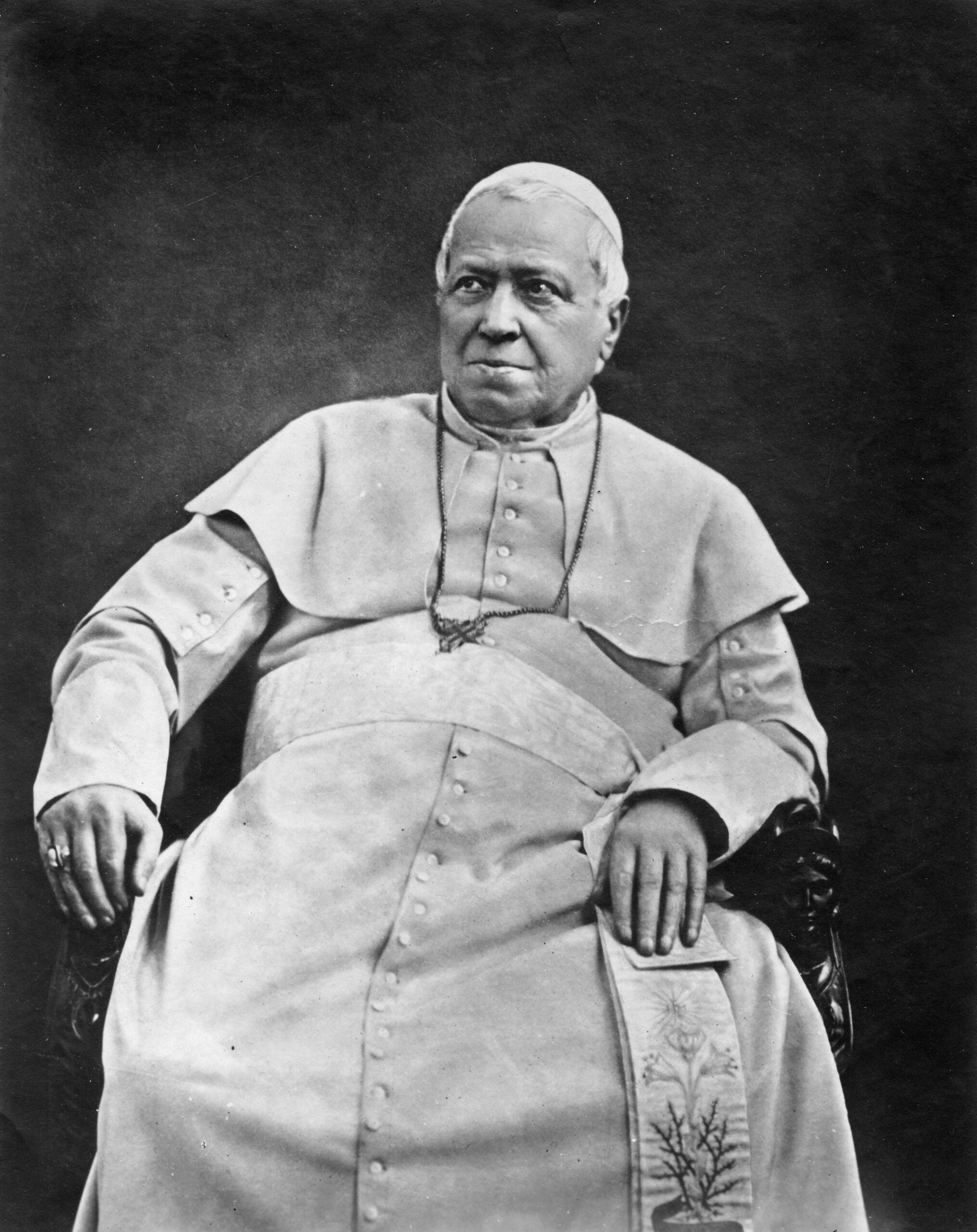
Pope Pius IX, born Giovanni Maria Mastai-Ferretti on May 13, 1792, in Senigallia, Marche, Italy, was a towering figure in the 19th century, serving as the head of the Catholic Church for over three decades. His papacy, which lasted from 1846 until his death in 1878, was marked by significant events and dramatic shifts both within the Church and in the broader political landscape of Italy and Europe. This article explores the life, age, fame, and significant highlights of Pope Pius IX’s career, offering detailed insights into his contributions to the Church and the historical context that defined his papacy.
Early Life and Religious Formation
Giovanni Maria Mastai-Ferretti was born into a noble family, the ninth child of Count Girolamo Mastai-Ferretti and Caterina Solazzi. His upbringing was one of privilege, but it was also marked by challenges, including a severe case of epilepsy that disrupted his education. Despite these difficulties, Giovanni pursued his studies at the College of the Nobles in Volterra, run by the Piarist Fathers. However, his condition often forced him to take breaks from his studies, and he did not have a traditional academic trajectory.
In 1814, Giovanni moved to Rome to live with his uncle, Paolino Mastai-Ferretti, who was a canon at St. Peter’s Basilica. During this time, he studied philosophy and theology at the Roman College. Remarkably, Giovanni’s epileptic seizures ceased after a pilgrimage to the Shrine of Our Lady of Loreto, an event he attributed to divine intervention. This miraculous recovery paved the way for his ordination, and on April 10, 1819, he was ordained a priest.
Early Clerical Career and Diplomatic Missions
After his ordination, Giovanni Maria Mastai-Ferretti was actively involved in charitable work, particularly at the Tata Giovanni Institute in Rome, which cared for orphaned and abandoned children. His dedication to social justice and his pastoral care for the poor reflected the Franciscan values he embraced as a member of the Third Order of St. Francis.
In 1823, he was selected to join a diplomatic mission to Chile, an experience that broadened his perspective and deepened his understanding of global Catholicism. Although the mission was challenging, it demonstrated his resilience and commitment to the Church’s diplomatic and spiritual outreach.
Upon his return to Italy, Giovanni was appointed Archbishop of Spoleto in 1827 at the age of 35. His tenure as Archbishop was marked by his pastoral zeal and his ability to navigate the political tensions of the time, particularly during the revolutions of 1831, when he played a crucial role in mediating between revolutionaries and the papal authorities. His success in Spoleto led to his transfer to the Diocese of Imola in 1832, where he continued to gain respect for his leadership and piety.
In 1840, Pope Gregory XVI elevated him to the College of Cardinals, recognizing his contributions to the Church. This elevation set the stage for his election as pope just six years later, in one of the most pivotal moments in the Church’s history.
Election as Pope and Early Reforms
On June 16, 1846, following the death of Pope Gregory XVI, Giovanni Maria Mastai-Ferretti was elected pope, taking the name Pius IX. His election came at a time of great political and social upheaval in Europe, particularly in Italy, where the movement for unification was gaining momentum. Pius IX was initially seen as a liberal and reformist pope, a perception that fueled high expectations among the Italian populace and beyond.
One of his first acts as pope was to grant a general amnesty to political prisoners, a move that was widely celebrated and seen as a sign of his liberal inclinations. He also introduced a series of administrative and governmental reforms in the Papal States, including the establishment of a civic guard, the modernization of infrastructure, and the introduction of a limited freedom of the press. These reforms endeared him to the Italian nationalists and liberals who saw in Pius IX a potential ally in their quest for Italian unification.
The pope’s early popularity was unprecedented. Accounts from the time describe how crowds of enthusiastic supporters would unhitch the horses from his carriage and pull it through the streets themselves as a sign of their admiration and hope for his leadership.
The Turning Point: The Allocution of 1848
The Revolutions of 1848, a series of political upheavals across Europe, marked a significant turning point in Pius IX’s papacy. Initially supportive of the nationalist cause, Pius IX faced a profound crisis when the Italian states, including the Papal States, were engulfed in revolutionary fervor. The pope’s earlier reforms had raised hopes that he would support the unification of Italy, but the events of 1848 forced him to reconsider his position.
On April 29, 1848, Pius IX issued the Allocution, a formal address to the Church in which he declared his opposition to a war against Austria, a Catholic power, and distanced himself from the Italian nationalist movement. This decision shocked and alienated many of his earlier supporters, including prominent figures like Giuseppe Mazzini, who had hoped the pope would lead the movement for Italian unification.
The pope’s refusal to support the war against Austria and his subsequent retreat into a more conservative stance marked the beginning of a significant shift in his papacy. The disillusionment among liberals and nationalists was profound, and the pope’s popularity quickly waned.
Exile and Return: The Roman Republic and Gaeta
In November 1848, the situation in Rome deteriorated rapidly. The assassination of Count Pellegrino Rossi, the pope’s prime minister, and the increasing pressure from revolutionary forces led Pius IX to flee Rome in disguise. He sought refuge in the fortress of Gaeta, in the Kingdom of the Two Sicilies, marking the beginning of a period of exile.
During his time in Gaeta, Pius IX became increasingly conservative, aligning himself with the more reactionary forces in Europe. He was deeply affected by the establishment of the Roman Republic in February 1849, a short-lived government that declared the end of papal temporal power. The Roman Republic was eventually crushed by French forces loyal to the pope, allowing Pius IX to return to Rome in April 1850, but the experience had left an indelible mark on his papacy.
Later Papacy: Defining Catholic Doctrine
Upon his return to Rome, Pius IX focused on strengthening the spiritual and doctrinal authority of the Church. One of his most significant acts was the proclamation of the dogma of the Immaculate Conception on December 8, 1854. This doctrine, which held that the Virgin Mary was conceived without original sin, was a major theological development and demonstrated the pope’s commitment to asserting the authority of the papacy in matters of faith.
Pius IX also convened the First Vatican Council in 1869, a landmark event in the history of the Catholic Church. The council’s most famous decree was the definition of papal infallibility, which declared that the pope is preserved from the possibility of error when he solemnly declares a doctrine of faith or morals to be held by the whole Church. This doctrine further centralized authority in the papacy and was a defining moment in Pius IX’s efforts to consolidate papal power.
The Decline of the Papal States and the Struggle with Italian Unification
As Pius IX focused on spiritual matters, the political landscape in Italy continued to shift dramatically. The movement for Italian unification, led by figures like Giuseppe Garibaldi and Count Camillo di Cavour, steadily gained ground. The Papal States, once a significant temporal power in Italy, were increasingly isolated as more Italian territories joined the newly established Kingdom of Italy.
In 1860, the Papal States suffered significant territorial losses, with the regions of Umbria and the Marche annexed by the Kingdom of Italy. Pius IX’s response was one of resistance. He issued the Syllabus of Errors in 1864, a document that condemned various modern ideas, including secularism, rationalism, and the separation of church and state. The Syllabus was a clear statement of the pope’s opposition to the liberal and nationalist movements of the time.
The final blow to papal temporal power came in 1870, with the capture of Rome by Italian forces during the Franco-Prussian War. On September 20, 1870, Rome was officially annexed to the Kingdom of Italy, and Pius IX retreated to the Vatican, declaring himself a “prisoner of the Vatican.” This marked the end of the Papal States and the beginning of the Vatican’s status as a sovereign entity confined to the Vatican City.
Legacy and Beatification
Pope Pius IX’s papacy, the longest in the history of the Catholic Church after that of St. Peter, was one of profound contrasts. He began as a reformer, a figure of hope for liberals and nationalists, but his later years were marked by a staunch conservatism and a commitment to the preservation of papal authority in an era of rapid change.
Pius IX’s legacy is complex. On one hand, he is remembered for his deep devotion to the Church, his role in defining important Catholic doctrines, and his efforts to strengthen the spiritual authority of the papacy. On the other hand, his opposition to modern political movements and his resistance to Italian unification left a contentious legacy, particularly in Italy.
Despite the controversies, Pius IX was beatified by Pope John Paul II on September 3, 2000, recognizing his piety and dedication to the Church. His beatification was not without its critics, particularly those who remembered his role in the suppression of Italian nationalism and his conservative stances on various issues.
Historical Context and Influence
Pope Pius IX’s life and papacy were deeply intertwined with the broader historical currents of the 19th century. The period was one of significant transformation in Europe, marked by the rise of nationalism, the decline of monarchies, and the emergence of secular states. Pius IX’s papacy was defined by his efforts to navigate these changes while maintaining the authority and independence of the Church.
His interactions with the political movements of his time, particularly the Italian unification movement, highlight the tensions between the Church and the modern state. Pius IX’s reluctance to embrace these changes ultimately led to the loss of the Papal States and the redefinition of the papacy’s role in the modern world.
Conclusion
Pope Pius IX remains one of the most significant and complex figures in the history of the Catholic Church. His long and eventful papacy saw the Church through a period of profound change, both within the Church itself and in the broader world. While his legacy is marked by both achievements and controversies, there is no denying the impact he had on the Catholic Church and on European history.
As we reflect on the life and career of Pope Pius IX, it is clear that he was a man deeply committed to his faith and to the preservation of the Church’s authority. His papacy, with all its triumphs and challenges, offers a window into a critical period in the history of the Church and the modern world.


