
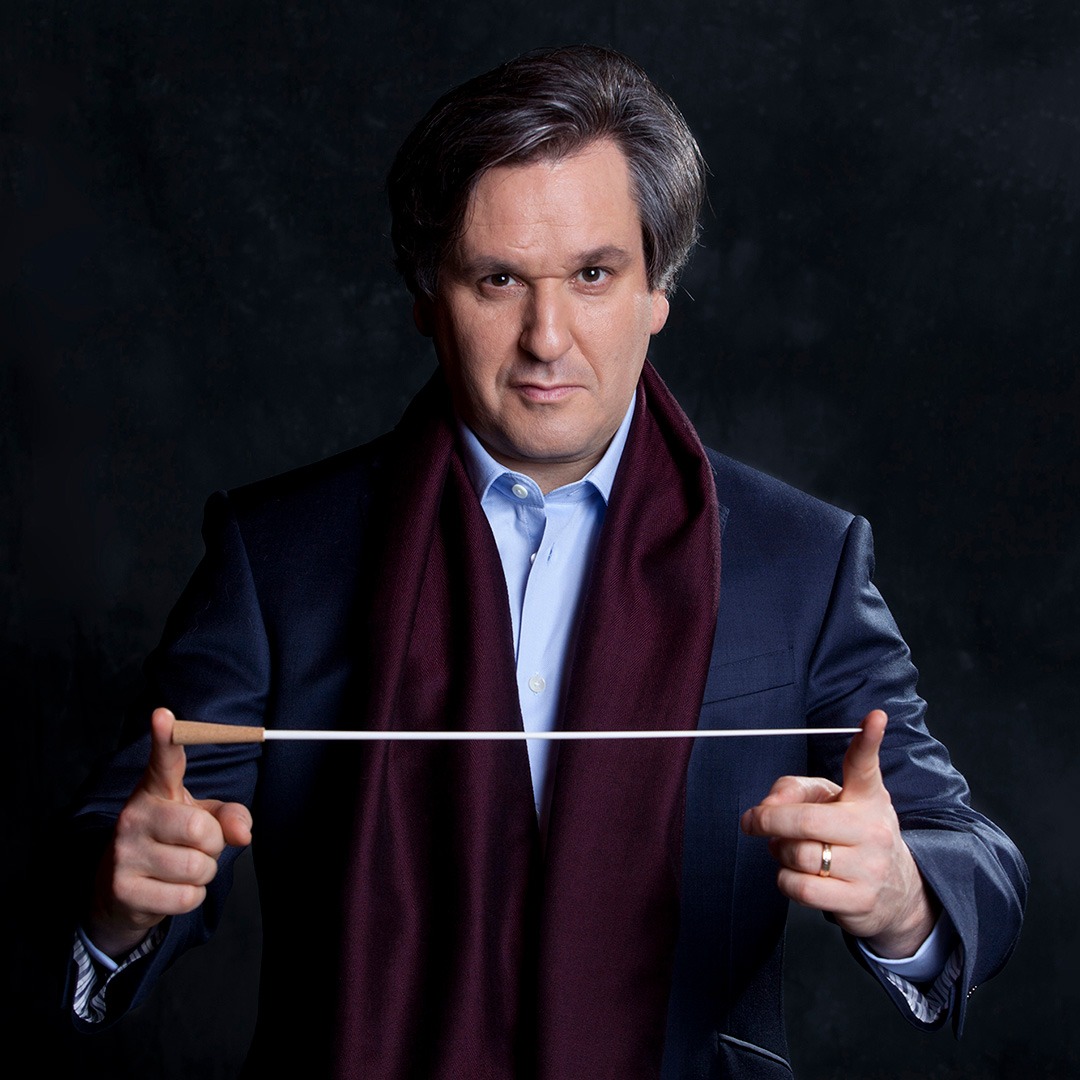
Antonio Pappano, born on December 30, 1959, in Epping, Essex, England, is a renowned conductor and pianist who has made significant contributions to the world of classical music. Known for his dynamic conducting style, deep musical insight, and commitment to both opera and symphonic music, Pappano’s career spans several decades and includes prestigious positions in some of the world’s leading music institutions. This article delves into the life, age, fame, and significant highlights of Antonio Pappano’s career, providing detailed insights into his journey and the historical context that has shaped his success.
Early Life and Musical Beginnings
Antonio Pappano was born to Italian parents who had emigrated from Castelfranco in Miscano, a small town in the Campania region of Italy. His father was a chef and waiter by profession but had a profound love for music, particularly singing. This passion for music was passed down to young Antonio, who began studying piano at the age of six. His early musical education was deeply influenced by his father, who had studied singing under Ettore Campogalliani, the same teacher who trained the legendary tenor Luciano Pavarotti.
In 1973, the Pappano family moved to the United States, where Antonio continued his piano studies under the tutelage of Norma Verilli. He also studied composition with Arnold Franchetti and conducting with Gustav Meier. Despite his extensive musical education, Pappano’s path was unconventional in one significant way: he did not formally graduate from any music conservatory. This lack of formal credentials later became a point of contention in certain academic and musical circles, but it did not hinder his rise to prominence.
Early Career and Breakthroughs
Antonio Pappano’s career began to take shape in the early 1980s. After becoming a naturalized U.S. citizen, he started working as an assistant to various conductors in Chicago, which provided him with invaluable experience and exposure to the world of professional music. His big break came in 1981 when he began collaborating with the New York City Opera. During this period, Pappano also worked with the San Diego Opera, where he served as the Italian language coach for the legendary soprano Joan Sutherland in the production of Adriana Lecouvreur.
Pappano’s talent and versatility quickly caught the attention of major figures in the music world. His ability to blend technical precision with emotional depth set him apart from many of his contemporaries. His reputation grew further when he became an assistant to the renowned conductor Daniel Barenboim at the Bayreuth Festival, one of the most prestigious events in the classical music calendar. This experience was instrumental in shaping Pappano’s approach to conducting, particularly in the complex and demanding world of opera.
Rise to Prominence in the 1990s
Antonio Pappano’s ascent to international fame began in earnest in the 1990s. In 1990, he made his debut as a conductor with the Norwegian National Opera (Den Norske Opera) in Oslo, conducting a production of Puccini’s La Bohème. This marked the beginning of his tenure as the music director of the Norwegian National Opera, a position he held until 1992. His work in Oslo was characterized by a deep commitment to the repertoire and a strong rapport with both the orchestra and the audience.
In 1992, Pappano took on the role of music director at La Monnaie, the Royal Theatre in Brussels, Belgium. His decade-long tenure at La Monnaie was a period of remarkable artistic achievement. Under his leadership, the company gained international acclaim for its innovative productions and high musical standards. Pappano’s ability to draw out nuanced performances from both singers and instrumentalists made La Monnaie one of the most respected opera houses in Europe during this time.
One of the hallmarks of Pappano’s tenure at La Monnaie was his commitment to contemporary opera. He championed the works of modern composers, ensuring that the repertoire was not only rooted in the classics but also reflected the evolving landscape of 20th and 21st-century music. His willingness to take risks and push the boundaries of what opera could be endeared him to both critics and audiences alike.
Royal Opera House, Covent Garden: A New Era
In 1999, Antonio Pappano was appointed as the music director of the Royal Opera House, Covent Garden, in London, one of the most prestigious positions in the world of opera. He officially assumed the role in September 2002, succeeding Bernard Haitink. This appointment marked the beginning of a new era for the Royal Opera House, as Pappano brought with him a fresh perspective and a renewed energy.
Pappano’s tenure at Covent Garden has been characterized by a series of critically acclaimed productions and a commitment to maintaining the highest artistic standards. He quickly established himself as a conductor of extraordinary versatility, equally at home in the symphonic and operatic repertoire. His interpretations of the works of Verdi, Puccini, Wagner, and other great composers have been widely praised for their emotional depth, technical brilliance, and attention to detail.
Under Pappano’s leadership, the Royal Opera House has continued to be a major force in the international opera scene. He has collaborated with some of the world’s most celebrated singers, directors, and designers to create productions that are both innovative and true to the spirit of the works being performed. His ability to balance tradition with innovation has ensured that Covent Garden remains a leading institution in the world of classical music.
Expanding Horizons: Symphonic Work and Collaborations
In addition to his work in the opera house, Antonio Pappano has also made significant contributions to the world of symphonic music. He has conducted many of the world’s leading orchestras, including the London Symphony Orchestra, the Berlin Philharmonic, the Chicago Symphony Orchestra, and the Royal Concertgebouw Orchestra. His symphonic work is marked by the same qualities that define his operatic conducting: a deep understanding of the music, a commitment to excellence, and an ability to communicate the emotional essence of the pieces he conducts.
In 2005, Pappano was appointed as the music director of the Orchestra dell’Accademia Nazionale di Santa Cecilia in Rome, one of Italy’s most prestigious musical institutions. His work with the orchestra has been widely praised, and he has played a key role in raising its international profile. Pappano’s recordings with the Santa Cecilia Orchestra have received numerous awards and have been lauded for their clarity, precision, and emotional impact.
Pappano’s ability to bridge the worlds of opera and symphonic music is one of the defining features of his career. He has brought a symphonic sensibility to his opera conducting, ensuring that the orchestral component of opera is given the attention it deserves. Conversely, his experience in the opera house has informed his symphonic work, allowing him to bring a dramatic intensity to his interpretations of symphonic works.
Honors, Recognition, and Contributions to Music Education
Throughout his career, Antonio Pappano has received numerous honors and awards in recognition of his contributions to music. In 2007, he was made a Knight Bachelor by Queen Elizabeth II, which allowed him to use the title “Sir.” This honor was a testament to his significant impact on the world of classical music, particularly in the United Kingdom.
Pappano’s commitment to music education and outreach has also been a significant aspect of his career. He is passionate about making classical music accessible to a wider audience and has been involved in numerous initiatives aimed at bringing music to young people and underserved communities. His work in this area reflects his belief that music has the power to inspire, uplift, and bring people together.
In addition to his work as a conductor and educator, Pappano has also been involved in the production of numerous recordings. His discography includes acclaimed recordings of operas by Verdi, Puccini, Wagner, and others, as well as symphonic works by composers such as Mahler, Brahms, and Tchaikovsky. These recordings have received critical acclaim and have contributed to his reputation as one of the leading conductors of his generation.
Historical Context and Influence
Antonio Pappano’s career must be understood within the broader context of the late 20th and early 21st centuries, a period of significant change and innovation in the world of classical music. As a conductor, Pappano has been at the forefront of this evolution, championing contemporary works while also maintaining a deep respect for the classical tradition.
His work has been particularly important in the context of opera, where he has played a key role in ensuring that the art form remains relevant in the modern world. Pappano’s willingness to embrace new technologies, collaborate with innovative directors, and push the boundaries of what opera can be has helped to ensure that opera continues to be a vibrant and vital art form.
Pappano’s influence extends beyond the concert hall and opera house. As a public figure, he has used his platform to advocate for the arts and to raise awareness about the importance of music education. His work has inspired a new generation of musicians and music lovers, and his legacy will continue to shape the world of classical music for years to come.
Conclusion
Antonio Pappano’s career is a testament to the power of passion, dedication, and a deep love for music. From his early beginnings in England and the United States to his rise as one of the most respected conductors in the world, Pappano has consistently demonstrated his commitment to excellence in every aspect of his work. His contributions to both opera and symphonic music have left an indelible mark on the world of classical music, and his influence will be felt for generations to come.
As we reflect on Antonio Pappano’s life and career, it is clear that he is not just a conductor, but a true ambassador for the arts. His work has enriched the lives of countless people around the world, and his legacy as a conductor, educator, and advocate for music will continue to inspire future generations of musicians and music lovers.


