
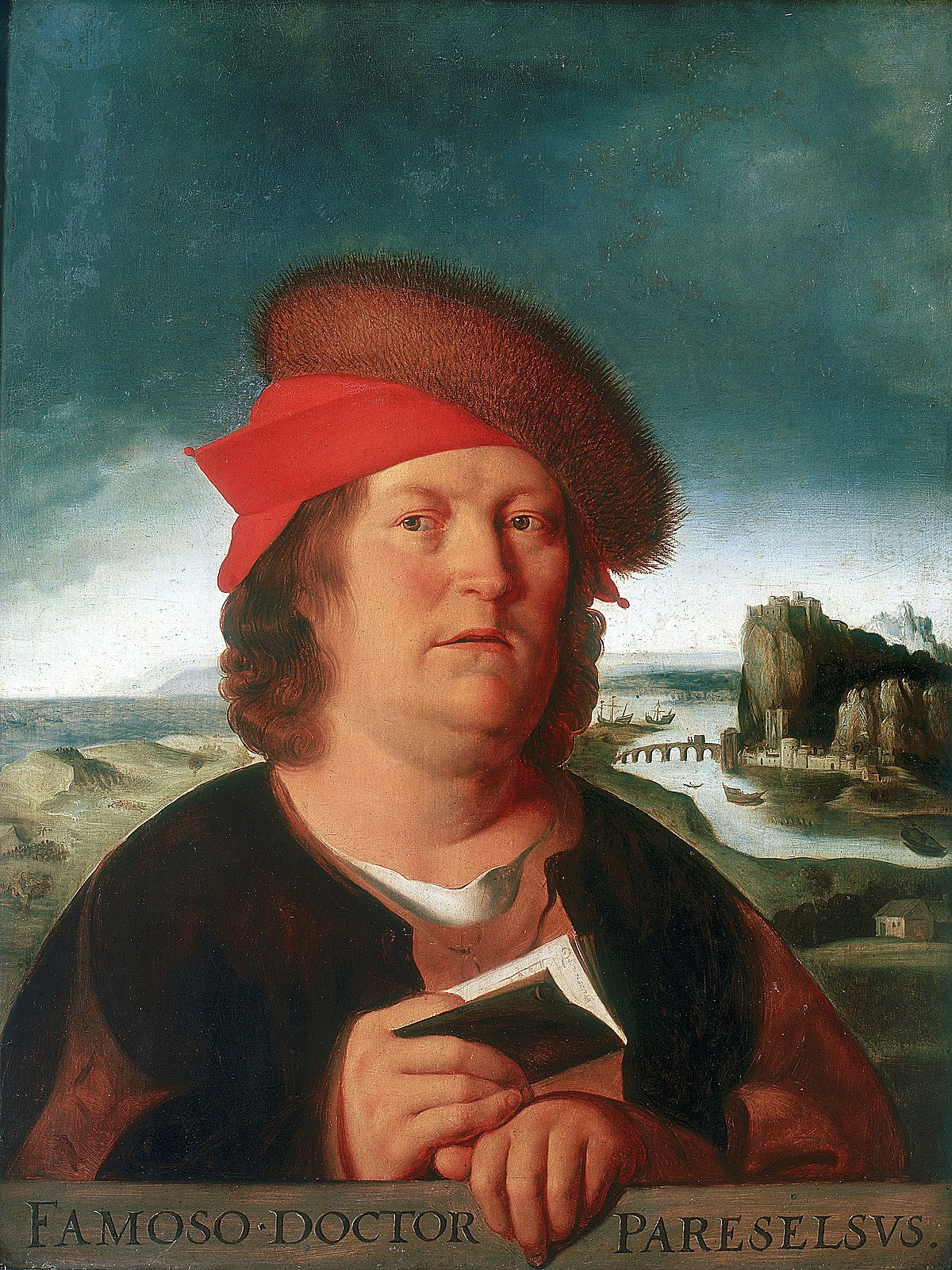
Philippus Aureolus Theophrastus Bombastus von Hohenheim, more commonly known as Paracelsus, was a Swiss physician, alchemist, and astrologer born on November 14, 1493, in Einsiedeln, Switzerland. He is a fascinating and controversial figure in the history of medicine and science, recognized for his bold theories, unconventional practices, and his challenges to the medical orthodoxy of his time. Paracelsus’ life and work left a lasting impact on the development of modern science and medicine, making him a pivotal figure in the Renaissance and early modern periods. This article explores his life, achievements, and the complex legacy he left behind.
Early Life and Education
Paracelsus was born into a modest family; his father, Wilhelm von Hohenheim, was a physician and a minor noble who likely influenced his early education in medicine and chemistry. Little is known about his mother, who was reportedly of humble origins and served as a housekeeper in a local monastery. Paracelsus grew up in a region that was a crossroads for pilgrims heading to Santiago de Compostela, an environment that likely exposed him to diverse ideas and cultures from an early age.
His education was eclectic and extensive. Around 1502, Paracelsus and his father moved to Villach in Carinthia, where he continued his studies under his father’s guidance. Wilhelm von Hohenheim was well-versed in medicine and alchemy, providing Paracelsus with a foundational knowledge in these fields. Paracelsus also studied under Johannes Trithemius, a renowned alchemist and occultist, which furthered his interest in the esoteric aspects of science.
Academic Pursuits and Formation of Ideas
Between 1509 and 1515, Paracelsus traveled extensively across Europe, studying at several universities, including Vienna, Ferrara, and others. His education was unconventional; he dismissed the dominant medical practices of the time, which were heavily influenced by Galen and Avicenna. Paracelsus believed that true knowledge came from practical experience rather than theoretical study. He earned his medical degree from the University of Ferrara, where he likely encountered contemporary thinkers like Nicolaus Copernicus, who were beginning to challenge traditional views of the universe.
During his studies, Paracelsus developed a deep skepticism towards the prevailing medical doctrines of the time, which he felt were overly reliant on ancient texts and not sufficiently grounded in observation and experience. His education was as much about rejecting established knowledge as it was about acquiring new ideas. This iconoclastic approach would later define his career and make him both a revered and reviled figure in the medical community.
Revolutionary Contributions to Medicine and Chemistry
Paracelsus is best known for his contributions to the fields of medicine and chemistry, which were revolutionary in their time. He challenged the conventional four-humor theory of medicine, which posited that health was maintained by balancing the four bodily fluids: blood, phlegm, yellow bile, and black bile. Instead, Paracelsus introduced the concept of using chemicals and minerals in treatment, laying the groundwork for what would later become pharmacology and toxicology.
He is credited with founding the discipline of iatrochemistry, a precursor to modern pharmacology, which focused on chemical remedies to treat disease. Paracelsus was among the first to advocate for the use of minerals and metals, such as mercury, sulfur, and salt, in medical treatments, which was a radical departure from the herbal remedies commonly used at the time. He also coined the term “zinc,” derived from the German “Zinke,” which referred to the pointed, jagged shape of zinc crystals.
Perhaps one of Paracelsus’ most enduring contributions was his introduction of the use of opium in medicine. He created a tincture called “laudanum,” which was used to relieve pain and induce sleep, a practice that continued for centuries. His exploration of dosage and the concept that “the dose makes the poison” was a fundamental shift in thinking, emphasizing the importance of dosage in the therapeutic use of substances. This idea is a cornerstone of toxicology and pharmacology today.
Paracelsus and the Occult
In addition to his medical work, Paracelsus was deeply involved in alchemy and astrology, fields that were closely related to science during his time. He believed that understanding the stars and the elements was crucial to understanding the human body and disease. His writings often blended practical medical advice with mystical and alchemical theories, reflecting his belief in the interconnectedness of all things.
Paracelsus’ work often ventured into what we would now consider the occult. He believed in the existence of elemental beings—creatures composed of the elements of earth, air, fire, and water—which he thought played a role in the natural world and in human health. His approach to medicine was holistic, integrating physical, spiritual, and magical elements, which set him apart from his contemporaries and attracted both admiration and criticism.
Controversy and Opposition
Paracelsus’ unconventional methods and outspoken personality often put him at odds with the academic and medical establishments of his day. His approach was radical and dismissive of established authorities, leading to friction with his colleagues and eventually causing his departure from several academic posts. In 1527, after successfully treating Erasmus of Rotterdam, a prominent scholar, Paracelsus was appointed as a municipal physician and professor at the University of Basel. However, his tenure was short-lived.
At Basel, Paracelsus’ lectures were marked by his disdain for traditional teachings. He famously burned the works of Galen and Avicenna, declaring them obsolete and inaccurate. This act, along with his challenging and abrasive teaching style, alienated his students and colleagues. His refusal to adhere to the academic norms of the time, combined with his abrasive personality, led to his ouster from Basel in 1528.
Following his expulsion, Paracelsus returned to a life of wandering, moving from city to city across Europe. He continued to publish his writings, although many of his works were banned by local authorities. In 1530, the city council of Nuremberg prohibited his publications, reflecting the contentious nature of his work and ideas.
Later Years and Death
The last decade of Paracelsus’ life was marked by continued travel and the production of several key writings. Despite his itinerant lifestyle and often being in conflict with authorities, he managed to maintain a reputation as a healer and a sage. During this period, he stayed in various locations across Europe, including Regensburg and San Gallen. In the latter, he was reportedly tasked with overseeing the health of the local mayor, Christian Studer, and continued to make public prophecies, claiming to have divine insights.
One of the most notable events of his later life was his supposed vision of a rainbow on October 28, 1531, which he interpreted as a divine sign of salvation, contrasting with the foreboding comet of Halley that had appeared two months earlier. This incident is emblematic of Paracelsus’ blend of scientific inquiry and mystical interpretation, showcasing his unique approach to understanding the natural world.
Paracelsus died on September 24, 1541, in Salzburg, under mysterious circumstances. Some accounts suggest he was murdered, though details are sparse and speculative. He was buried in the Church of St. Sebastian in Salzburg, leaving behind a complex legacy that would influence both medicine and occultism for centuries.
Legacy and Influence
Paracelsus’ impact on the world of medicine and science is undeniable, though it is marred by controversy and mixed opinions. He was a pioneer of chemical pharmacology and toxicology, advocating for the use of chemicals in medicine at a time when such ideas were considered heretical. His assertion that “the dose makes the poison” is a fundamental principle in the field of toxicology, highlighting the importance of dosage in the safety and effectiveness of treatments.
Beyond his contributions to medicine, Paracelsus’ integration of alchemical and astrological concepts into his practice represents a unique blend of science and mysticism that was characteristic of Renaissance thought. His work laid the groundwork for future generations of scientists who would continue to explore the relationships between chemistry, medicine, and the natural world.
However, his methods and ideas were not without their detractors. Many of his contemporaries viewed him as a charlatan and a heretic, and his reliance on personal experience over established doctrine was seen as both arrogant and dangerous. Despite this, his influence persisted, particularly in the fields of homeopathy and naturopathy, which draw on his holistic view of health and disease.
Conclusion
Paracelsus remains a controversial figure in the history of science and medicine. His bold challenges to the medical orthodoxy of his time, his pioneering use of chemicals in treatment, and his integration of mystical and scientific thinking make him a figure of enduring interest and debate. He embodies the spirit of the Renaissance—a period characterized by a willingness to question established norms and explore new ideas. His life and work continue to inspire those who seek to understand the complex interplay between science, medicine, and the mysteries of the natural world.
While Paracelsus’ methods were unconventional and often contentious, his contributions to medicine and chemistry have left a lasting mark. His life story is a testament to the importance of challenging established beliefs and pursuing knowledge, no matter the cost. As we continue to explore the frontiers of science and medicine, the legacy of Paracelsus serves as both a cautionary tale and an inspiration, reminding us of the value of innovation, curiosity, and the courage to defy convention.


