
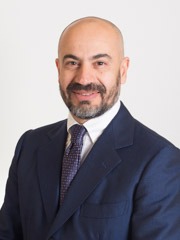
Gianluigi Paragone, a prominent Italian journalist and politician, has carved a unique path in the realms of media and politics. Born on August 7, 1971, in Varese, Italy, Paragone’s journey from a local journalist to a nationally recognized political figure is marked by bold decisions, controversial stances, and an unwavering commitment to his principles. This article delves into the life, career, and significant milestones of Gianluigi Paragone, offering insights into his rise to fame, his political inclinations, and his lasting impact on Italian society.
Early Life and Career Beginnings
Gianluigi Paragone was born into a family with roots in the Samnite region of Italy, an area known for its historical significance and cultural heritage. His early years were shaped by the values and traditions of his family, which instilled in him a deep sense of identity and purpose. Paragone’s initial foray into journalism began with his work at the local newspaper “La Prealpina,” where he honed his reporting skills and developed a keen interest in political journalism.
During his time at “La Prealpina,” Paragone had the opportunity to cover key political figures such as Roberto Maroni and Umberto Bossi, who were instrumental in shaping the political landscape of Northern Italy through the Lega Nord party. This exposure to high-stakes political reporting provided Paragone with the experience and confidence needed to navigate the complex world of Italian politics and media.
Rise to Prominence in Journalism
Paragone’s career trajectory took a significant leap when he became the director of the news program on Rete 55, a local television station in Varese. His leadership and editorial direction at Rete 55 garnered attention, and he was soon appointed as the director of “La Padania,” the official newspaper of the Lega Nord. His work with “La Padania” further solidified his reputation as a journalist with a deep understanding of the political dynamics of Northern Italy.
Following his success at “La Padania,” Paragone joined the national newspaper “Libero,” where he quickly rose through the ranks to become the deputy director. His tenure at “Libero” was marked by incisive political commentary and a no-nonsense approach to journalism. Paragone’s ability to dissect complex political issues and present them in an accessible manner resonated with readers, further elevating his profile in the Italian media landscape.
Transition to Television: “Malpensa Italia” and “L’ultima parola”
In January 2009, Gianluigi Paragone made a significant move to television, hosting the political talk show “Malpensa Italia” on Raidue. The show quickly gained popularity, with viewership peaking at over 8% share, a notable achievement for a political program. Paragone’s direct and often confrontational style of interviewing distinguished him from other television hosts, making “Malpensa Italia” a must-watch for those interested in Italian politics.
Building on the success of “Malpensa Italia,” Paragone launched another political talk show, “L’ultima parola” (“The Last Word”), in January 2010, also on Raidue. The show blended political discourse with music, offering a unique format that attracted a diverse audience. However, Paragone’s independent approach to journalism soon led to tensions with his former political allies in the Lega Nord. In October 2011, Umberto Bossi, the party’s federal secretary, ordered Lega Nord members to boycott Paragone’s show, citing concerns over its content. Paragone, however, defended his journalistic integrity, emphasizing his commitment to unbiased reporting.
Controversies and Challenges: The Move to La7
In 2013, Gianluigi Paragone faced a new challenge when his show “L’ultima parola” was canceled, and he was offered a position to host a music program. Paragone, known for his political acumen, declined the offer and instead transitioned to La7, a network owned by Urbano Cairo. At La7, Paragone hosted the political talk show “La gabbia” (“The Cage”), which became one of the network’s flagship programs.
“La gabbia” provided Paragone with a platform to explore controversial topics and challenge the status quo. His unfiltered commentary and willingness to tackle sensitive issues earned him both praise and criticism. Paragone’s time at La7 was marked by a high degree of editorial freedom, something he openly appreciated. He described his experience at La7 as one of “maximum freedom,” where he had the liberty to present his views without undue interference from the network’s management.
However, the arrival of Andrea Salerno as the new director of La7 in 2017 brought changes that affected Paragone’s role at the network. “La gabbia” was canceled, and Paragone was not offered an alternative program. This decision led to public statements from Paragone expressing his disappointment and frustration. Despite the setback, Paragone maintained that a director has the right to make programming decisions, even if those decisions are unpopular with certain hosts.
Political Career: Joining the Five Star Movement
Gianluigi Paragone’s transition from journalism to politics was marked by his alignment with the Five Star Movement (Movimento 5 Stelle), a populist political party founded by comedian Beppe Grillo and web strategist Gianroberto Casaleggio. In September 2017, Paragone hosted the party’s three-day event in Rimini, where Luigi Di Maio was officially nominated as the party’s candidate for Prime Minister.
In January 2018, Paragone officially announced his candidacy for the Italian Senate under the banner of the Five Star Movement. His decision to enter politics was seen as a natural progression of his career, given his long-standing interest in political issues and his desire to effect change from within the system. Paragone’s candidacy was successful, and he was elected to the Senate in the March 2018 general elections.
During his time in the Senate, Paragone continued to be an outspoken advocate for the principles of the Five Star Movement, particularly its stance against the influence of big banks and financial institutions. He authored the book “GangBank: Il perverso intreccio tra politica e finanza che ci frega il portafoglio e la vita” (“GangBank: The Perverse Entanglement Between Politics and Finance That Steals Our Wallets and Our Lives”), in which he criticized the close ties between politics and finance in Italy.
Expulsion from the Five Star Movement and Beyond
Paragone’s time with the Five Star Movement, however, was not without its challenges. In early 2020, he was expelled from the party following a series of disagreements with the leadership. Paragone had abstained from voting on the budget law and had expressed dissenting views on several key issues, including the policies of then-Prime Minister Giuseppe Conte. His expulsion was a significant blow, but Paragone remained defiant, continuing to express his views through various media channels.
Paragone’s expulsion highlighted the internal tensions within the Five Star Movement, particularly as the party grappled with its transition from a protest movement to a governing force. Despite his departure from the party, Paragone has continued to be a vocal critic of the Italian political establishment, often using social media platforms such as Facebook and Twitter to communicate with his followers.
Legacy and Influence
Gianluigi Paragone’s journey from journalism to politics reflects his deep commitment to challenging the status quo and advocating for transparency and accountability in both media and government. His willingness to speak out against powerful interests, whether in the media industry or the political arena, has earned him a reputation as a maverick—a figure who is unafraid to take risks and confront uncomfortable truths.
Paragone’s influence extends beyond his roles as a journalist and politician. He has become a symbol of resistance against the perceived corruption and complacency of the Italian political system. His work, both as a broadcaster and as a senator, has focused on exposing the connections between politics and finance, advocating for the rights of ordinary citizens, and pushing for systemic reforms.
In an era where populism and anti-establishment sentiments are on the rise, Paragone’s career offers valuable insights into the dynamics of modern Italian politics. His experiences underscore the challenges faced by those who seek to disrupt the status quo and the personal and professional costs associated with taking a stand against entrenched power structures.
Conclusion: The Continuing Journey of Gianluigi Paragone
Gianluigi Paragone’s life and career are a testament to the power of conviction and the importance of staying true to one’s principles. From his early days as a local journalist in Varese to his tenure as a senator in the Italian Parliament, Paragone has consistently demonstrated a willingness to challenge authority and speak out on behalf of those who feel marginalized by the system.
As Paragone continues to navigate the complex landscape of Italian politics and media, his legacy as a fearless advocate for change remains intact. Whether through his writing, his broadcasting, or his political activism, Paragone’s impact on Italian society is undeniable. His journey serves as a reminder that in the face of adversity, persistence, and a commitment to one’s beliefs can lead to lasting change.
In the years to come, it will be interesting to see how Gianluigi Paragone continues to influence the political discourse in Italy and whether his vision for a more transparent and accountable government will come to fruition. Regardless of the challenges ahead, Paragone’s contributions to Italian journalism and politics will continue to inspire and provoke debate for years to come.


