
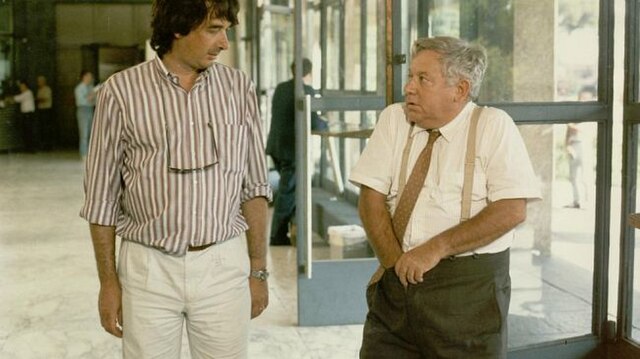
Neri Parenti, born on April 26, 1950, in Florence, Italy, is a celebrated Italian film director and screenwriter known for his significant contributions to the comedy genre in Italian cinema. Parenti’s work, spanning over four decades, has made him one of the most recognizable figures in Italian filmmaking, particularly for his iconic “cinepanettone” films that have become a staple of holiday entertainment in Italy. His unique blend of humor, cultural references, and popular appeal has left an indelible mark on Italian pop culture.
Early Life and Path to Cinema
Neri Parenti’s journey into the world of cinema began after he completed a degree in Political Science. Despite his academic background, Parenti was drawn to the world of filmmaking and decided to pursue his passion. His entry into the film industry was not through formal education but rather through hands-on experience, learning the craft by working as an assistant to established directors.
One of Parenti’s earliest mentors was Pasquale Festa Campanile, a prominent figure in Italian cinema known for his work in both dramatic and comedic films. Under Campanile’s guidance, Parenti worked on films such as Conviene fare bene l’amore (1975) and Autostop rosso sangue (1977). These early experiences provided Parenti with a strong foundation in filmmaking, particularly in understanding the nuances of directing and screenwriting.
In addition to his work with Campanile, Parenti also gained valuable experience working on the sets of other films during the late 1970s, including Pane, burro e marmellata (1977) and Io tigro, tu tigri, egli tigra by Giorgio Capitani. This period of apprenticeship allowed Parenti to develop his directorial style and deepen his understanding of the Italian film industry.
Directorial Debut and Early Success
Neri Parenti made his directorial debut in 1979 with the film John travolto… da un insolito destino, a parody of the American hit Saturday Night Fever. Although the film did not achieve significant commercial success, it showcased Parenti’s penchant for comedy and satire. The film’s humor, rooted in cultural references and parody, would become a hallmark of Parenti’s style in the years to come.
Despite the modest reception of his debut, Parenti’s talent did not go unnoticed. He caught the attention of Paolo Villaggio, one of Italy’s most beloved comedic actors, known for his portrayal of the hapless character Ugo Fantozzi. Villaggio was looking for a director to take over the Fantozzi film series after the departure of Luciano Salce, the original director. This opportunity marked a turning point in Parenti’s career.
In 1980, Parenti directed Fantozzi contro tutti, the third film in the Fantozzi series. The film was a commercial success and solidified Parenti’s reputation as a skilled director of comedy. This collaboration with Villaggio would continue for many years, resulting in several more Fantozzi films, including Fracchia la belva umana (1981), Fantozzi va in pensione (1988), and Fantozzi in paradiso (1993). These films were characterized by their satirical take on Italian society, blending slapstick humor with sharp social commentary.
Establishing a Signature Style
As Neri Parenti’s career progressed, he honed a distinctive style of comedy that combined elements of slapstick, satire, and farce. His films were often populated by exaggerated characters, absurd situations, and a focus on physical humor, reminiscent of the silent film era. Parenti’s ability to create humor through visual gags and physical comedy became a defining feature of his work.
One of Parenti’s most successful ventures was the Le Comiche trilogy, starting with Le Comiche in 1990, followed by Le Comiche 2 (1991) and Le nuove comiche (1994). These films, starring Paolo Villaggio and Renato Pozzetto, were immensely popular with Italian audiences and showcased Parenti’s talent for creating humorous scenarios rooted in everyday life. The films relied heavily on visual gags and slapstick humor, drawing inspiration from classic American comedies of the 1920s and 1930s.
Parenti’s films during this period often featured recurring themes of mistaken identities, elaborate pranks, and the misadventures of the everyman. His ability to craft accessible, crowd-pleasing comedies made him a favorite among Italian moviegoers.
The “Cinepanettone” Phenomenon
Perhaps the most significant aspect of Neri Parenti’s career is his association with the “cinepanettone” genre, a term used to describe a specific type of Italian comedy film released during the Christmas season. These films, characterized by their light-hearted humor, exotic settings, and ensemble casts, became a holiday tradition in Italy, drawing large audiences each year.
Parenti’s involvement in the Vacanze di Natale series began in 1995 with Vacanze di Natale ’95, starring Massimo Boldi and Christian De Sica. This film was the beginning of a long-running series that would come to define the cinepanettone genre. The films typically featured the comedic duo of Boldi and De Sica, who played characters entangled in humorous and often risqué situations while vacationing in glamorous locations.
The success of Vacanze di Natale ’95 led to numerous sequels, including Natale sul Nilo (2001), Natale in India (2003), Natale a New York (2006), Natale a Rio (2008), and Natale a Beverly Hills (2009). These films were known for their formulaic plots, which often involved infidelity, misunderstandings, and slapstick humor, all set against the backdrop of luxurious holiday destinations.
The cinepanettone films became a cultural phenomenon in Italy, with audiences eagerly anticipating their release each year. Despite criticism from some quarters for their perceived lack of depth and reliance on lowbrow humor, these films were incredibly successful at the box office, cementing Parenti’s status as a master of popular Italian cinema.
Continued Success and Evolution
While Neri Parenti is best known for his work on the cinepanettone films, his career has also included a variety of other projects that showcase his versatility as a director. Throughout the 1990s and 2000s, Parenti continued to direct films that combined his signature brand of humor with different themes and settings.
In 1998, Parenti directed Paparazzi, a comedy that satirized the world of celebrity photographers. The film featured an ensemble cast, including Christian De Sica, Massimo Boldi, and Diego Abatantuono, and was another box office hit. This film, along with others like Tifosi (1999) and Bodyguards (2000), demonstrated Parenti’s ability to adapt his comedic style to different narratives while maintaining his appeal to mainstream audiences.
In 2011, Parenti directed Amici miei – Come tutto ebbe inizio, a prequel to the classic Italian film Amici miei (1975) directed by Mario Monicelli. Parenti’s version, set in 15th-century Florence during the plague, featured a star-studded cast, including Christian De Sica, Massimo Ghini, and Gerard Depardieu. The film was a nod to the Italian comedy tradition, blending historical elements with contemporary humor.
Despite the challenges of keeping the cinepanettone genre fresh and relevant, Parenti continued to innovate within the framework of popular comedy. His films remained a fixture of Italian cinema, with audiences consistently flocking to theaters during the holiday season to enjoy his latest offerings.
Legacy and Influence
Neri Parenti’s impact on Italian cinema is undeniable. His films have entertained millions of viewers over the years and have become a significant part of Italy’s cultural landscape. The success of the cinepanettone genre, in particular, is a testament to Parenti’s ability to understand and cater to the tastes of the Italian public.
Parenti’s approach to comedy, characterized by its accessibility, visual humor, and reliance on popular themes, has made his films enduring favorites. His work has influenced a generation of Italian filmmakers who continue to explore the boundaries of comedy in contemporary cinema.
Beyond the box office success, Parenti’s films have also sparked discussions about the role of comedy in Italian culture. While some critics have dismissed his work as formulaic or simplistic, others recognize the skill and creativity required to consistently produce films that resonate with such a wide audience.
Conclusion
Neri Parenti’s career is a remarkable journey through the evolution of Italian comedy. From his early days learning the craft under the guidance of seasoned directors to his establishment as the king of the cinepanettone genre, Parenti has demonstrated an unwavering commitment to entertaining audiences.
His ability to blend humor with cultural commentary, create memorable characters, and adapt to changing trends in cinema has solidified his place as one of Italy’s most beloved directors. As Parenti continues to contribute to the world of film, his legacy as a master of popular Italian comedy is assured.


