
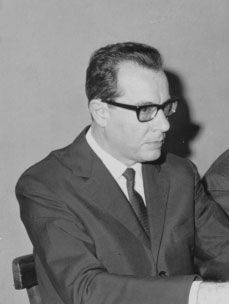
Luigi Pareyson, born on February 4, 1918, in Piasco, Italy, was a towering figure in 20th-century philosophy. Known for his profound contributions to existentialism and hermeneutics, Pareyson’s intellectual journey was marked by a deep engagement with the concepts of freedom, personhood, and the complexities of human existence. This article delves into the life, philosophical contributions, and enduring legacy of Luigi Pareyson, offering a comprehensive overview of his work and its impact on contemporary thought.
Early Life and Academic Foundations
Luigi Pareyson was born into a family with roots in the Valle d’Aosta region of Italy, an area known for its rich cultural heritage and intellectual traditions. From a young age, Pareyson displayed an exceptional aptitude for learning. By the age of 17, he had already begun his academic journey at the University of Turin, enrolling in 1935 and graduating just four years later in 1939.
During his time at the University of Turin, Pareyson was influenced by some of the most prominent intellectuals of his time. He studied under the guidance of Gioele Solari and Augusto Guzzo, two philosophers who would shape his understanding of philosophy and the role of the individual in society. Pareyson’s early exposure to existentialist thought was further deepened by his interactions with Karl Jaspers during his studies in Heidelberg in the mid-1930s. Jaspers, a leading existentialist philosopher, had a profound impact on Pareyson’s thinking, particularly in the areas of freedom and the human condition.
The War Years and Resistance Activities
The period of World War II was a defining time in Pareyson’s life. After completing his studies, he began teaching at the Liceo Classico in Cuneo, a position that placed him at the heart of intellectual and political resistance against the fascist regime. Pareyson’s tenure at the Liceo Classico from 1940 to 1944 was not just an academic endeavor but also a period of intense political activism.
Pareyson played a crucial role in the Italian Resistance, particularly in the formation of the Action Party (Partito d’Azione) in Cuneo, alongside figures like Leonardo Ferrero and Duccio Galimberti. His involvement in the Resistance was not without personal risk. In March 1944, Pareyson was arrested by fascist authorities and held for several days before being released. This experience only strengthened his resolve, and he continued his clandestine activities, contributing to the efforts of the Justice and Freedom (Giustizia e Libertà) partisan group in the province of Cuneo.
Pareyson’s wartime experiences deeply influenced his philosophical outlook, particularly his understanding of freedom. For Pareyson, freedom was not an abstract concept but a lived reality, forged in the crucible of struggle and resistance. This period also marked the beginning of his lifelong commitment to the philosophy of freedom, which would become a central theme in his later work.
Academic Career and Philosophical Contributions
After the war, Luigi Pareyson returned to academia, where he would go on to have a distinguished career. In 1946, he began teaching at the University of Turin, where he would remain for over four decades until his retirement in 1988. During this time, Pareyson taught a range of subjects, including Aesthetics, Pedagogy, Theoretical Philosophy, and Moral Philosophy. His teachings attracted a generation of students who would go on to become influential philosophers in their own right, including Umberto Eco and Gianni Vattimo.
Pareyson’s philosophical contributions are vast, but he is perhaps best known for his work in existentialism and his development of what he called “personalism ontological.” This approach to philosophy emphasized the dual nature of human beings: as both open to the ontological reality of being and as historical individuals shaped by their unique experiences. For Pareyson, the concept of the “person” was central to understanding human existence. A person, in his view, was not merely an individual but a synthesis of universal openness to being and particular historical context.
In the realm of aesthetics, Pareyson made significant contributions with his theory of formatività, or “formativity.” In his 1954 work, Teoria della Formatività, Pareyson argued that the act of creating art is a process of forming and being formed, where the artist and the work of art engage in a dynamic relationship. This concept of formative aesthetics has had a lasting impact on the study of art and continues to influence contemporary aesthetic theory.
Hermeneutics and Interpretation
Another major area of Pareyson’s work was hermeneutics, the study of interpretation. In his 1971 book Verità e interpretazione (Truth and Interpretation), Pareyson explored the nature of understanding and the role of interpretation in human experience. He argued that interpretation is not just a method of uncovering meaning but is itself a fundamental aspect of existence. For Pareyson, every act of understanding is an act of interpretation, and this process is central to how humans engage with the world.
Pareyson’s hermeneutics is closely linked to his personalist philosophy. He believed that interpretation is always rooted in the individual’s unique perspective, which is shaped by both their ontological openness and their historical context. This view challenges the notion of objective, universal truth, suggesting instead that truth is always mediated through interpretation. Pareyson’s work in hermeneutics laid the groundwork for later developments in the field, influencing thinkers such as Hans-Georg Gadamer and Paul Ricoeur.
Literary and Editorial Work
In addition to his philosophical writings, Luigi Pareyson was deeply involved in literary and editorial work. He was a key figure in the Centro di Studi Filosofici Cristiani in Gallarate, where he worked to promote the study of Christian philosophy. Pareyson also served as the director of the Rivista di Estetica, a leading journal in the field of aesthetics, and edited several important philosophical series for publishers like Mursia, Zanichelli, and Bottega d’Erasmo.
Pareyson’s editorial work was characterized by his commitment to fostering dialogue between Italian and international scholars. He actively sought to bring together the best minds in philosophy, encouraging collaboration and the exchange of ideas. This commitment to intellectual community was a hallmark of Pareyson’s career and contributed significantly to the development of philosophical thought in Italy and beyond.
The Final Years and Legacy
Luigi Pareyson’s final years were marked by illness and retreat from public life. He spent much of this time in Rapallo, where he continued to work on his philosophical ideas despite his declining health. During this period, Pareyson focused on what would become his final major work, L’ontologia della libertà (The Ontology of Freedom). This book, which he was working on at the time of his death in 1991, represents the culmination of his lifelong exploration of the concept of freedom.
L’ontologia della libertà is a profound meditation on the nature of freedom and its implications for human existence. In this work, Pareyson brings together the various strands of his thought, offering a comprehensive vision of freedom as both an ontological and ethical reality. For Pareyson, freedom is not merely the absence of constraint but a positive force that shapes and defines the human experience. His ideas on freedom have continued to resonate with philosophers and scholars, influencing debates on existentialism, ethics, and political philosophy.
Luigi Pareyson’s legacy is evident not only in his written works but also in the influence he had on his students and the broader philosophical community. His ideas have left a lasting impact on a wide range of fields, from aesthetics to hermeneutics, and his contributions to the study of freedom remain relevant today. Pareyson’s commitment to the philosophy of freedom, his innovative approach to interpretation, and his deep engagement with the human condition make him one of the most important philosophers of the 20th century.
Conclusion
Luigi Pareyson’s life and work offer a rich and nuanced understanding of the human experience. From his early days as a precocious student in Turin to his role as a leading figure in the Italian Resistance, Pareyson’s journey was one of intellectual rigor and moral courage. His contributions to philosophy, particularly in the areas of existentialism, hermeneutics, and aesthetics, have had a profound impact on the way we understand freedom, personhood, and the nature of interpretation.
As we reflect on Pareyson’s legacy, it is clear that his work continues to inspire and challenge us. His exploration of the complexities of human existence, his commitment to freedom, and his innovative approach to philosophy make him a timeless figure in the history of thought. Luigi Pareyson may have passed away in 1991, but his ideas live on, offering valuable insights into the challenges and possibilities of the human condition.


