
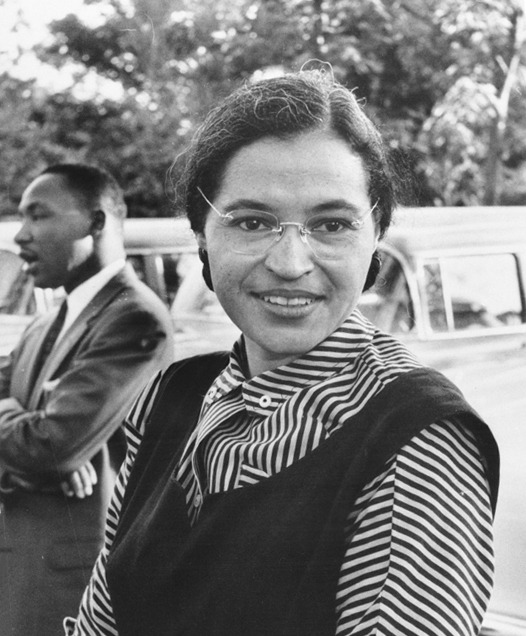
Rosa Parks is a name that resonates with the fight for civil rights in America, embodying courage and the quest for justice. Her refusal to surrender her seat on a bus in Montgomery, Alabama, in 1955 sparked a movement that became a defining moment in the battle against racial segregation. But who was Rosa Parks beyond this iconic act? This comprehensive article delves into her life, exploring her early years, her rise to fame, and the significant impact she had on American history.
Early Life: A Legacy of Resilience
Rosa Louise McCauley was born on February 4, 1913, in Tuskegee, Alabama, to parents James and Leona McCauley. Her father was a carpenter, and her mother was a schoolteacher. Growing up in the deeply segregated South, Rosa was exposed to racial injustice from a young age. Her early years were spent on her grandparents’ farm in Pine Level, Alabama, where she witnessed firsthand the brutal realities of racial violence, particularly the actions of the Ku Klux Klan, a racist organization notorious for its acts of terror against African Americans.
Rosa’s grandparents were former slaves, and the stories they shared about their experiences in bondage profoundly shaped her worldview. The McCauleys lived in fear, yet they were determined to protect their family. Rosa’s grandfather would often keep a gun by his side at night, prepared to defend his loved ones from potential attacks. These experiences ingrained in Rosa a deep sense of the importance of standing up against oppression, a value that would guide her actions later in life.
The Struggle for Education
Education was a central part of Rosa’s upbringing, thanks to her mother’s influence. However, the path to acquiring knowledge was not easy. The segregated school system in Alabama provided substandard facilities and materials for Black children. Despite these challenges, Rosa was determined to succeed. She attended the Industrial School for Girls in Montgomery, where she was exposed to a curriculum that included domestic skills alongside academic subjects.
After her schooling, Rosa moved to Montgomery to care for her ailing mother and to further her education. She enrolled in a secondary school but was forced to drop out to care for her grandmother and mother when they became ill. Despite these setbacks, Rosa was deeply committed to self-improvement and the advancement of her community. Her resolve to seek knowledge, even in the face of adversity, was a testament to her inner strength.
Marriage and Early Activism
In 1931, at the age of 18, Rosa married Raymond Parks, a barber and a fervent supporter of civil rights. Raymond was actively involved in the National Association for the Advancement of Colored People (NAACP), working to defend the rights of African Americans in a society that sought to suppress them. Through her marriage, Rosa became increasingly involved in the struggle for civil rights.
Rosa’s work with the NAACP began in earnest in the 1940s when she became the secretary of the Montgomery chapter. In this role, she helped document cases of racial injustice and supported efforts to combat segregation in the South. Rosa’s commitment to the cause grew as she witnessed the daily indignities and systemic oppression faced by her community. Her involvement in the NAACP positioned her as a key figure in the fight for civil rights, even before her fateful encounter on the Montgomery bus.
The Defining Moment: The Bus Incident of 1955
On December 1, 1955, Rosa Parks boarded bus number 2857 after a long day of work as a seamstress in Montgomery. She took a seat in the “colored section” of the bus, as was customary in the segregated South. However, when the “white” section filled up, the bus driver demanded that Rosa and three other African American passengers give up their seats for white passengers. While the others reluctantly complied, Rosa refused to move.
Her simple act of defiance was a powerful statement against the systemic racism that permeated every aspect of life in the South. The bus driver threatened Rosa with arrest, to which she calmly responded, “You may do that.” This response marked a pivotal moment in the civil rights movement, as it ignited a wave of activism that would change the course of American history.
Rosa was arrested and fined for violating the city’s segregation laws, but her actions that day sparked the Montgomery Bus Boycott, a 381-day mass protest that aimed to end racial segregation on public transportation. Led by a young Martin Luther King Jr., the boycott became a symbol of the broader struggle for civil rights and drew national attention to the issue of racial injustice.
The Legal Battle and Victory
Rosa Parks’ arrest led to a legal battle that would eventually reach the U.S. Supreme Court. On December 13, 1956, the Court ruled that segregation on public buses was unconstitutional, effectively ending the boycott and signaling a major victory for the civil rights movement. This ruling was a watershed moment, setting a legal precedent that would be used to challenge segregation in other areas of American life.
However, this victory came at a great personal cost to Rosa and her family. She lost her job as a seamstress and faced constant harassment and threats. The Parks family was forced to relocate to Detroit, Michigan, where they sought to build a new life away from the hostile environment of the South. Despite these challenges, Rosa remained undeterred in her commitment to the cause of civil rights.
Life in Detroit and Continued Activism
After moving to Detroit, Rosa Parks continued her activism, working alongside civil rights leaders such as Martin Luther King Jr. and Malcolm X. In Detroit, she took on a new role as an assistant to U.S. Representative John Conyers, a position she held for over two decades. In this capacity, Rosa worked to address issues such as housing discrimination, police brutality, and the welfare of the African American community.
In 1987, Rosa Parks founded the Rosa and Raymond Parks Institute for Self-Development, an organization dedicated to providing educational opportunities for young people, particularly those from disadvantaged backgrounds. Through this institute, Rosa sought to empower the next generation of leaders to carry on the fight for justice and equality.
Legacy and Honors
Rosa Parks’ legacy is one of resilience, courage, and unwavering dedication to the principles of justice and equality. Her quiet act of defiance on a Montgomery bus in 1955 became a powerful symbol of the struggle against racial segregation and inspired countless others to join the fight for civil rights.
Over the years, Rosa Parks received numerous honors and awards for her contributions to American society. In 1999, she was awarded the Congressional Gold Medal, one of the highest civilian honors in the United States. President Bill Clinton, in presenting the medal, referred to her as “the Mother of the Civil Rights Movement,” recognizing her pivotal role in the fight for justice.
In addition to the Congressional Gold Medal, Rosa Parks was awarded the Presidential Medal of Freedom, the NAACP’s Spingarn Medal, and numerous other accolades. Her legacy continues to be celebrated today, with schools, streets, and buildings named in her honor across the United States.
Historical Context: The Jim Crow South
To fully understand Rosa Parks’ impact, it is essential to consider the historical context in which she lived. The era of Jim Crow laws, which enforced racial segregation in the South from the late 19th century until the mid-20th century, was a period of intense racial discrimination and violence. African Americans were subjected to a rigid system of segregation that permeated every aspect of life, from education and employment to transportation and public facilities.
The Montgomery Bus Boycott, sparked by Rosa Parks’ refusal to give up her seat, was one of the first large-scale demonstrations against segregation in the United States. It marked the beginning of a broader movement that would eventually lead to the dismantling of Jim Crow laws and the achievement of significant civil rights victories, including the Civil Rights Act of 1964 and the Voting Rights Act of 1965.
Rosa Parks: A Symbol of Quiet Strength
Rosa Parks is often remembered as a quiet, unassuming woman who found herself at the center of a historic struggle. However, this characterization belies the strength and determination that defined her life. Rosa was not merely a passive participant in the civil rights movement; she was a seasoned activist who understood the risks involved in challenging the status quo.
Her refusal to move on that December day was not an impulsive act but a deliberate choice rooted in a deep commitment to justice. Rosa Parks’ courage in the face of adversity serves as a reminder that ordinary individuals have the power to effect extraordinary change. Her life story is a testament to the impact that one person can have in the fight against injustice.
Conclusion: The Enduring Legacy of Rosa Parks
Rosa Parks passed away on October 24, 2005, in Detroit, Michigan, but her legacy lives on. She remains a symbol of the fight for civil rights and a beacon of hope for those who continue to struggle against oppression. Rosa Parks’ life serves as an enduring reminder that the fight for justice is never easy, but it is always worth the effort.
Her story is not just a chapter in American history; it is a source of inspiration for future generations. As we reflect on her life and the monumental impact she had on the world, we are reminded of the power of individual action in the face of systemic injustice. Rosa Parks’ legacy continues to inspire, reminding us that the pursuit of equality is a journey that requires courage, resilience, and an unwavering commitment to the principles of justice.


