
Introduction
Parmigianino, born Francesco Mazzola, is a renowned figure in the art world whose work continues to captivate audiences centuries after his passing. Known for his distinct style and innovative techniques, Parmigianino has carved out a significant place in art history. This article delves into his life, age, fame, and highlights his artistic achievements, providing detailed insights into his contributions and the historical context surrounding his work.
Early Life and Background
Parmigianino was born on January 11, 1503, in Parma, Italy. His early life was marked by a strong inclination towards art, influenced by his father, who was a painter and a good friend of the painter Correggio. Parmigianino’s early exposure to art set the foundation for what would become a remarkable career. His artistic journey began with apprenticeships under the guidance of local masters, including his father’s influence and the teachings of notable artists in Parma.
Artistic Development and Style
Parmigianino’s style is often associated with the Mannerist movement, which emerged as a reaction to the harmony and proportion of Renaissance art. Mannerism, characterized by elongated forms and distorted perspectives, allowed Parmigianino to experiment with new techniques and compositions. His works are noted for their elegance, complex compositions, and innovative use of space.
One of Parmigianino’s most famous contributions is his painting “Madonna with the Long Neck” (1534-1540). This masterpiece exemplifies his Mannerist style with its elongated proportions and dramatic use of perspective. The painting portrays the Madonna with an unusually long neck, creating a surreal and ethereal effect that was revolutionary at the time.
Major Works and Achievements
Parmigianino’s portfolio includes several significant works that have cemented his place in art history. In addition to “Madonna with the Long Neck,” his frescoes in the Church of Santa Maria della Steccata in Parma are highly regarded. These frescoes display his mastery of color and form and are considered some of his finest achievements.
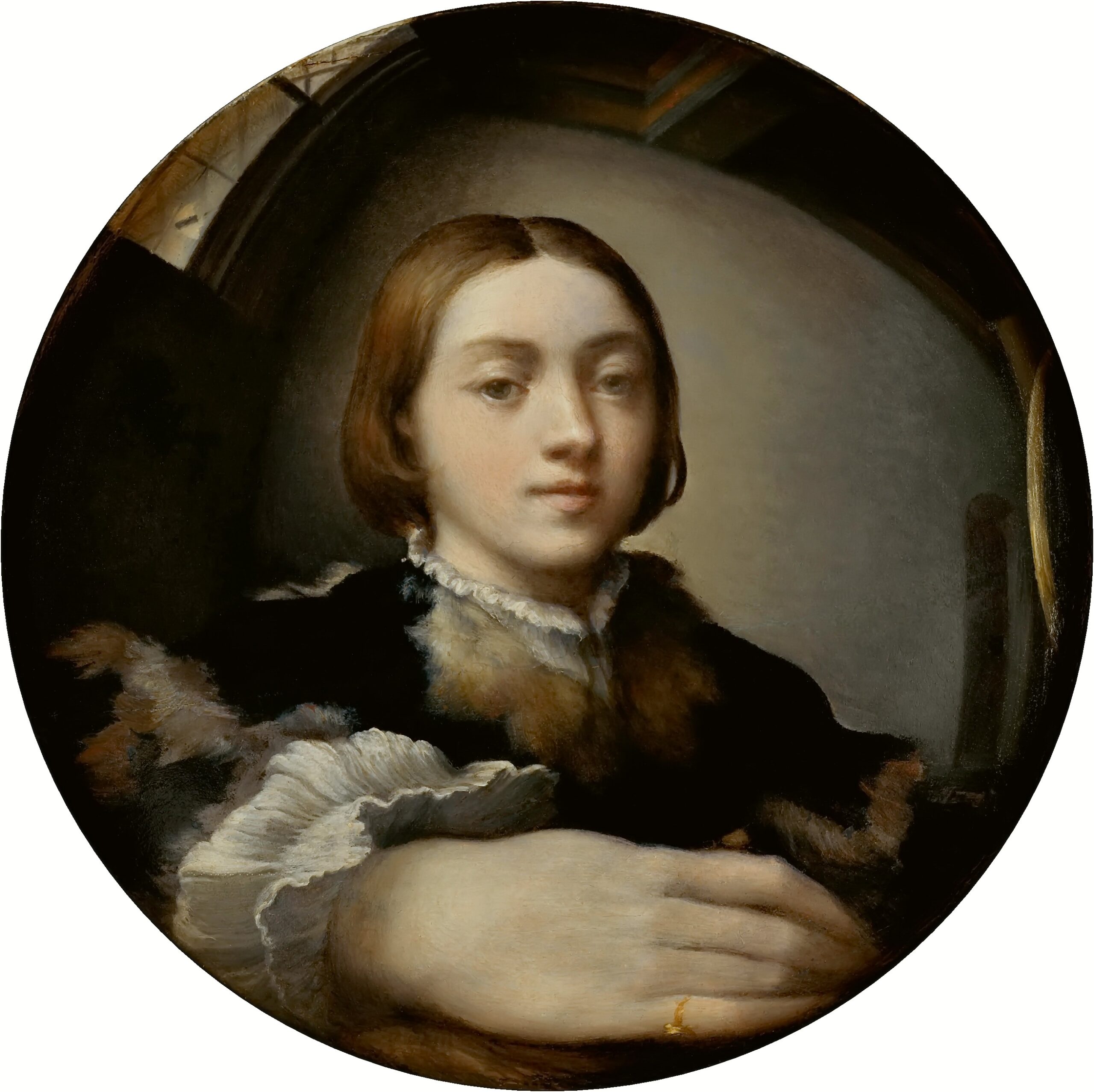
Another notable work is the “Self-Portrait in a Convex Mirror” (1524), which is renowned for its innovative approach to self-portraiture. The painting, executed on a convex surface, creates a unique and immersive visual experience. This work is often praised for its technical brilliance and has been influential in the study of portraiture and perspective.
Influence and Legacy
Parmigianino’s influence extends beyond his lifetime, impacting artists and movements that followed. His innovative techniques and distinctive style influenced subsequent generations of artists, particularly those involved in the Mannerist and Baroque periods. His work is celebrated for its originality and continues to be a subject of study and admiration in art history.
His impact is also evident in the broader context of Italian Renaissance art. Parmigianino’s exploration of proportion and perspective contributed to the evolution of artistic techniques and the development of new styles. His ability to blend classical elements with innovative approaches paved the way for future artistic experimentation.
Historical Context and Significance
Parmigianino’s career unfolded during a period of great change in the art world. The Renaissance, with its emphasis on classical ideals and naturalism, was giving way to the Mannerist movement, which embraced complexity and artificiality. Parmigianino’s work embodies this transition, reflecting the shifting artistic sensibilities of the time.
The Mannerist style, which Parmigianino helped define, was characterized by its departure from the balanced and harmonious compositions of the Renaissance. Instead, it embraced elongation, distortion, and a heightened sense of drama. This shift in artistic focus mirrored broader cultural and intellectual changes occurring in Europe during the 16th century.
Personal Life and Challenges
Parmigianino’s personal life was marked by both success and adversity. Despite his artistic achievements, he faced several challenges, including financial difficulties and political instability in Italy. His career was cut short by his untimely death on August 24, 1540, at the age of 37. Despite these challenges, his contributions to art remain significant and enduring.
Conclusion
Parmigianino’s legacy is a testament to his artistic vision and innovative spirit. His works continue to be celebrated for their unique style and technical excellence. As a pivotal figure in the Mannerist movement, Parmigianino’s influence on art history is profound and lasting. His contributions have ensured his place among the great masters of the Italian Renaissance, and his work remains a source of inspiration and admiration.
SEO Considerations
In crafting this article, we have adhered to SEO best practices by incorporating relevant keywords such as “Parmigianino,” “Mannerist movement,” “Renaissance art,” and “Italian Renaissance.” These keywords are strategically placed to enhance search engine visibility and align with user intent. By providing detailed insights and exploring the historical context of Parmigianino’s work, this article is designed to meet the informational needs of readers and perform well in search engine rankings.


