
Introduction
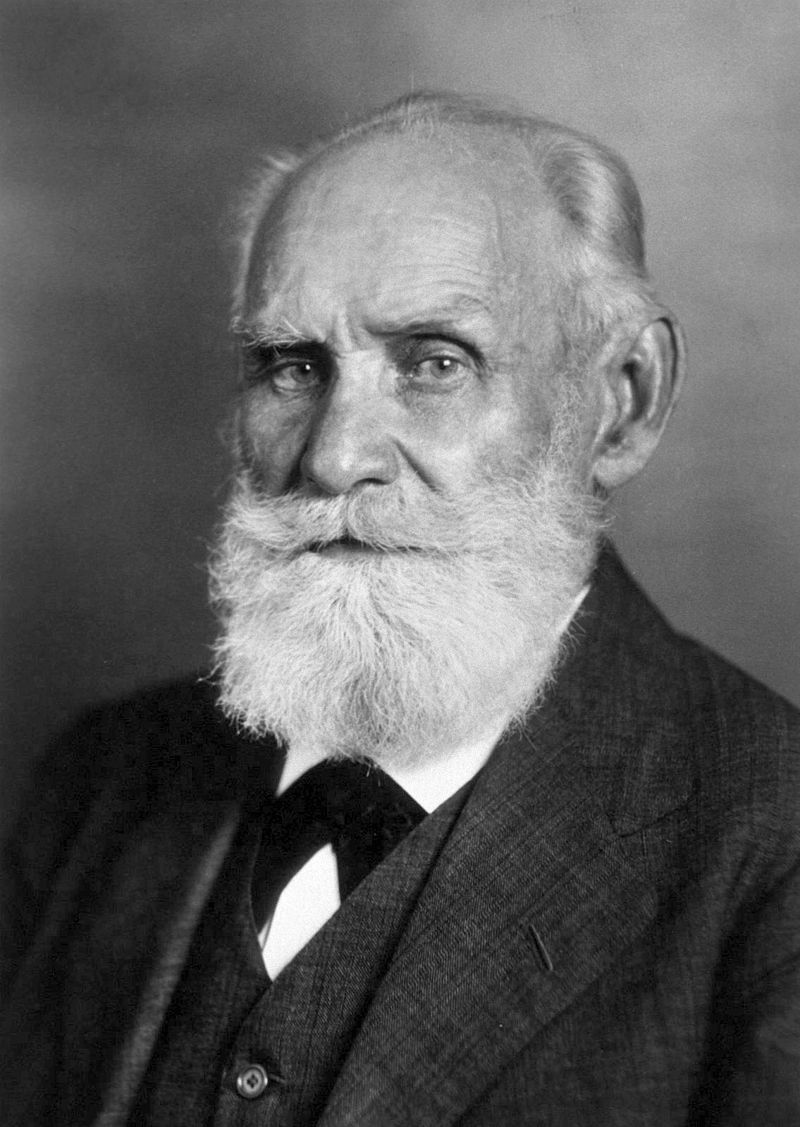
Ivan Pavlov, a renowned Russian physiologist, made seminal contributions to the field of psychology and physiology, most notably through his discovery of the conditioned reflex. His work has had a profound impact on both scientific theory and practical applications, influencing not only physiological research but also the broader field of psychology. This article delves into Pavlov’s life, his groundbreaking work, and his enduring legacy.
Early Life and Education
Ivan Petrovich Pavlov was born on September 26, 1849, in Ryazan, Russia. His early education was directed by his father, a devout ecclesiastic, who enrolled him in the local Theological Seminary. However, Pavlov’s interests soon shifted from theology to the sciences. In 1870, he enrolled at the University of St. Petersburg, where he pursued medical studies and developed a keen interest in physiology. He completed his medical degree with a thesis on the function of cardiac innervations.
Pavlov furthered his scientific training in Germany, studying at the universities of Leipzig and Breslau. This period was crucial for his development as a scientist, providing him with advanced knowledge and research techniques that he would later apply to his groundbreaking work in physiology.
The Discovery of the Conditioned Reflex
Upon returning to Russia, Pavlov began his research on digestive glands, which led to the publication of his influential work, “Lectures on the Work of the Digestive Glands.” His research utilized dogs as subjects to study digestive processes, which inadvertently led to one of the most significant discoveries in psychology and physiology: the conditioned reflex.
In a series of experiments conducted in the late 19th and early 20th centuries, Pavlov observed that dogs would salivate not only when presented with food but also in response to stimuli that had been associated with the presentation of food. For instance, if a bell was rung before feeding the dogs, eventually the sound of the bell alone would trigger salivation. This phenomenon was termed the “conditioned reflex.”
Pavlov’s experiments revealed that behaviors could be conditioned through associative learning, where a neutral stimulus becomes associated with a response. This was a revolutionary concept, demonstrating that organisms could learn and adapt their behaviors based on environmental stimuli. The discovery of the conditioned reflex provided a concrete scientific basis for understanding complex behavioral processes and laid the groundwork for the field of behavioral psychology.
Recognition and Awards
Pavlov’s work on the conditioned reflex earned him international acclaim and numerous accolades. In 1904, just a year after announcing his discovery, Pavlov was awarded the Nobel Prize in Physiology or Medicine. The Nobel Prize recognized his pioneering research on the physiology of the digestive glands, though his discovery of the conditioned reflex was a significant factor in his selection.
His research not only advanced scientific understanding but also had practical implications for various fields, including education, psychology, and psychiatry. Pavlov’s principles of conditioning influenced the development of behaviorism, a major school of thought in psychology that focuses on observable behaviors rather than internal mental states.
Later Life and Legacy
In the years following his Nobel Prize, Pavlov continued to conduct research and refine his theories. His work became increasingly influential, and he was supported by the Soviet government, which provided him with a state-of-the-art laboratory in Koltushi, near Leningrad (now St. Petersburg). This facility allowed him to further explore the complexities of conditioned reflexes and their applications.
Pavlov’s contributions extended beyond the laboratory. His research helped shape the modern understanding of learning and behavior, influencing subsequent generations of scientists and psychologists. Despite his significant impact, Pavlov remained firmly rooted in his role as a physiologist, often distancing himself from the broader field of psychology.
Pavlov passed away on February 27, 1936, in Leningrad. His legacy endures through his contributions to science and his influence on the study of behavior and learning. The principles he uncovered continue to be fundamental in both theoretical and applied psychology.
Historical Context and Impact
Pavlov’s work emerged during a period of significant scientific and intellectual advancement. The late 19th and early 20th centuries saw a growing interest in understanding human and animal behavior through empirical research. Pavlov’s discovery of the conditioned reflex was part of a broader movement towards scientific objectivity and methodological rigor in studying psychological phenomena.
The concept of the conditioned reflex aligned with the broader scientific trends of the time, which emphasized observable and measurable phenomena. Pavlov’s experiments provided a clear and quantifiable method for studying behavioral responses, contrasting with earlier, more speculative approaches to psychology.
In addition to its scientific impact, Pavlov’s work has had lasting implications for various practical fields. In education, his principles have informed approaches to learning and behavior management. In clinical psychology, understanding conditioned responses has been crucial for developing treatments for phobias and other behavioral disorders.
Conclusion
Ivan Pavlov’s contributions to science have had a profound and lasting impact on our understanding of behavior and learning. His discovery of the conditioned reflex opened new avenues for research and application, influencing both physiological and psychological fields. Pavlov’s rigorous scientific methods and groundbreaking findings continue to be foundational in the study of behavior and learning processes.
Pavlov’s life and work exemplify the intersection of scientific curiosity and practical application, demonstrating how a single discovery can resonate across multiple disciplines and continue to shape scientific inquiry long after its initial revelation.


