
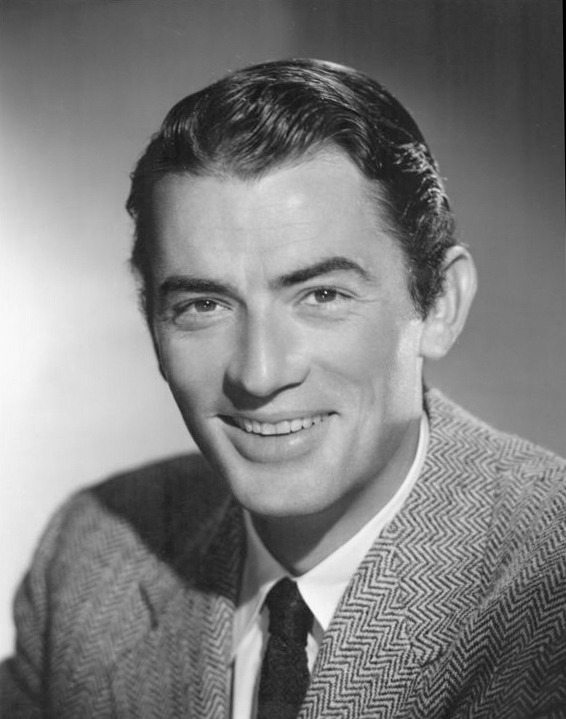
Gregory Peck, one of Hollywood’s most beloved and respected actors, was born Eldred Gregory Peck on April 5, 1916, in La Jolla, San Diego, California. Known for his imposing presence, distinctive voice, and deep, empathetic portrayals, Peck became a symbol of moral integrity and quiet strength throughout his career. His journey from a medical student to an iconic figure in American cinema is a story of dedication, talent, and an unwavering commitment to the craft of acting.
Early Life and Career Beginnings
Gregory Peck was born to a pharmacist father and a teacher mother. His parents divorced when he was young, and he was primarily raised by his maternal grandmother. Peck’s early years were marked by a love for reading and a natural inclination towards sports, particularly rowing, which he pursued during his time at San Diego High School. After graduating, he enrolled at the University of California, Berkeley, initially pursuing a degree in medicine.
However, Peck’s life took a dramatic turn during a trip to New York in 1938, where he was captivated by a Broadway play titled “I’ve Married an Angel.” This experience ignited a passion for acting, leading him to abandon his medical studies and enroll in the Neighborhood Playhouse School of the Theatre in New York City. It was here that Peck honed his craft, studying under the renowned acting coach Sanford Meisner, whose emphasis on emotional truth and naturalistic performance would significantly influence Peck’s style.
Rise to Stardom: Breakthrough Roles and Early Success
Peck’s early career was shaped by the challenges of the World War II era. Due to a spinal injury sustained while training for the U.S. Armed Forces, he was declared unfit for military service. This injury, however, proved to be a turning point in his acting career. He focused entirely on theater, which eventually led to his big break in Hollywood.
Peck’s film debut came in 1944 with the movie “Days of Glory,” where he played the role of a Russian partisan during World War II. His performance was well-received, showcasing his commanding screen presence and setting the stage for his future success. His next film, “The Keys of the Kingdom” (1944), solidified his status as a rising star. Peck’s portrayal of a compassionate and dedicated priest earned him his first Academy Award nomination, a rare achievement for an actor so early in his career.
The following years saw Peck starring in a series of successful films that demonstrated his versatility and depth as an actor. In 1945, he appeared in Alfred Hitchcock’s psychological thriller “Spellbound,” opposite Ingrid Bergman. Directed by the master of suspense himself, Peck’s role as a troubled amnesiac doctor highlighted his ability to convey vulnerability and complexity, earning him critical acclaim.
Hollywood Icon: Classic Roles and Enduring Fame
By the late 1940s, Gregory Peck had established himself as one of Hollywood’s leading men. His tall, athletic build, combined with his earnest and introspective performances, made him a natural fit for roles that required both physicality and moral gravitas. In 1946, he starred in “The Yearling,” a touching family drama that garnered him his second Oscar nomination.
Peck’s commitment to taking on roles with significant social messages became a hallmark of his career. This was particularly evident in the 1947 film “Gentleman’s Agreement,” directed by Elia Kazan. In this movie, Peck portrayed a journalist who poses as a Jew to expose the widespread anti-Semitism in post-war America. The film was a critical and commercial success, winning the Academy Award for Best Picture and earning Peck his third Oscar nomination.
In the 1950s, Peck continued to choose roles that resonated with audiences and critics alike. He played a series of iconic characters in films such as “Roman Holiday” (1953), opposite Audrey Hepburn, which became one of his most beloved roles. The romantic comedy, directed by William Wyler, not only showcased Peck’s charm and wit but also introduced Hepburn to the world, marking the beginning of her illustrious career. The film was a box office hit and remains a classic to this day.
Another significant role during this period was his portrayal of Captain Ahab in John Huston’s adaptation of Herman Melville’s “Moby Dick” (1956). Peck’s intense performance as the obsessive and vengeful sea captain hunting the titular white whale was a departure from his usual roles, demonstrating his range as an actor.
Peak of His Career: “To Kill a Mockingbird” and the Legacy of Atticus Finch
The pinnacle of Gregory Peck’s career came in 1962 with his portrayal of Atticus Finch in “To Kill a Mockingbird.” Based on Harper Lee’s Pulitzer Prize-winning novel, the film adaptation directed by Robert Mulligan cast Peck as the morally upright and compassionate lawyer defending a black man falsely accused of raping a white woman in the segregated South.
Peck’s performance as Atticus Finch was not just a role; it became a symbol of justice, integrity, and moral courage. His portrayal earned him the Academy Award for Best Actor, cementing his place in Hollywood history. The character of Atticus Finch resonated deeply with audiences, particularly during the Civil Rights Movement, and Peck himself considered it his most important work. The American Film Institute later named Atticus Finch the greatest hero in American film history, a testament to the enduring impact of Peck’s portrayal.
Later Career: Transition to Television and Continued Influence
As the 1960s progressed, the nature of Hollywood was changing, and so too was Peck’s career. While he continued to appear in major films, including “The Guns of Navarone” (1961) and “Cape Fear” (1962), his filmography began to reflect a broader range of projects, including more character-driven roles and even television appearances.
One of his notable later roles was in the 1976 horror film “The Omen,” where Peck played an ambassador who discovers that his adopted son is the Antichrist. The film was a commercial success and introduced Peck to a new generation of moviegoers. Despite the changing landscape of cinema, Peck remained a respected figure in the industry, known for his professionalism and dedication to his craft.
In the 1980s and 1990s, Peck transitioned more into television, starring in miniseries such as “The Blue and the Gray” (1982) and “The Scarlet and the Black” (1983). His return to the role of Captain Ahab in the 1998 miniseries adaptation of “Moby Dick” was a fitting bookend to his career, allowing him to revisit one of his most challenging roles.
Personal Life and Legacy
Beyond his work on screen, Gregory Peck was known for his humanitarian efforts and commitment to social causes. He was a vocal advocate for civil rights and was actively involved in several charitable organizations throughout his life. In recognition of his contributions, President Lyndon B. Johnson awarded him the Presidential Medal of Freedom in 1969, one of the highest civilian honors in the United States.
Peck’s personal life was marked by stability and enduring relationships. He was married twice, first to Greta Kukkonen, with whom he had three sons, and later to Veronique Passani, with whom he had two children. His family life remained a cornerstone of his existence, and he often spoke about the importance of family and personal integrity.
Gregory Peck passed away on June 12, 2003, at the age of 87. His death marked the end of an era in Hollywood, but his legacy lives on through his films, which continue to inspire and resonate with audiences around the world.
Historical Context and Impact on Cinema
Gregory Peck’s career must be understood within the broader context of mid-20th century American cinema. He emerged during the Golden Age of Hollywood, a time when the studio system was at its peak, producing films that would become classics. However, Peck’s work transcended the era, as he consistently chose roles that addressed significant social issues, from anti-Semitism and racism to war and personal redemption.
Peck’s performances often reflected the idealism and moral clarity that characterized the best of American cinema during this period. His portrayal of Atticus Finch, in particular, became a cultural touchstone, influencing how generations of Americans understood justice and equality. The character’s quiet strength and unwavering commitment to doing what is right, even in the face of overwhelming opposition, made Atticus Finch a symbol of integrity that continues to resonate today.
In addition to his social impact, Peck’s approach to acting—marked by a deep emotional authenticity and a commitment to understanding the characters he portrayed—helped to elevate the craft of acting in Hollywood. His collaborations with directors like Alfred Hitchcock, John Huston, and Elia Kazan produced some of the most memorable performances in film history, setting a standard for actors that followed.
Conclusion
Gregory Peck was more than just an actor; he was a symbol of the best that American cinema had to offer. His career, which spanned more than five decades, was marked by a series of iconic roles that not only entertained but also challenged audiences to think more deeply about the world around them. From his early days as a rising star in Hollywood to his status as a living legend, Peck remained true to his principles, both on and off the screen.
As we look back on Gregory Peck’s life and career, it is clear that his contributions to film and society extend far beyond his most famous roles. He embodied the ideals of justice, compassion, and integrity in a way that few others have, leaving behind a legacy that continues to inspire and guide. Whether through his portrayal of Atticus Finch, his advocacy for civil rights, or his enduring influence on the art of acting, Gregory Peck’s impact on American culture is undeniable.


