
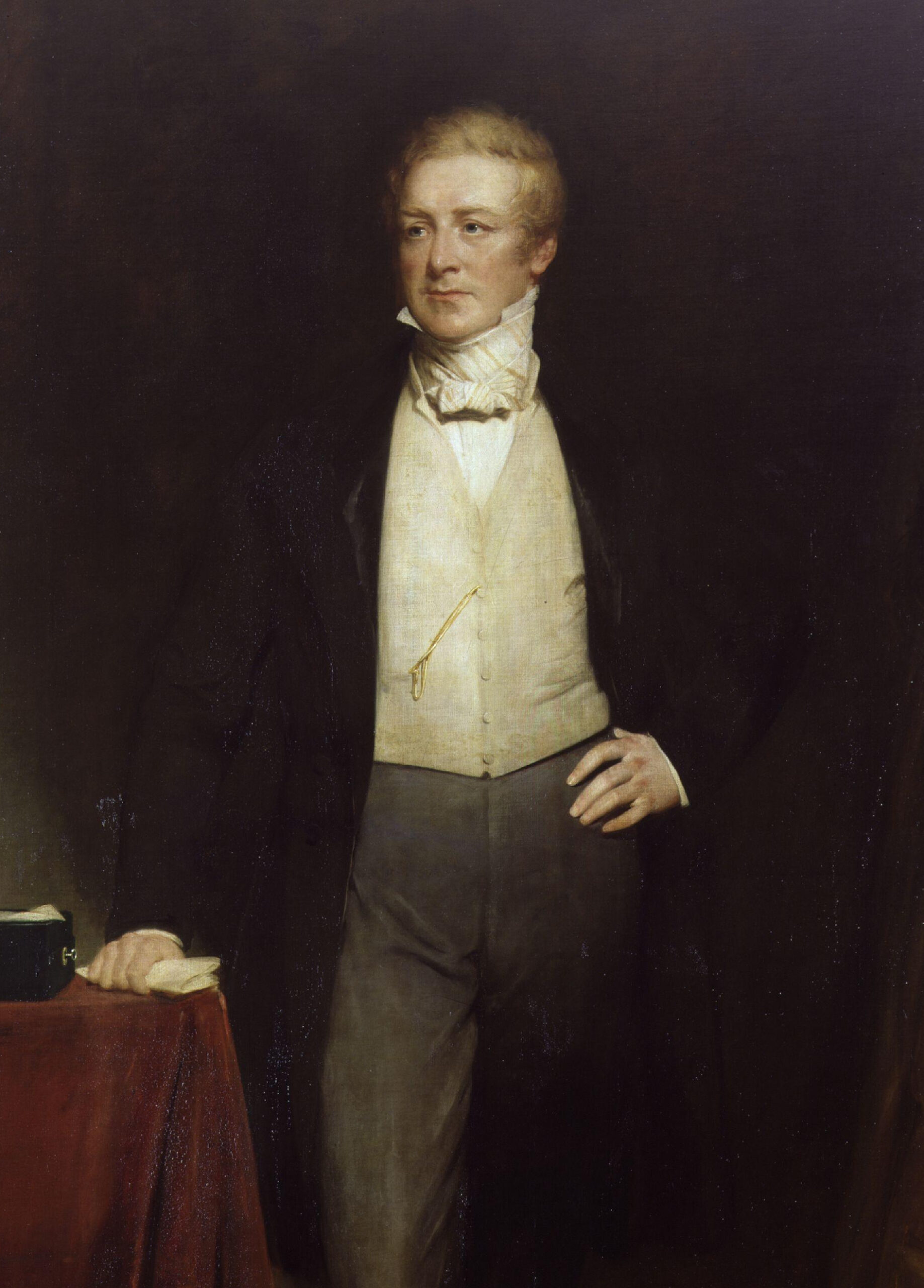
Robert Peel, born on February 5, 1788, in Chamber Hall, Bury, Lancashire, is a towering figure in British political history. His contributions to modern governance, particularly in the realms of law enforcement and economic policy, have left an indelible mark on the United Kingdom. A conservative by ideology yet progressive in action, Peel’s legacy is a blend of innovation, reform, and pragmatic leadership.
Early Life and Political Beginnings
Robert Peel was born into a prosperous family, with his father, Sir Robert Peel, being a successful industrialist and politician. His upbringing was marked by privilege and education, which laid the foundation for his future political career. Peel was educated at Harrow and Christ Church, Oxford, where he excelled academically, particularly in classics and mathematics. This rigorous education not only sharpened his intellectual capabilities but also ingrained in him a strong sense of duty and public service.
Peel’s entry into politics was almost a foregone conclusion given his family’s status. In 1809, at the young age of 21, he was elected as the Member of Parliament for the Irish borough of Cashel. As a member of the Tory party, which later evolved into the Conservative Party, Peel quickly distinguished himself with his oratory skills and deep understanding of legislative matters.
Early Political Roles and the Irish Question
One of Peel’s first significant political roles was as Under-Secretary of State for War and the Colonies in 1810, during which he gained invaluable experience in administration. However, it was his appointment as Chief Secretary for Ireland in 1812 that truly tested his political acumen. The Irish Question, particularly the issues surrounding Catholic emancipation and Irish autonomy, were among the most contentious of the era.
Peel, a staunch Protestant, initially opposed Catholic emancipation, which sought to remove the legal restrictions on Catholics in the United Kingdom. His opposition was rooted in the belief that granting such rights would undermine the Anglican establishment and, by extension, the British state. However, his tenure in Ireland was marked by a pragmatic approach to governance, where he balanced firmness with necessary reforms. He established the Royal Irish Constabulary, a centralized police force, to maintain order—a precursor to his later work in creating the Metropolitan Police in London.
The Home Secretary and Legal Reforms
Peel’s tenure as Home Secretary, beginning in 1822, is widely regarded as one of the most transformative periods in British legal history. His approach to governance was characterized by a blend of conservatism and reform. While he was committed to preserving the established order, he recognized the need for legal and social reforms to address the changing realities of British society.
One of his most notable achievements as Home Secretary was the overhaul of the British criminal justice system. At the time, the legal code was notoriously harsh, with the death penalty being prescribed for a wide range of offenses, many of which were minor by modern standards. Peel spearheaded the effort to rationalize the penal code, reducing the number of capital offenses and introducing more humane punishments. His reforms laid the groundwork for the modern British legal system, emphasizing the principles of justice, proportionality, and rehabilitation.
Founding the Metropolitan Police Force
Perhaps Peel’s most enduring legacy is his role in the creation of the Metropolitan Police Force in 1829. Before its establishment, law enforcement in London was a patchwork of local constables and watchmen, which was often ineffective in dealing with crime in the rapidly growing metropolis. Peel recognized the need for a professional, organized police force to maintain public order and protect citizens.
The Metropolitan Police Force, often referred to as “Bobbies” or “Peelers” after their founder, was revolutionary in its approach. It was the first modern police force, with a focus on crime prevention rather than mere reaction. The principles set forth by Peel, known as the “Peelian Principles,” emphasized the importance of police being part of the community they served, operating with the consent and cooperation of the public. These principles continue to influence policing worldwide.
Prime Ministerial Tenure and Economic Reforms
Peel served two terms as Prime Minister, first briefly in 1834-1835 and then from 1841 to 1846. His time as Prime Minister was marked by significant economic reforms that reflected his commitment to pragmatic governance. Despite his conservative background, Peel was willing to embrace liberal economic ideas when they aligned with the nation’s interests.
One of Peel’s most significant achievements was his handling of the economic crisis of the early 1840s. When he took office in 1841, Britain was grappling with a severe financial deficit. Peel responded by implementing a series of fiscal and monetary reforms, including the reintroduction of income tax, which had been abolished after the Napoleonic Wars. This move was controversial but effective, helping to stabilize the economy and restore fiscal balance.
However, Peel’s most famous—and most contentious—economic policy was the repeal of the Corn Laws in 1846. The Corn Laws were tariffs on imported grain designed to protect domestic producers, but they kept food prices artificially high, causing widespread discontent, particularly among the working class. Peel, influenced by the arguments of free trade advocates like Richard Cobden, came to believe that the repeal of these laws was necessary to alleviate poverty and promote economic growth.
The repeal of the Corn Laws marked a turning point in British economic policy, signaling a shift towards free trade. However, it also led to a split within the Conservative Party, with many of Peel’s colleagues feeling betrayed by what they saw as his abandonment of protectionist principles. This division ultimately led to Peel’s resignation as Prime Minister and the end of his political career.
Later Life and Legacy
After his resignation, Peel continued to be an influential figure in British politics, albeit from the backbenches. He supported various liberal causes, including Jewish emancipation and the expansion of civil liberties. However, his health began to decline, and his political influence waned.
Robert Peel’s life came to a tragic end on July 2, 1850, following a fall from his horse. He died at the age of 62, leaving behind a legacy that continues to be felt in British politics and governance. Peel is remembered as a statesman who, despite his conservative roots, was willing to adapt and embrace reform when it was in the national interest.
Historical Context and Nuances
Peel’s career must be understood in the context of a rapidly changing Britain. The early 19th century was a period of significant social, economic, and political transformation. The Industrial Revolution was reshaping the economy, leading to urbanization and the rise of new social classes. These changes created new challenges for governance, including how to manage the growing demands for political representation and economic fairness.
Peel’s ability to navigate these challenges while maintaining social order is a testament to his political skill and vision. His reforms in policing and the legal system were not merely reactive but were part of a broader strategy to modernize British governance to meet the needs of a changing society.
Moreover, Peel’s shift towards free trade and his eventual break with protectionism reflected the growing influence of liberal economic thought in Britain. While his decisions were controversial and divisive, they were also forward-looking, laying the foundations for Britain’s economic policies in the latter half of the 19th century.
Peel’s Influence on Modern Conservatism
Robert Peel is often regarded as the father of modern British conservatism. His ability to balance conservative principles with necessary reforms created a template for future Conservative leaders. Peel’s emphasis on law and order, fiscal responsibility, and a pragmatic approach to governance continues to resonate within the Conservative Party today.
Moreover, Peel’s legacy is evident in the ongoing debates within conservatism about the balance between tradition and change. His willingness to embrace reform when it was in the national interest, even at the cost of party unity, set a precedent for subsequent conservative leaders who have faced similar dilemmas.
Conclusion
Robert Peel was a statesman of remarkable vision and courage. His contributions to British politics, from the establishment of the Metropolitan Police Force to the repeal of the Corn Laws, have had a lasting impact on the nation. Peel’s legacy is not just one of political achievement but also of moral and intellectual leadership. He exemplified the belief that true conservatism is not about resisting change at all costs but about managing change in a way that preserves the best of the past while embracing the future.
As we reflect on Peel’s life and career, it is clear that his influence extends far beyond his time. His principles of governance, particularly the importance of law and order, fiscal responsibility, and the willingness to adapt to changing circumstances, continue to be relevant in today’s political landscape. Robert Peel’s legacy is a testament to the enduring power of thoughtful, principled leadership in the service of the public good.


